As U.N. Secretary-General António Guterres warned that El Niño is likely to return in the coming months, both he and officials at the World Meteorological Organization quickly pivoted to a second message: forecasts alone are not enough.
The emphasis on preparedness, anticipatory action and the U.N.’s Early Warnings for All initiative on Tuesday highlighted a broader shift underway inside the international climate system, where increasing attention is focused not only on understanding climate risks but on helping governments act on them.
“The science is clear: El Niño is arriving on our doorstep in the coming months with 90% certainty,” Guterres said in a video message released alongside WMO’s latest El Niño update.
But after describing El Niño as an “urgent climate warning” that would “pour fuel on the fire of a warming world,” Guterres concluded by calling for “early warning systems for all.”
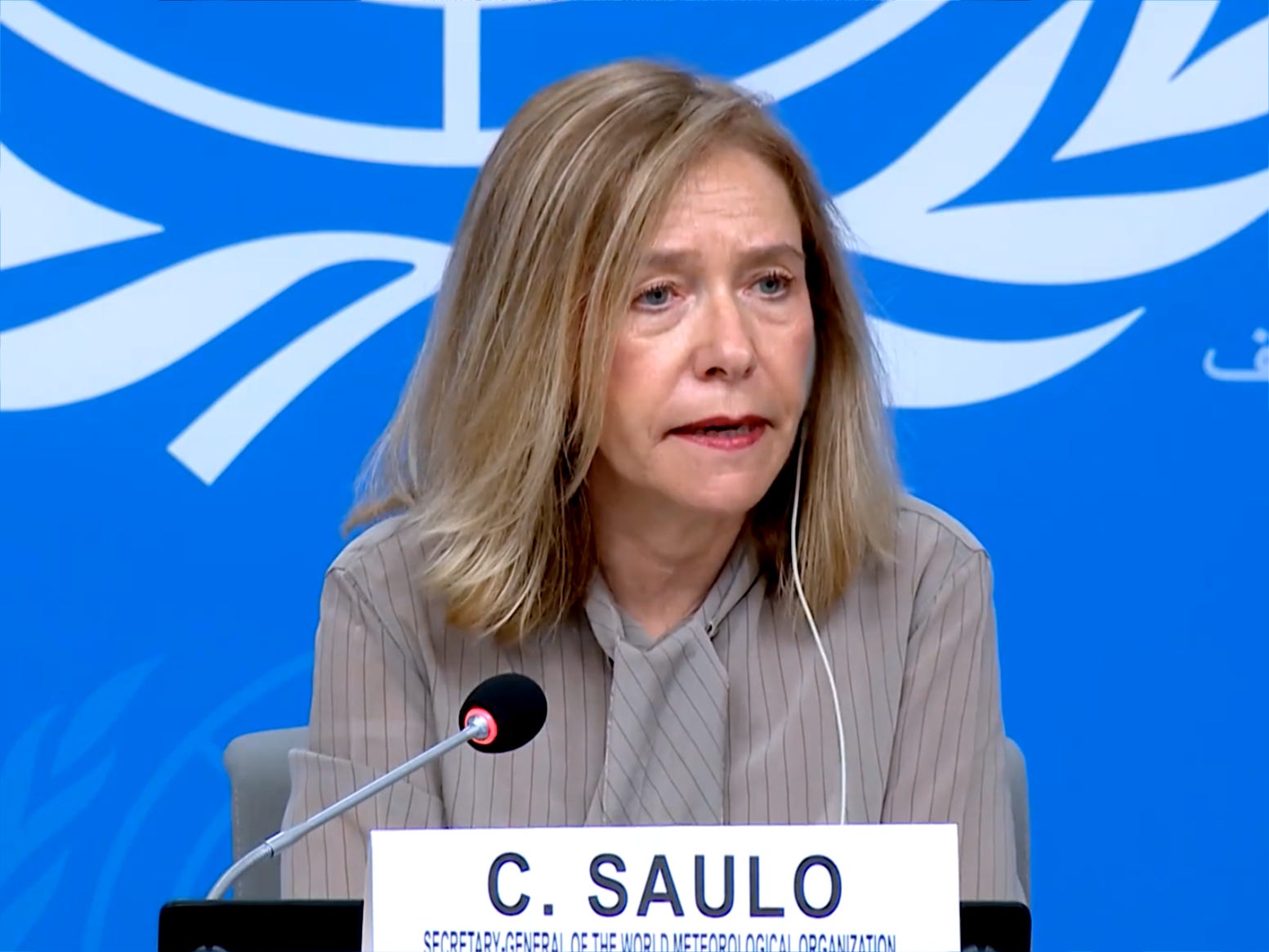
The same theme ran throughout a briefing by WMO Secretary-General Celeste Saulo and the agency’s forecasting experts.
Although the briefing focused on the probability of El Niño conditions developing later this year, Saulo repeatedly emphasized preparedness, risk reduction and anticipatory action.
“Forecasts such as what WMO presents today are a call to action,” she told reporters in Geneva.
The messaging reflects a larger evolution at WMO, which also officially hosts the secretariat for the Nobel Prize-winning Intergovernmental Panel on Climate Change (IPCC).
For much of its history, the U.N. weather agency was known primarily for coordinating global weather observations, forecasting standards and scientific cooperation among national meteorological services. Climate monitoring later became a growing part of its portfolio.
Today, WMO increasingly presents its mission in terms of helping countries use scientific information before disasters occur.
That shift is embodied in Early Warnings for All, the U.N.-backed initiative launched by Guterres in 2022 with the goal of ensuring that every person on Earth is protected by life-saving warning systems by the end of 2027.
Helping governments make decisions under conditions of uncertainty
At first glance, the initiative appears to be a meteorological program. In practice, it is a much broader exercise in international cooperation.
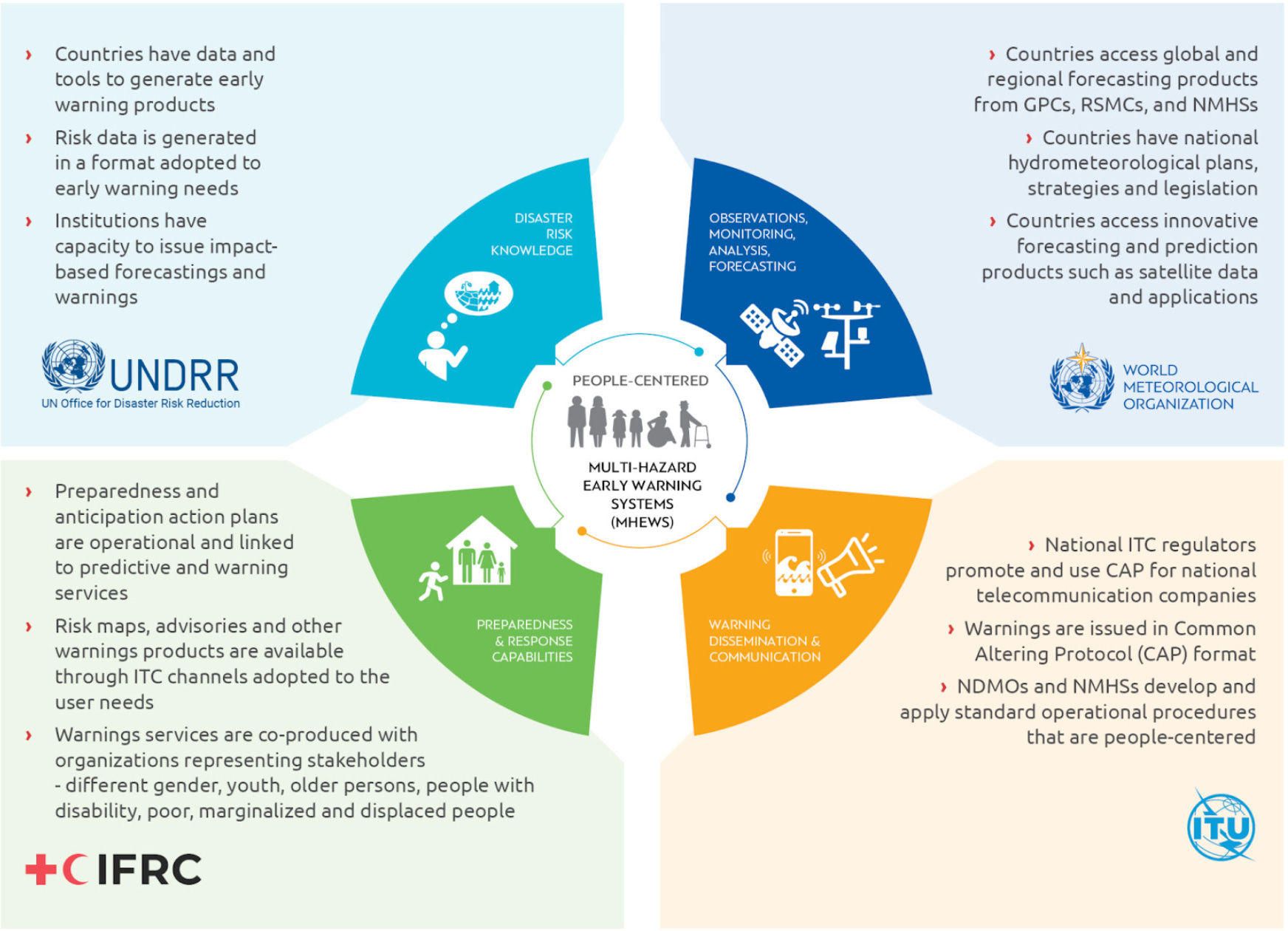
WMO co-leads the effort with the U.N. Office for Disaster Risk Reduction, alongside the International Telecommunication Union and the International Federation of Red Cross and Red Crescent Societies. The initiative requires forecasting systems, disaster-risk assessments, telecommunications networks, emergency-management agencies, development finance, public communication systems and political commitment from national governments.
Its four pillars extend well beyond weather prediction: disaster-risk knowledge, monitoring and forecasting, warning dissemination and communication, and preparedness and response capabilities.
In other words, the science becomes useful only when it is embedded in institutions capable of acting on it.
That perspective increasingly shapes how WMO describes its own work.
Recent agency reports focus not only on forecasting advances and observation networks but also on governance, financing, legislation, institutional reform, data-sharing systems and national implementation plans. Success is measured not simply by scientific accuracy but by whether warnings reach vulnerable populations in time to reduce losses and save lives.
The approach reflects a broader trend across international governance.
Scientific institutions are increasingly judged not only by the knowledge they generate but by their ability to help governments make decisions under conditions of uncertainty. Similar debates are taking place around artificial intelligence, pandemic preparedness, climate adaptation and other areas where scientific information must be translated into action.
The growing prominence of Early Warnings for All also comes at a moment when parts of the international climate architecture face increasing political and financial pressure.
Since returning to office, the Trump administration has withdrawn the United States from major climate institutions and agreements and reduced support for a range of climate-related programs and scientific initiatives. The U.S. has stepped back from several international bodies that help coordinate climate science, environmental assessments and global risk monitoring.
Against that backdrop, early warning systems occupy a distinctive and more neutral political space within international cooperation. They are framed not only as climate measures but also as tools for public safety, disaster preparedness, development and resilience.
WMO estimates that investments in early warning systems can generate returns many times greater than their cost while sharply reducing disaster-related mortality and economic losses.
For Saulo, the significance of the shift extends beyond meteorology. “Our goal must be to ensure everybody has access to science-based advanced intelligence,” she said.
Later, she described the effort in broader institutional terms.
“This is a cultural change,” Saulo said. “It’s moving from reactive to proactive.”