Veteran science broadcaster defends public trust in an age of polarization
The longtime host of CBC’s Quirks & Quarks argues that evidence-based journalism remains essential to helping societies navigate division, distrust and misinformation.

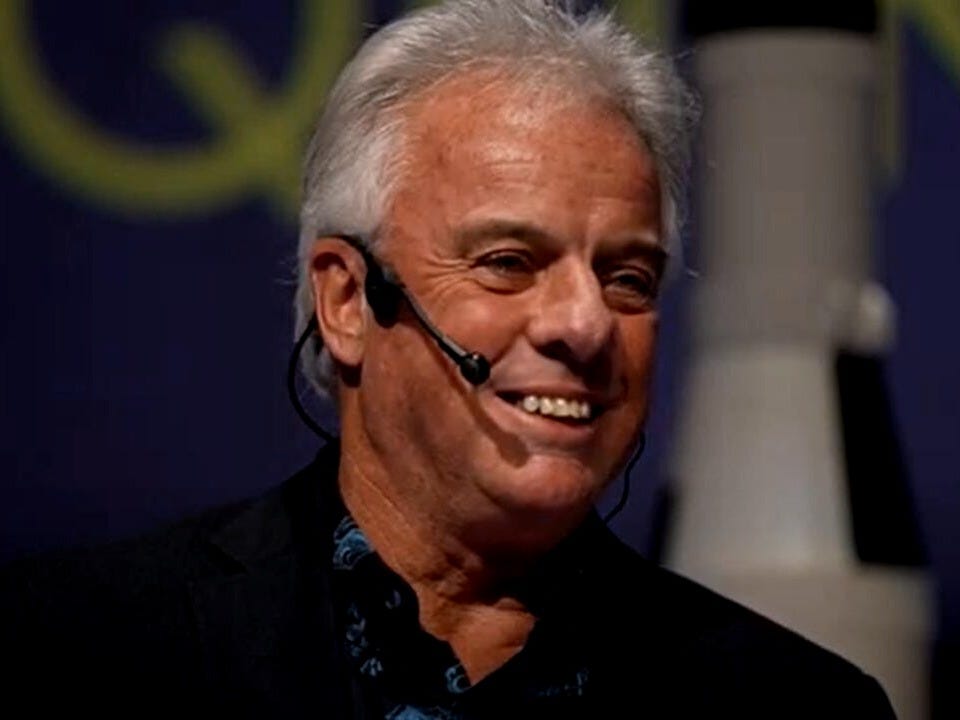
After decades working in one of the world’s longest-running public science programs, Bob McDonald still believes curiosity, evidence and long-form science journalism can cut through polarization and distrust.
The veteran Canadian broadcaster, who has hosted CBC Radio’s Quirks & Quarks since 1992, said science communication plays a critical role in helping the public navigate increasingly complex issues ranging from climate change and artificial intelligence to energy transitions and misinformation.
“I believe that if we have a scientifically literate society, we’ll make good decisions,” McDonald said during an interview on The Science Diplomat Podcast. “And politicians should be following the people.”
McDonald has spent decades translating scientific research for mass audiences through radio, television, books and live events. Quirks & Quarks, now in its 50th year, reaches more than 800,000 listeners weekly across Canada through CBC Radio and podcast platforms.
He is also the author of several popular science books, including Me and My 24 Hours, Canadian Spacewalkers, The Future Is Now and Just Say Yes, which explores how science and technology could help societies address challenges including climate change and sustainability.
Throughout the interview, McDonald repeatedly returned to the importance of scientific literacy and public understanding, even as science increasingly intersects with political conflict and ideological division.
“So that’s where our job comes into play, is to show the difference between good science and somebody’s opinion,” he said. “Good science relies on evidence, on data, on experiments, on peer review, and all of that.”
McDonald said the internet and artificial intelligence have made scientific information more accessible while also making misinformation and conspiracy theories easier to spread.
“With AI now creating images that are very convincing or videos that are convincing, it’s hard to tell the difference between real science and pseudoscience,” he said. “That scares me. That’s our challenge right now.”
At several points during the discussion, McDonald acknowledged the growing overlap between science and politics, particularly around climate change and energy policy.
“That’s when science became political, is when we started thinking about the environment and the impact, our impact on the Earth,” he said.
Still, McDonald insisted that his own role remains focused on explaining science rather than engaging directly in political debate.
“We only do science. We don’t do politics,” he said. “There’s enough. The news department does politics all the time.”
Instead, he described himself primarily as “a translator of science.”
“I can understand scientific language, and I want to translate that to the public and be a bridge between the public and the science,” he said. “That’s what I feel my job is.”
McDonald also emphasized optimism and technological adaptation as central themes in his reporting and public engagement.
“We know how to do it,” he said while discussing climate technologies and energy transitions. “We just need to get on with it.”
He pointed to advances in renewable energy, electric vehicles and hydrogen technologies as evidence that societies can transition away from fossil fuels without abandoning economic growth.
“It’ll make you money, and it’ll save you money to go green and take care of things,” he said. “Keep common sense, make common sense prevail.”
The interview reflected McDonald’s view that science communication helps sustain public trust in evidence and expertise during a period of growing fragmentation in media and politics. “Science to me is curiosity,” he said. “It’s how does the world work?”
Even after interviewing more than 7,000 scientists over the course of his career, McDonald said that sense of wonder has not diminished. “What we don’t know still exceeds what we do know,” he said.
Despite growing political polarization around scientific issues, McDonald said he remains optimistic about humanity’s ability to navigate future challenges.
“I try be optimistic that we’re smart. We’re smart. We’ve been to the Moon and back, for God’s sakes,” he said. “And I have faith in humanity that we’re smart enough that we can engineer our way through this little bottleneck that we are in right now and come to a better future.”

