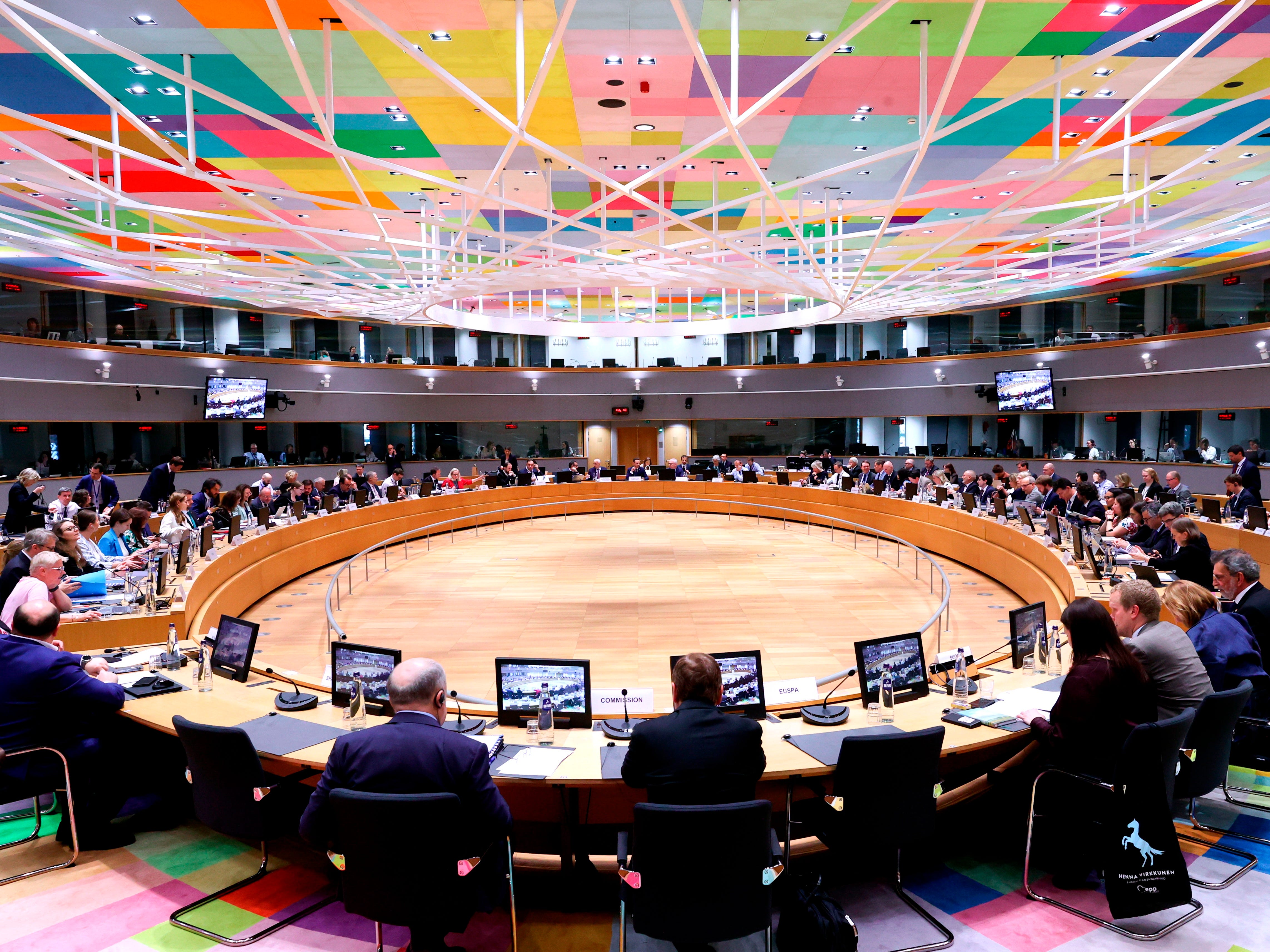
VIENNA — European Union research ministers formally adopted the bloc’s first science diplomacy framework, completing a multi-year effort to place scientific cooperation, research expertise and technological capacity more firmly within the E.U.’s foreign policy toolkit.
The decision came on Friday at a meeting of the E.U. Competitiveness Council in Brussels, where ministers approved a Council of the European Union recommendation on European science diplomacy. The recommendation is not legally binding, but it establishes a common framework that member nations have committed to implement through their research, diplomatic and international cooperation activities.
The adoption comes as European governments increasingly view scientific cooperation as a strategic asset amid geopolitical tensions, technological competition and growing pressure on international institutions.
“Science diplomacy is more important than ever,” Austrian Minister Eva-Maria Holzleitner told fellow ministers during the Council meeting.
“As pressure on multilateralism, democracy, academic freedom, and rules-based cooperations grows every day, global challenges such as climate change, health threats, and emerging technologies require joint responses based on scientific evidence.”
Holzleitner said science diplomacy helps build trust, maintain dialogue and defend shared values and interests, while calling for what she described as a “genuine Team Europe approach” linking research, innovation, higher education and foreign policy.
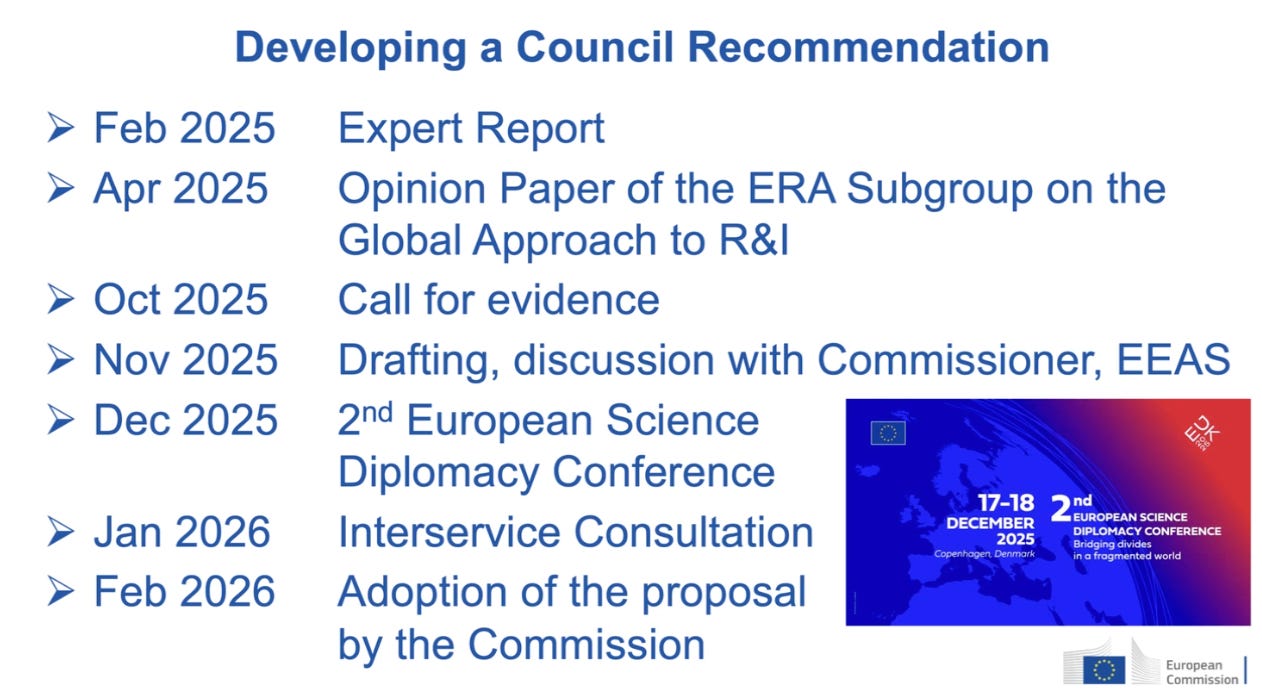
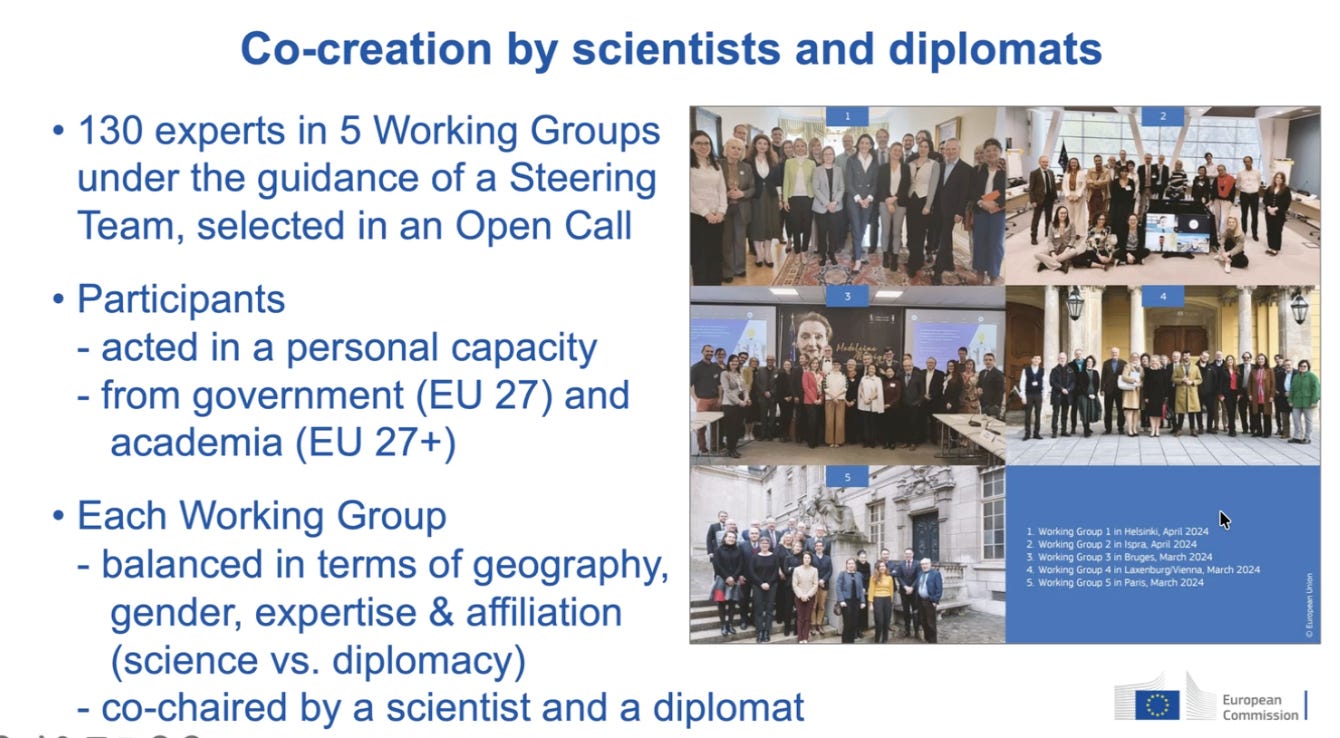
The adoption marks the culmination of a process launched by the European Commission and developed through consultations involving roughly 130 scientists, diplomats, policymakers and research leaders from across Europe.
“Science diplomacy is no longer a peripheral endeavor — it is a core strategic imperative,” said Nicodemos Damianou, Cyprus’s deputy minister for research, innovation and digital policy.
“It is through the universal language of science, and a commitment to open yet secured collaboration,” he said, “that the European Union can not only advance its own interests and values, but also forge a more peaceful, prosperous and sustainable world.”
The framework defines science diplomacy as the use of science, scientific evidence and international scientific cooperation to support foreign policy objectives while also using diplomacy to advance research and innovation.
Its adoption reflects a broader shift in European thinking about science diplomacy itself.
Jan-Marco Müller, the European Commission official who led the drafting process, has argued that the field has evolved beyond its traditional emphasis on international cooperation.
“Science diplomacy is also about defending your interests or defending sovereignty,” Müller said in an April interview with The Science Diplomat Podcast. “It is about your values.”
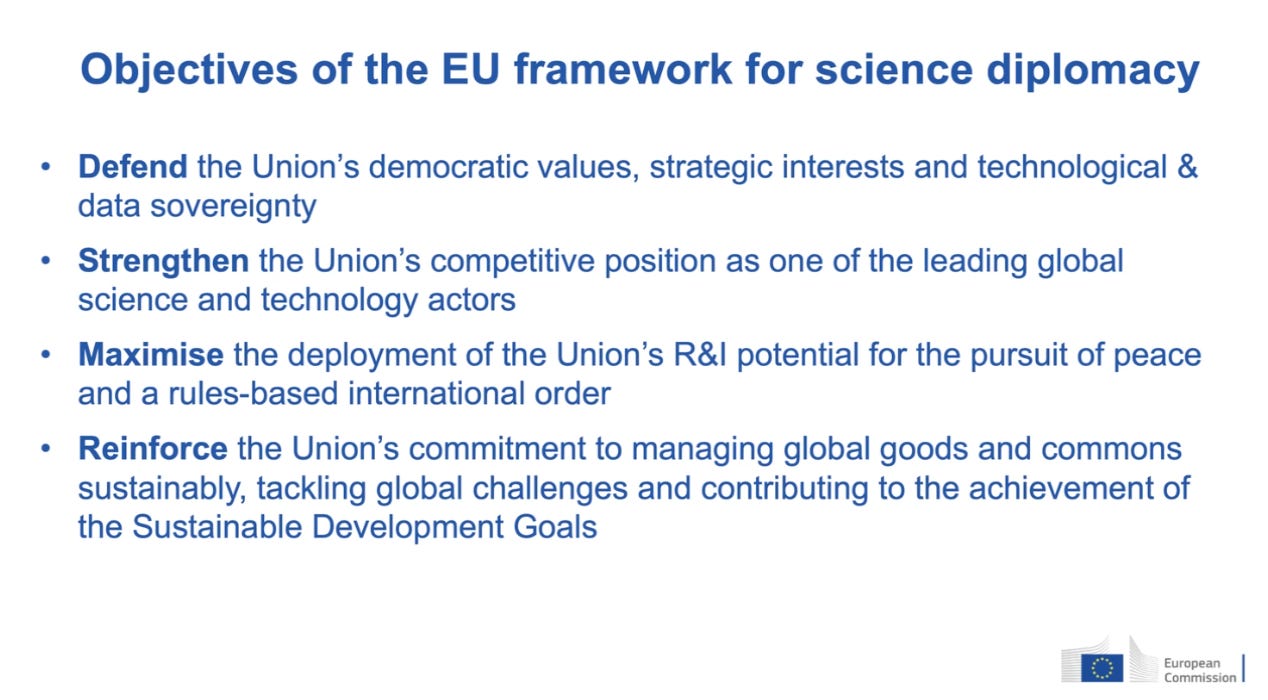
That evolution is visible throughout the framework. According to materials presented on Friday by European Commission policy officer Ágota Dávid, its objectives include defending the Union’s democratic values, strategic interests and technological sovereignty, strengthening Europe’s competitiveness in science and technology, supporting a rules-based international order and contributing to the management of global commons and sustainable development.
At the same time, the Council recommendation stresses that science remains a global public good and that scientific collaboration can build trust and facilitate dialogue with partner countries. It emphasizes open and secure international cooperation in research and innovation while acknowledging growing concerns surrounding emerging technologies, economic security and geopolitical competition. The recommendation also recognizes the need to balance scientific goals with foreign and security policy interests.
The framework emerged from recommendations developed by five expert working groups composed of scientists and diplomats. Each group was co-chaired by representatives of both communities.
One of the central goals, according to Dávid, was to bridge longstanding differences between scientific and diplomatic cultures.
“We always had the impression that we sometimes speak a bit different languages,” she said on Friday at the EUTOPIA Global Conference on Science Diplomacy in Brussels.
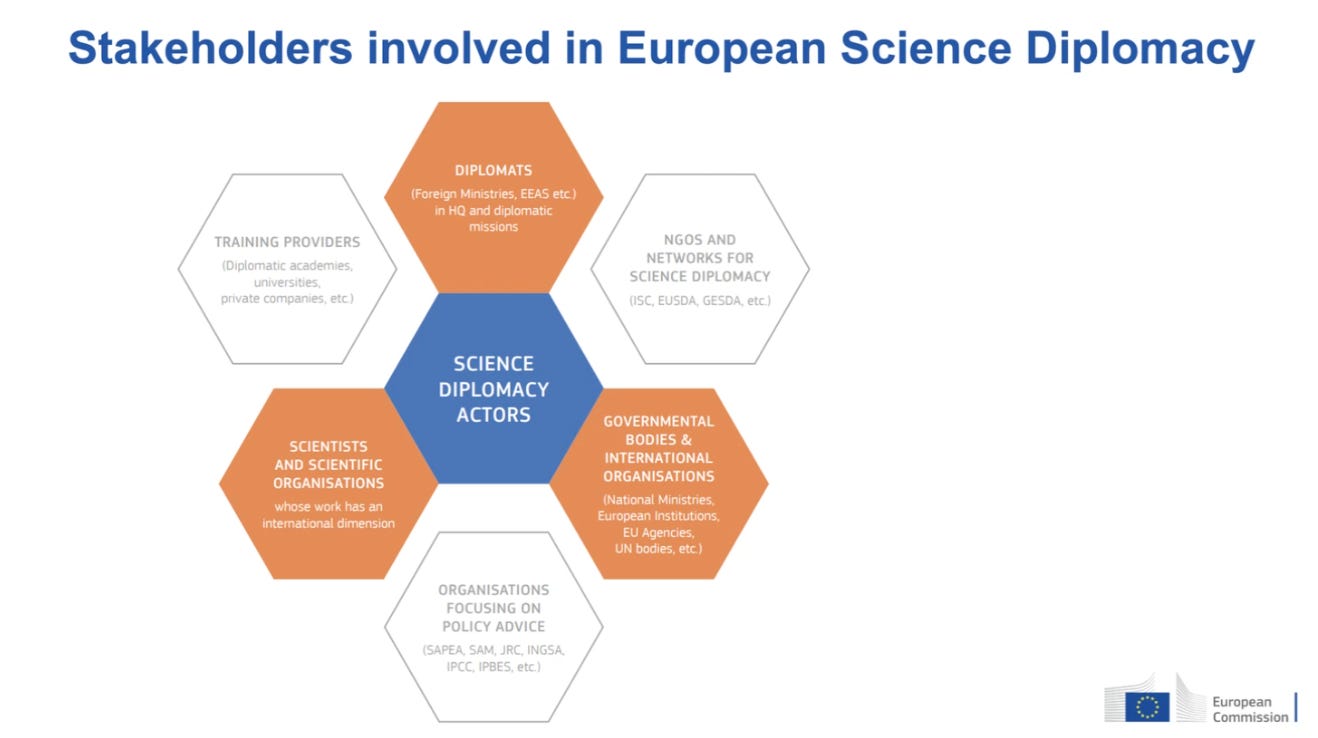
Scientists, diplomats, governments and international organizations often approach the same concepts from different perspectives, she said, making communication itself a recurring challenge in science diplomacy.
Müller has argued that bringing those communities together was as important as the final document itself. “Much more important than the end result ... was actually the process,” he said. “It was getting the scientists and diplomats into a room and talk to each other.”
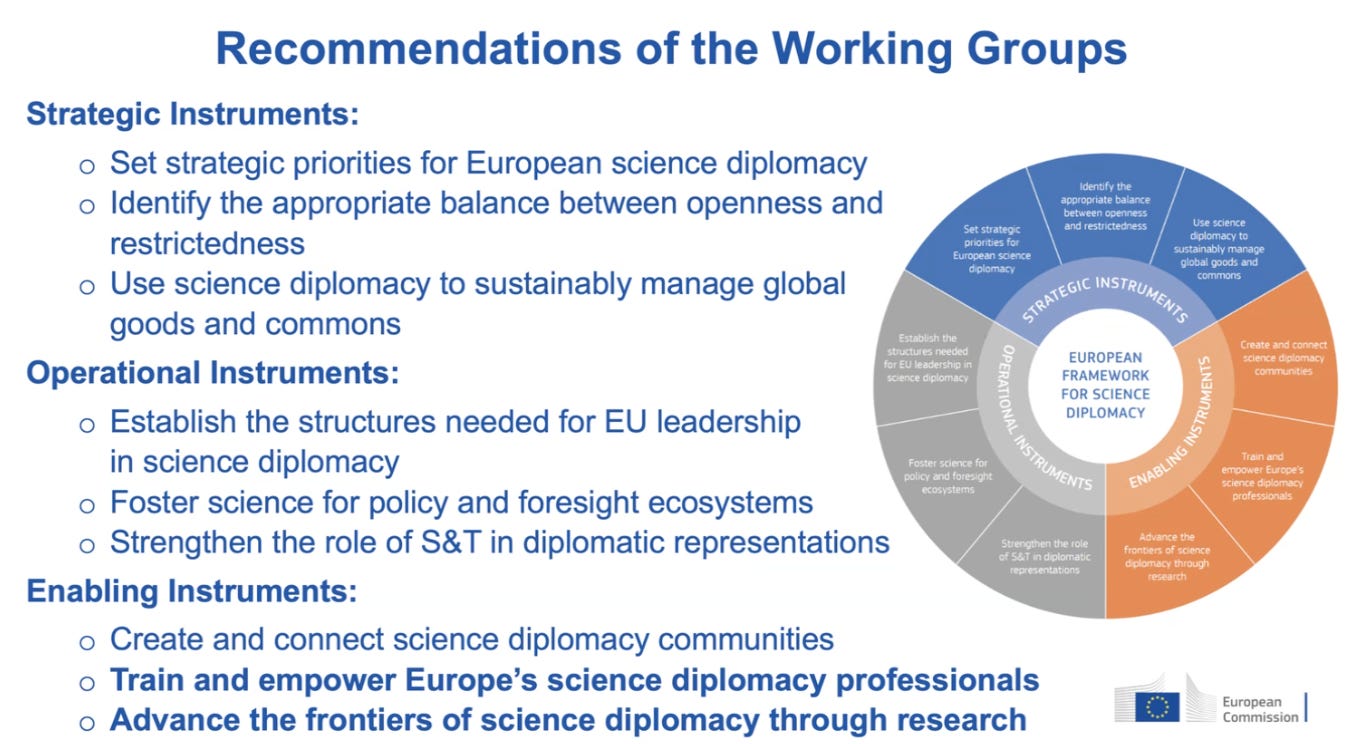
One of the framework’s central themes is balancing scientific openness with growing concerns about security, strategic competition and emerging technologies. Commission presentations describe the challenge as finding “the appropriate balance between openness and restrictedness.”
“How to find this balance between security and openness,” Dávid said. “How to be safe and open at the same time.”
The framework is organized around three broad categories of recommendations.
Strategic measures focus on European priorities, partnerships and global challenges. Operational measures call for stronger science-for-policy and foresight systems, along with greater scientific expertise within diplomatic services. Enabling measures emphasize training, professional development, community building and research on science diplomacy itself.
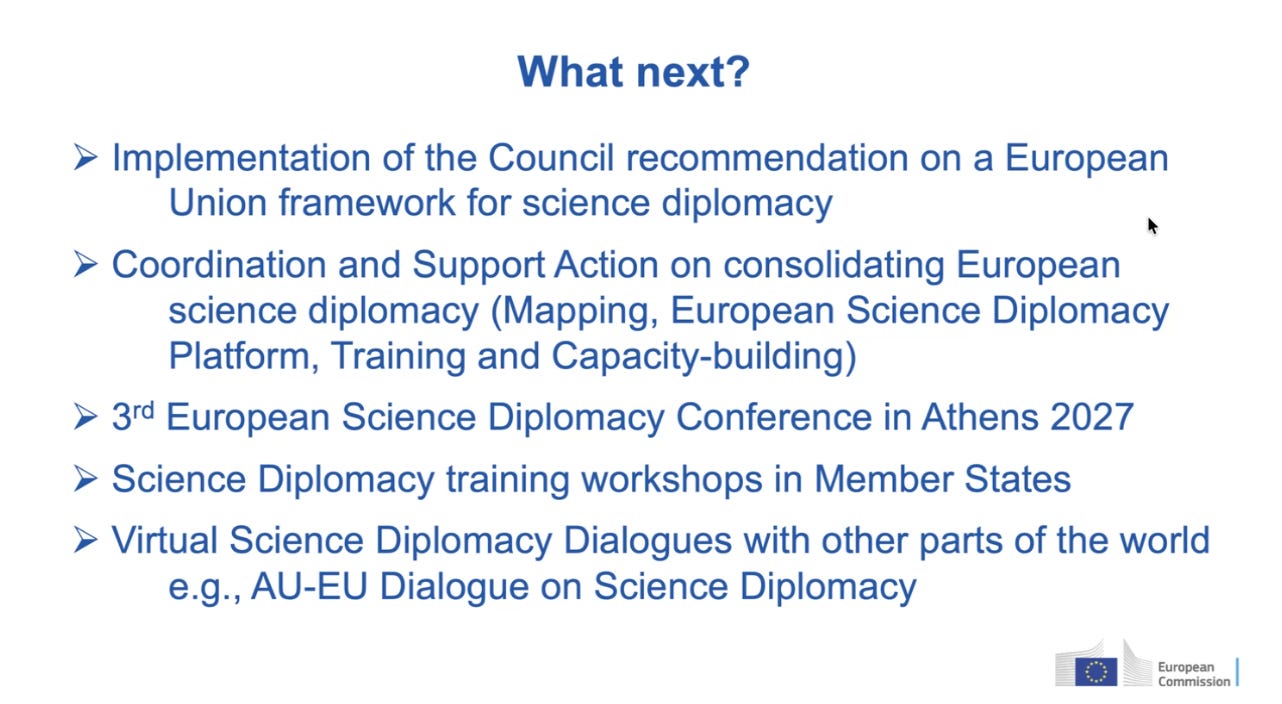
That emphasis reflects a growing effort to build permanent institutional capacity rather than rely on ad hoc cooperation. Commission plans presented on Friday show implementation will include a European science diplomacy platform, national workshops, mapping exercises, training programs and expanded international dialogues with partners in other regions.
“Diplomats should know more about scientific procedures and processes, but also scientists should be able to speak the language of politics and diplomacy,” Dávid said.
The recommendation also calls for stronger partnerships with countries in the Global South, support for international research capacity-building and the creation of a Mediterranean science diplomacy center. It encourages closer links between diplomatic services, universities, research-performing organizations and European Universities alliances.
The Council also asked the Commission to strengthen monitoring of major scientific and technological developments, including the growing use of artificial intelligence in scientific research, and assess their implications for European policy.
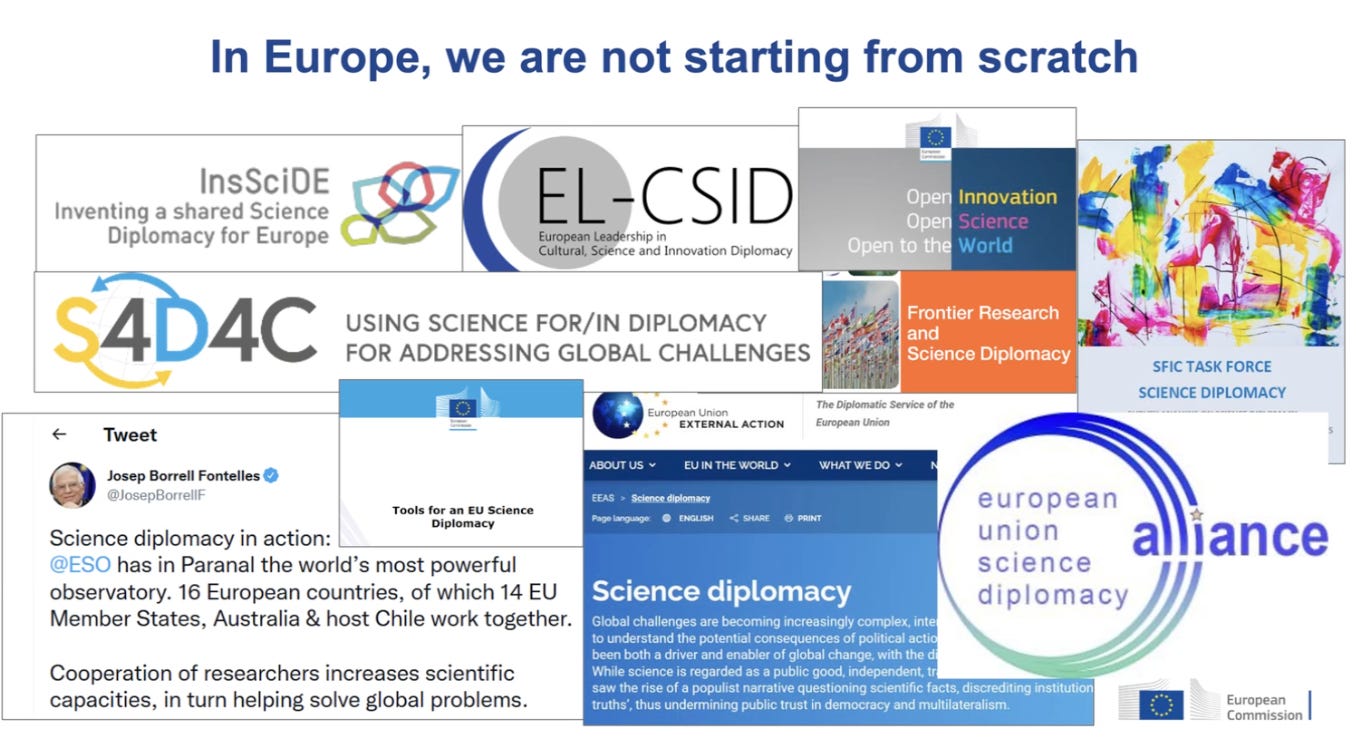
The framework builds on more than a decade of European efforts to define science diplomacy as a field of practice. What distinguishes the new recommendation is its attempt to move beyond concepts and networks toward permanent structures, training programs and policy tools.
Dávid described Friday’s adoption as the beginning of a new phase. “Now the implementation happens,” she said, “which will of course be as important as all these preparatory efforts.”
Heilprin reported from Geneva.
Slides from a presentation on Friday in Brussels at the EUTOPIA Science Diplomat Global Conference by Ágota David, policy officer for the European Commission’s Directorate-General Research and Innovation: