As governments become increasingly preoccupied with economic competition, technological sovereignty and national security, a question that once sat comfortably in the background of international science is moving closer to the center: who safeguards scientific cooperation itself?
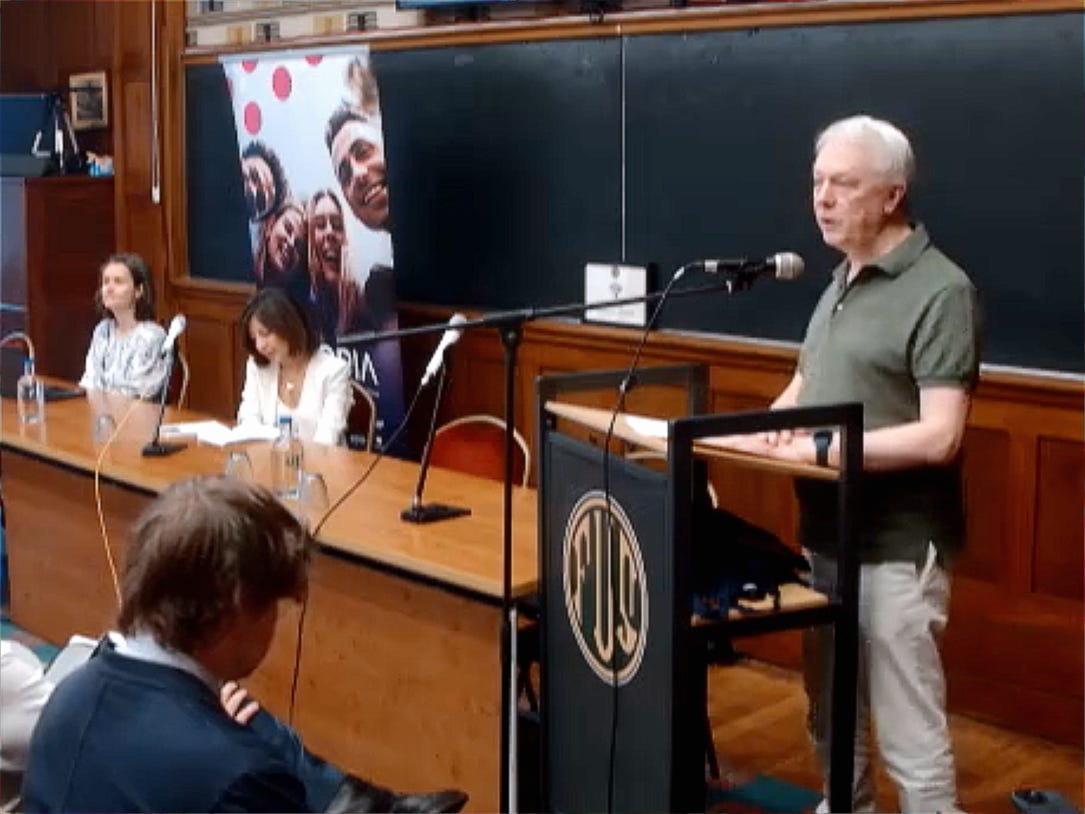
That question framed the opening of the EUTOPIA Global Conference on Science Diplomacy on Friday, where university leaders, diplomats and representatives of international organizations gathered to discuss the future of scientific collaboration at a time of growing geopolitical tension.
The conference was built around an observation that has become increasingly common across international institutions. The world’s most pressing challenges — climate change, pandemics, artificial intelligence, biotechnology and nuclear proliferation among them — are inherently transnational. Yet many of the political systems designed to address them are under strain.
“The challenges confronting humanity have never been more international or even global by nature,” Jan Danckaert, rector of Vrije Universiteit Brussel and chair of EUTOPIA’s Board of Presidents, said in opening remarks.
“Climate change does not recognize visa requirements. The pandemic does not pause at borders. Artificial intelligence shapes economies and also the scientific endeavor without asking permission.”
The concern is not simply that international politics has become more contentious. It is that science itself is increasingly being drawn into geopolitical competition.
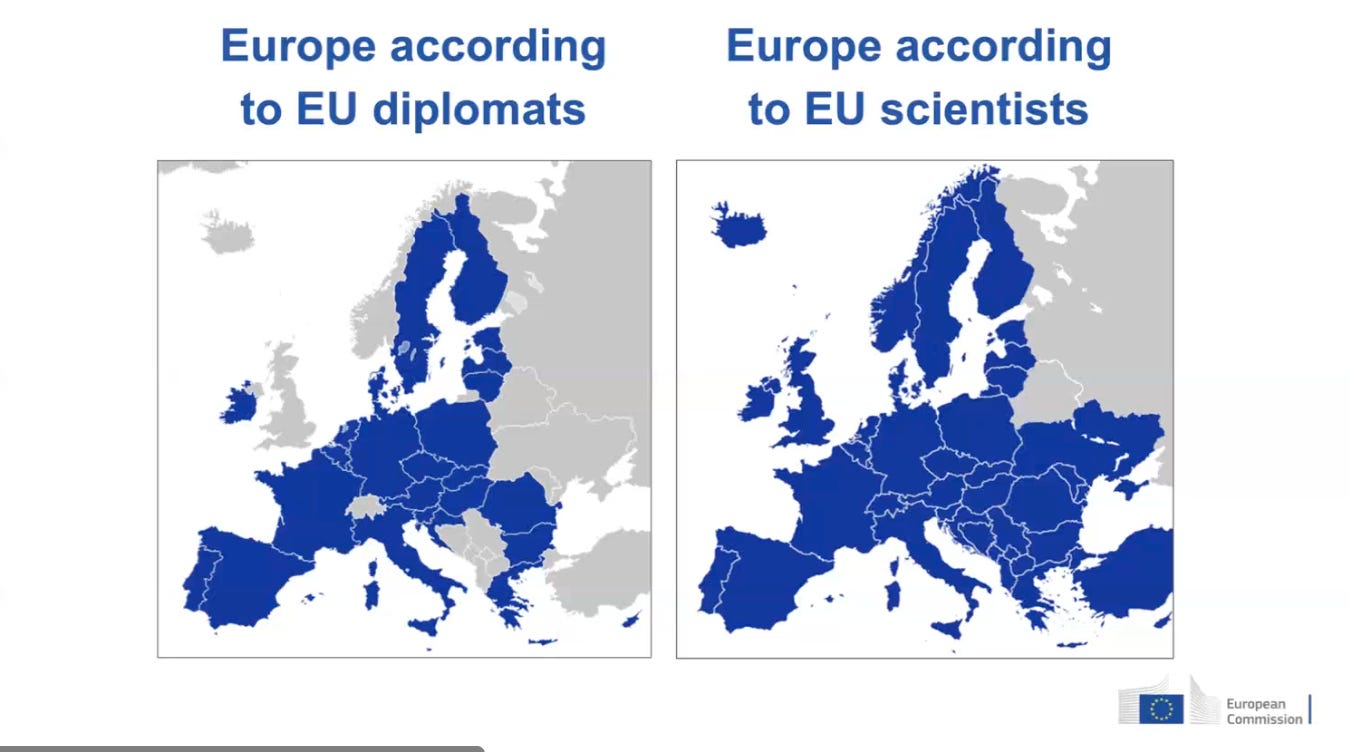
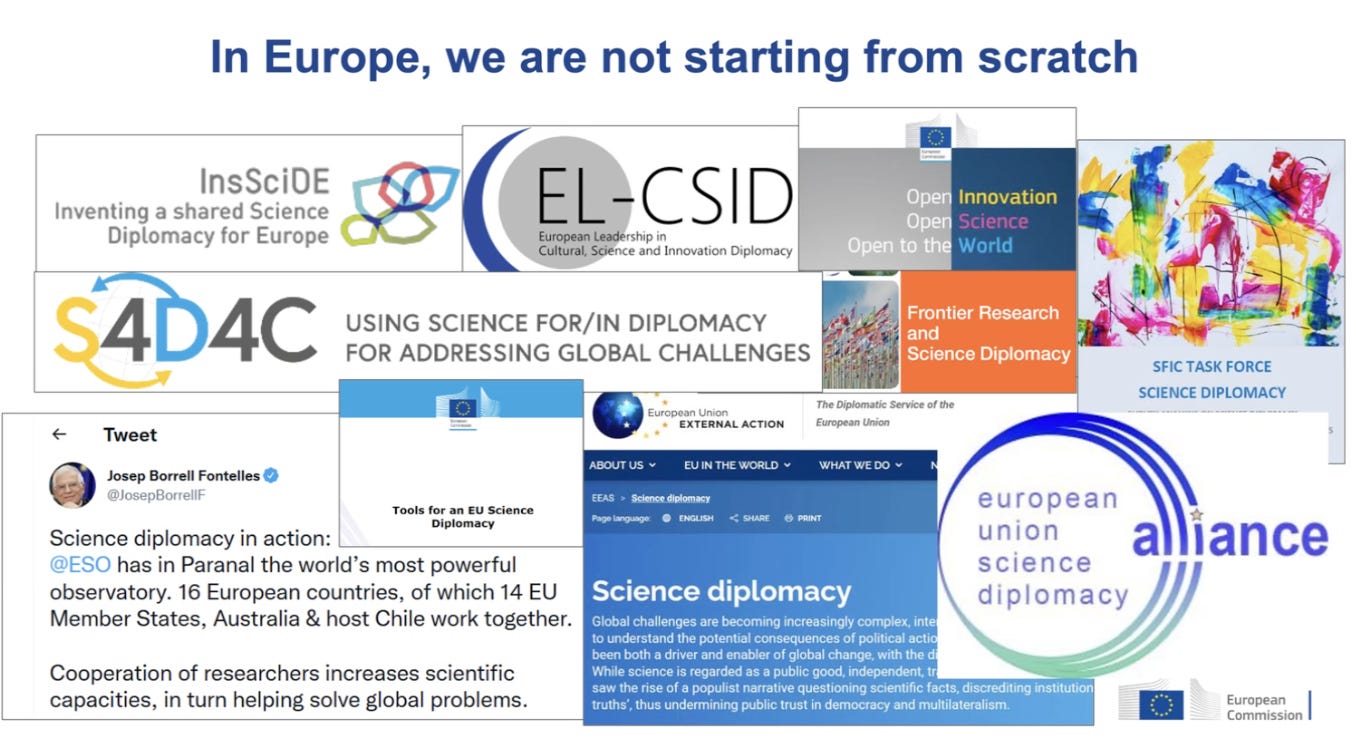
The discussion coincided with the European Union approving its first science diplomacy framework, reflecting growing efforts across Europe to formalize scientific cooperation as a component of foreign and research policy.
The conference prospectus notes that scientific cooperation is becoming “politicised, securitized, and instrumentalised for strategic purposes,” raising what organizers describe as a critical question: “who safeguards science as a global common good?”
For UNESCO, that concern has become increasingly central.
“Climate change, pandemics, biodiversity loss, artificial intelligence, water security, biotechnology, emerging technologies do not recognize borders,” said Lodovico Folin Calabi, UNESCO’s representative to the European Union.
“And yet the political and institutional environment in which international scientific cooperation operates has become more complex, more competitive, and increasingly securitized.”
The answer proposed repeatedly during the opening session was that universities themselves may need to assume a larger responsibility for maintaining international scientific ties.
Danckaert argued that universities have been practicing a form of science diplomacy for centuries through the routine work of international collaboration.
“Every international collaboration is, in a kind of way, an act of diplomacy,” he said. “Every co-authored paper is a kind of peace treaty.”
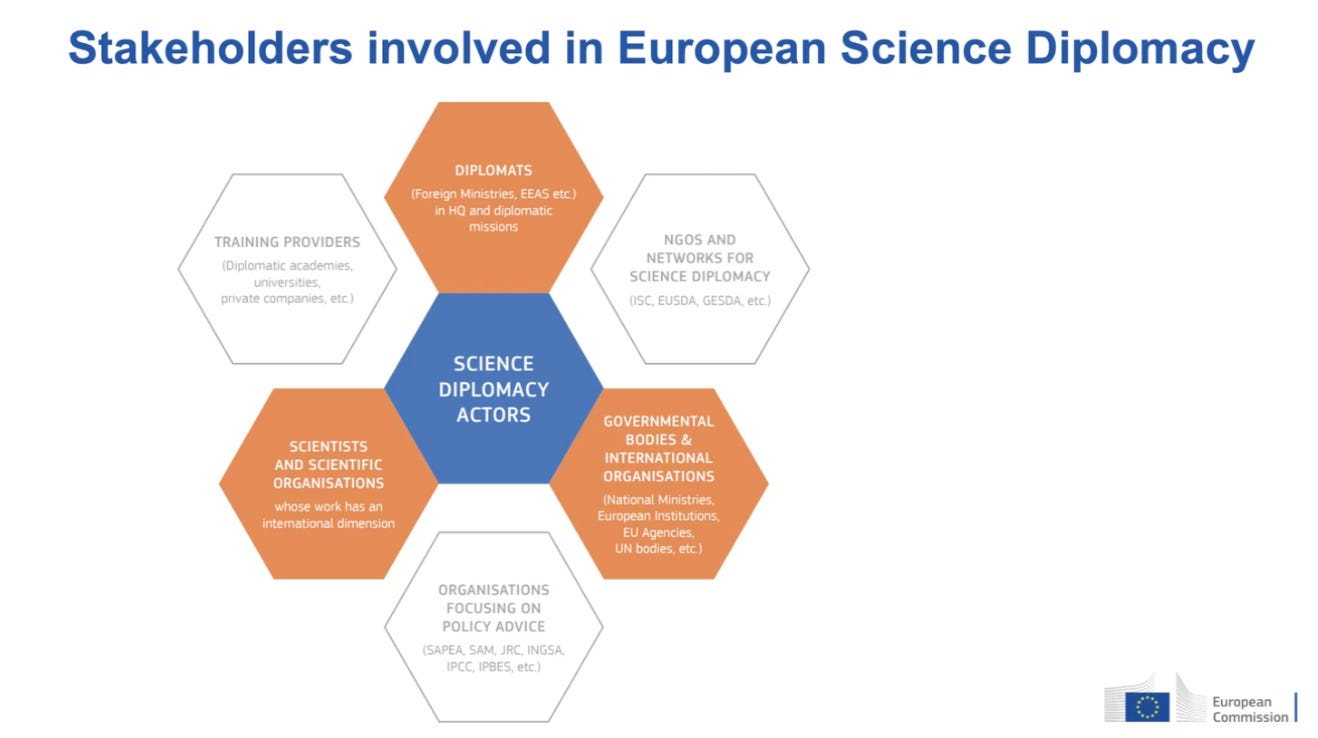
That idea lies at the heart of what conference organizers call the “fourth dimension” of science diplomacy: diplomacy that takes place within scientific cooperation itself rather than through governments alone. The concept reflects a broader shift in the field, where universities, scientific networks and research partnerships are increasingly being viewed not merely as beneficiaries of international cooperation but as institutions that help sustain it.
Aïda Mimouni Chaabane, vice president for international relations at CY Cergy Paris Université, argued that universities are already moving in that direction.
“We are not only supposed to produce science, to educate people,” she said. “We can do more.”
Yet not everyone framed the challenge simply as preserving existing forms of cooperation. For much of the past two decades, science diplomacy was often presented as a way to expand international cooperation. In Brussels, several speakers focused instead on how to sustain cooperation in a more difficult geopolitical environment.
During the conference’s panel on multilateralism, Rasmus Gjedssø Bertelsen, professor of Northern Studies at the Arctic University of Norway, warned against comfortable assumptions about the state of international cooperation.
“If you have implicit incentives in society to follow the flow, sing in the choir, you can easily end up in groupthink, echo chambers, blind spots, and you get surprises,” he said.
“It’s perhaps the role of universities to say that the Emperor is stark naked,” he added. “And I do see a tendency that everybody keeps a polite atmosphere.”
The remark reflected a broader discussion about whether science diplomacy is entering a different phase, one in which maintaining existing channels of cooperation may be as important as creating new ones. Rather than creating entirely new channels of cooperation, some participants suggested its role may increasingly be to preserve existing ones.
“Science diplomacy has always been defined as a builder,” said Luca Polizzi of the United Nations University. “But maybe now science diplomacy is becoming a keeper.”
Others argued that maintaining dialogue itself has become a strategic function.
“Science diplomacy is really not about replacing politics,” said Toto Matshediso of South Africa’s Department of Science, Technology and Innovation. “It’s rather more about preserving the dialogue that has been there over the years, building trust.”