Experts Without Mandates
Who governs science when no one is in charge: Part 2 of a five-part series

Editor’s Note: This weekly series explores how science is governed globally in the absence of a world authority, beginning with the myth and reality of coordination without control.
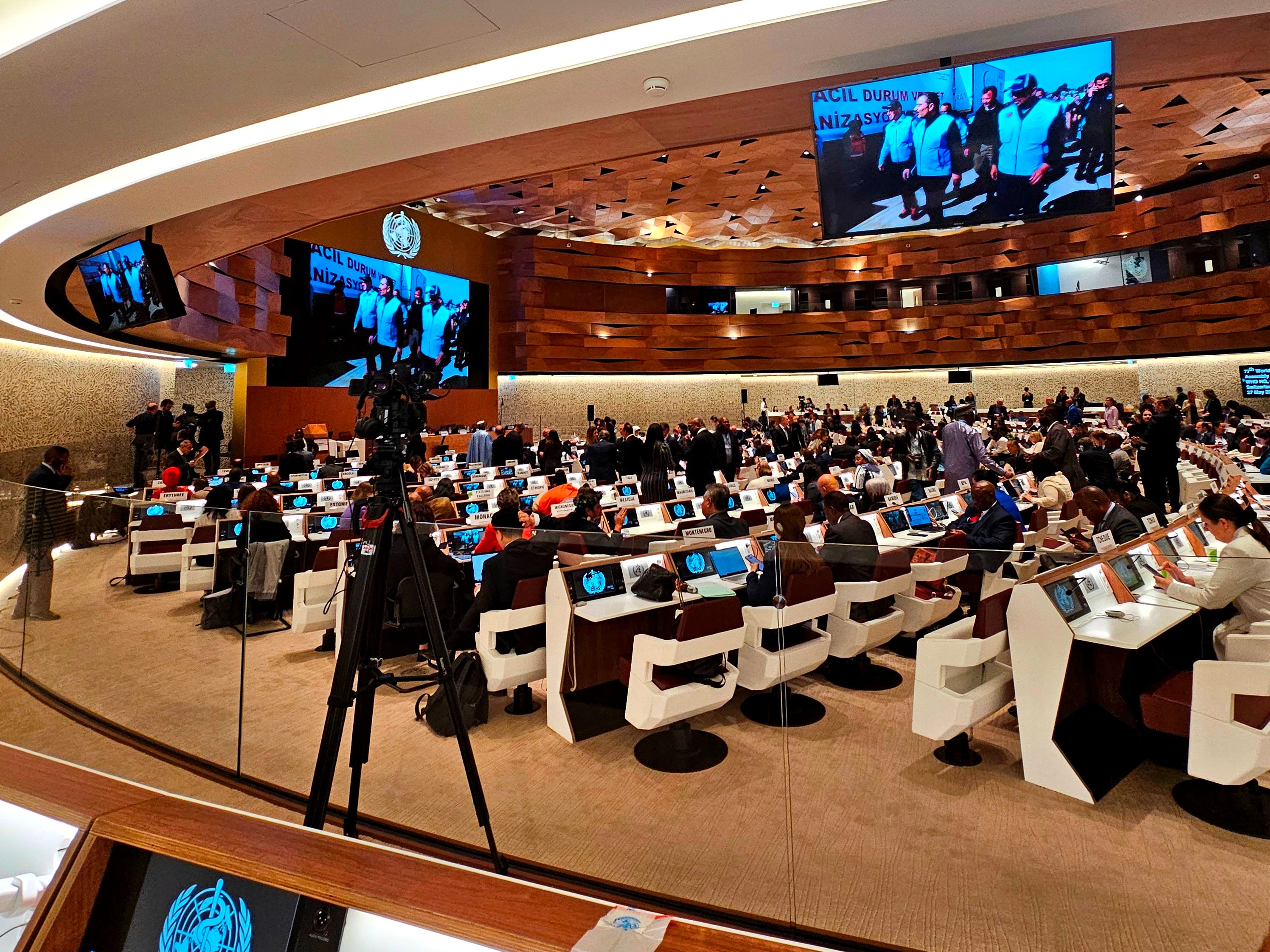
When the World Health Organization convenes an emergency committee, its members are unable to order governments to act. Yet its conclusions can help decide if borders close, vaccines are rolled out, or a public health emergency is declared.
That tension between influence and authority sits at the heart of how scientific expertise functions in global governance. Experts matter because decision-makers choose to rely on them.
Science diplomacy operates through this reliance.
Advice Without Authority
International scientific advisory bodies are deliberately designed to be narrow in their formal power. Their mandates are technical. Their outputs are advisory. Their legitimacy rests on expertise rather than representation.
The World Health Organization provides one of the clearest examples. Its technical advisory groups, ranging from standing expert committees to ad hoc emergency panels, are tasked with assessing evidence, identifying risks, and issuing guidance.
The design is intentional. Scientific advice gains credibility by remaining separate from political negotiation over national policy or compliance.
As Tedros Adhanom Ghebreyesus, WHO’s director-general, has emphasized, the organization’s role is to provide evidence-based guidance, but decisions ultimately rest with countries. “The guidelines and standards we produce,” he said, “ensure that people all around the world receive safe and effective care, based on the best evidence.”
That distinction became highly visible during the COVID-19 pandemic. WHO expert groups assessed transmission risks, evaluated emerging data, and advised on public health measures. Governments responded unevenly, sometimes closely following guidance, sometimes openly rejecting it.
Even if their advice was ignored, the experts never lost their mandate because they never had one to begin with.
How Expert Authority is Constructed
If scientific advisers lack formal power, how do they gain influence? The answer lies in process.
Advisory bodies derive authority from how they work: transparent procedures, clearly defined membership, disclosure of conflicts of interest, and reliance on peer-reviewed evidence. Their credibility accumulates over time through consistency and restraint.
The Intergovernmental Panel on Climate Change illustrates this dynamic. Instead of conducting original research, IPCC assesses existing science through a structured, multi-year process involving hundreds of authors and reviewers from around the world.
Its reports are non-binding. Countries are free to ignore them. IPCC assessments, however, have become the baseline reference for climate policy discussions globally.
The panel’s role is to “evaluate scientific evidence regarding climate change and assess the state of scientific knowledge on this issue,” said the IPCC’s then-chair Hoesung Lee. “We bring together scientists and governments because IPCC reports are tools that governments will work with.”
That authority is procedural rather than political. Governments participate in approving summary texts, but the underlying scientific assessments are produced by independent expert teams following established methodologies.
Why Mandates are Kept Narrow
The absence of formal authority is often portrayed as a weakness. In practice, it is what allows expert bodies to function across political divides.
If advisory groups were empowered to compel action, they would immediately become arenas of geopolitical negotiation. Scientific disagreement would be interpreted as political positioning. Trust would erode quickly.
By limiting their mandates, institutions like WHO and IPCC preserve a degree of insulation. Experts are expected to assess evidence, not negotiate outcomes. This separation manages rather than eliminates political pressure.
During public health emergencies, governments frequently seek clearer direction than experts are institutionally permitted to provide. Calls for stronger recommendations or earlier declarations are common. Advisory bodies respond by emphasizing uncertainty, updating guidance incrementally, and documenting the limits of available evidence.
This restraint is often criticized. It is also central to their credibility.
When Advice Shapes Decisions
Expert influence is most visible at decision points where evidence narrows political options.
Declaring a public health emergency, for example, is formally the responsibility of the WHO director-general. In practice, it is heavily shaped by expert committee deliberations. Climate targets, adaptation plans, and risk assessments routinely cite IPCC findings as justification. Scientific advice frames the outcomes.
This framing power explains why governments invest significant effort in participating in expert processes. Shaping the evidentiary baseline can be as consequential as negotiating policy text.
Science diplomacy operates here as well: facilitating expert exchange, aligning assessment methodologies, and ensuring that evidence remains shared even when politics diverge.
The Limits of Expert Influence
Expert authority has clear limits. Scientific advisers cannot resolve value conflicts, determine acceptable levels of risk or compel action when evidence runs counter to political priorities.
During crises, these limits become visible. Governments may cherry-pick findings, delay action, or dismiss advice altogether. Experts may be accused of overreach or irrelevance.
This vulnerability reflects the boundaries deliberately built into it.
During the pandemic, Tedros observed, science could inform decisions but it could not make them. “Countries are using a range of tools to influence behavior,” he said. “Information campaigns are one tool, but so are laws, regulations, guidelines and even fines.”
The line between informing and deciding is where science diplomacy often operates —and where it must stop.
Who Gets to Be an Expert
Expert advisory systems are not neutral in composition. Participation depends on institutional capacity, access to data, and professional networks. Countries with well-resourced research communities are better positioned to contribute authors, reviewers, and committee members. Others participate intermittently or not at all.
These imbalances shape which questions are prioritized and how evidence is interpreted. Efforts to broaden representation have increased, but structural disparities remain.
Science diplomacy acknowledges this challenge through capacity-building initiatives and support for inclusive processes. Expertise without mandates still reflects power. The authority of experts ultimately depends on trust: trust in methods, institutions, and intentions.
That trust is fragile. It can be undermined by politicization, misinformation, or perceived conflicts of interest. Rebuilding it requires transparency and restraint.
Scientific advisory bodies cannot demand trust. They earn it through repeated demonstration of competence and independence. This is why expert authority is cumulative. It grows slowly and can erode quickly.
Looking Ahead
Experts without mandates sit at the core of science diplomacy. They shape how problems are defined, which risks are recognized, and which options are considered viable without directing outcomes.
Their influence depends on institutional design, procedural credibility, and political willingness to listen.
In Part 3 of this series, the focus turns to what sustains that influence across borders: consensus itself, and why agreement has become the primary currency of global science governance.
Next: Part 3 — Consensus as Currency

