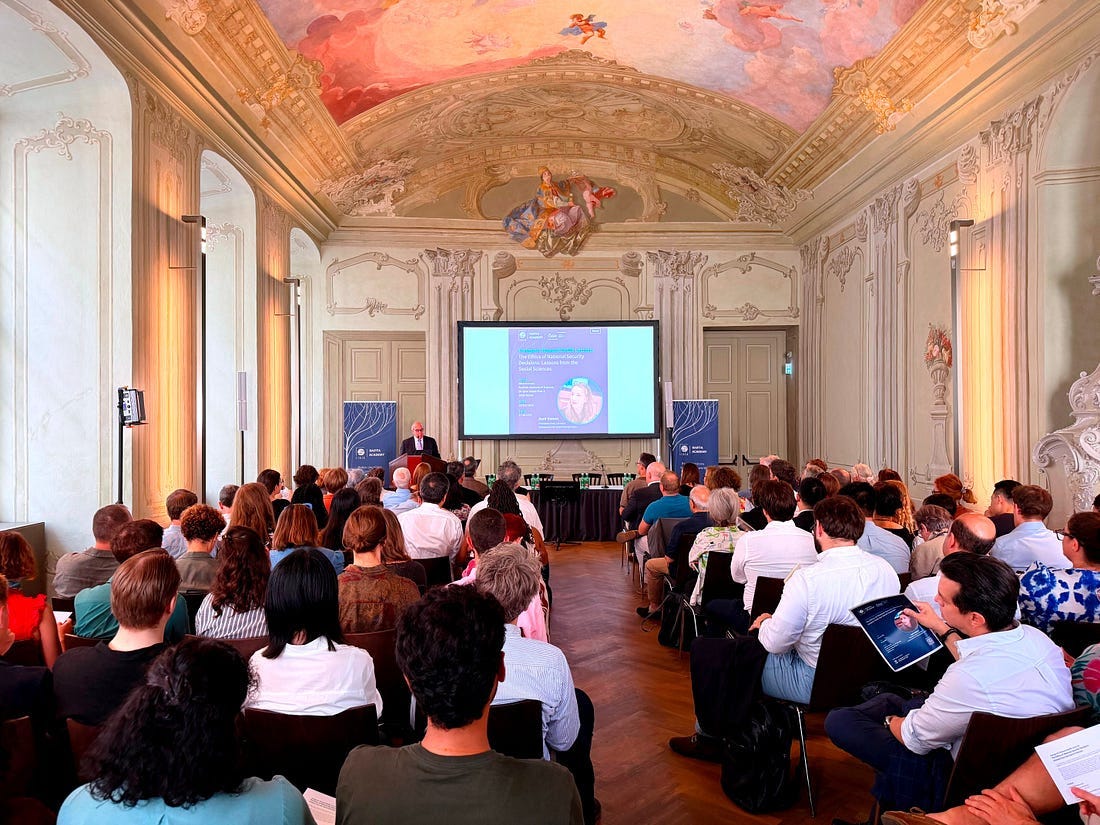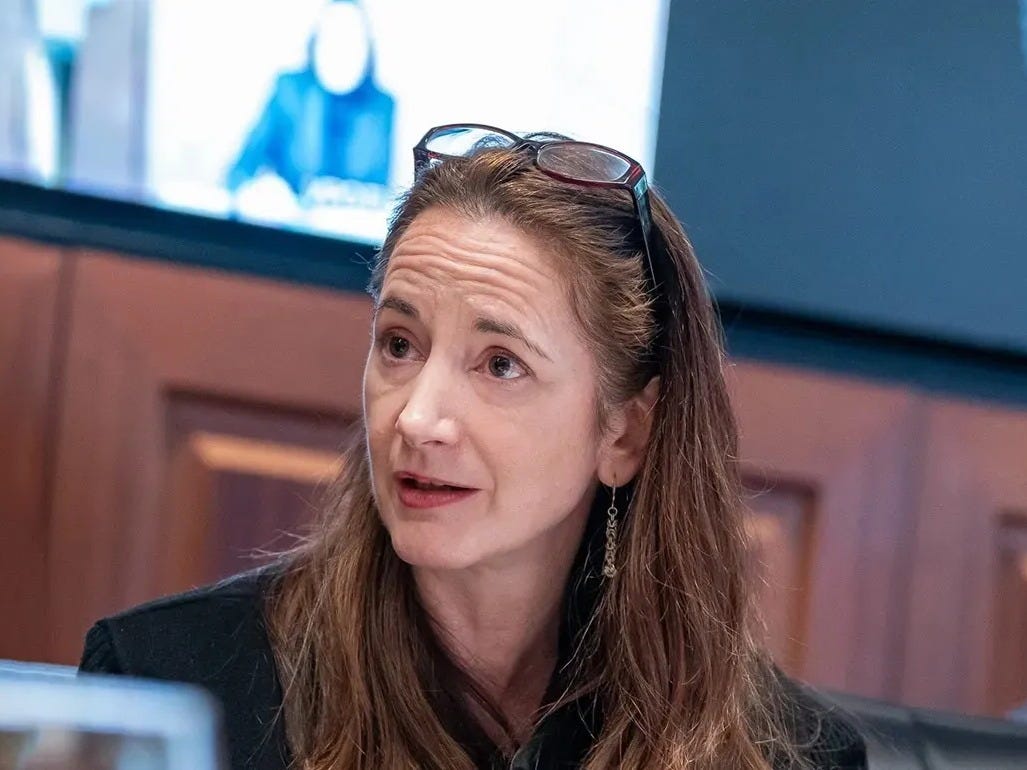
VIENNA — Ethical failures in government are often treated as failures of character, training or compliance. Avril Haines, a former U.S. director of national intelligence, argued that they are more often failures of institutional design.
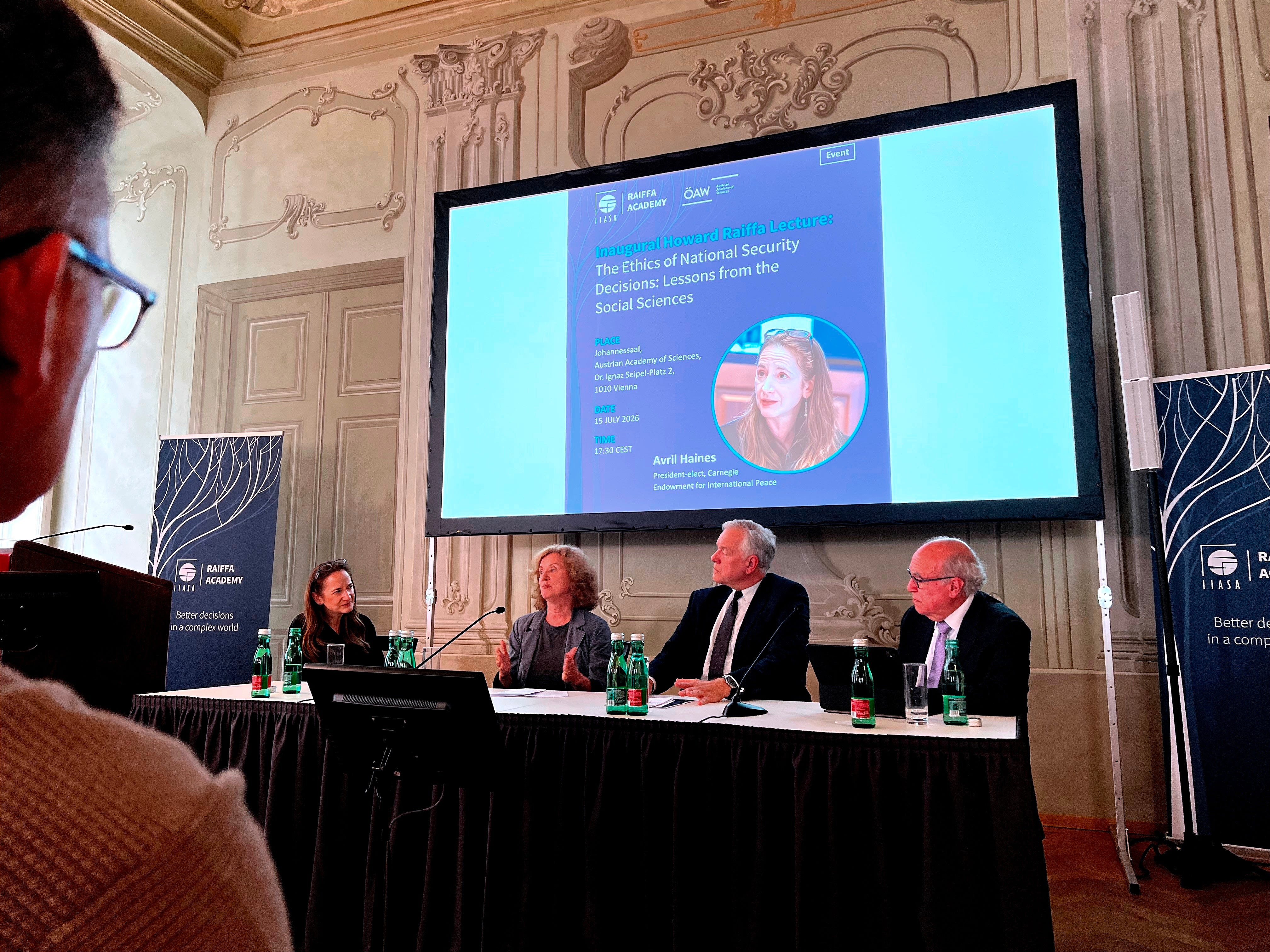
Delivering the inaugural Howard Raiffa Lecture in Vienna on Wednesday, Haines, the president-elect of the Carnegie Endowment for International Peace, called for national security institutions to draw more heavily on decision science, behavioral psychology and organizational research to strengthen ethical decision-making under pressure.
The lecture helped launch the Howard Raiffa Academy, a new initiative of the International Institute for Applied Systems Analysis (IIASA) and the Friends of IIASA dedicated to applying decision-analysis methods to public policy and governance.
“The social sciences have been telling us for decades that these assumptions are wrong,” Haines said, referring to the widespread belief that officials who receive sufficient ethics training and clear instructions will reliably make the right decisions.
Instead, she argued, ethical behavior is shaped not only by reasoning but also by institutional culture, social dynamics, hierarchy, incentives and situational pressures.
Haines, who served as director of national intelligence under former U.S. president Joe Biden and previously held senior positions at the CIA, National Security Council and State Department, framed her remarks around how to close the gap between ethical principles and actual behavior inside government institutions.
Drawing on the work of decision theorist Howard Raiffa, IIASA’s founding director, she distinguished between normative approaches that describe how people should make decisions, descriptive approaches that explain how people actually behave, and prescriptive approaches that seek to help real people make better choices under real-world conditions.
“Most institutional ethical frameworks rest on the implicit assumption that officials, when confronted with an ethical choice, will reason their way to the correct answer if they have been adequately trained, clearly instructed, and appropriately incentivized,” she said. Yet decades of research suggest that intuition, social context and situational pressures often play an equally important role.
The problem of institutional pressure
Throughout the lecture, hosted by IIASA and the Austrian Academy of Sciences, Haines described scenarios familiar to many large organizations. Analysts can soften judgments to avoid conflict, junior officials remain silent in meetings, employees defer to group consensus despite reservations, and staff hesitate to raise concerns because of hierarchical or cultural pressures.
In many such cases, she argued, officials already know the ethical course of action. The challenge is not a lack of knowledge but the cost of acting on it.
To explain the phenomenon, Haines drew on research by psychologist Jonathan Haidt, Stanley Milgram’s obedience experiments, Albert Bandura’s work on moral disengagement, and Thomas Schelling’s studies of how individual behavior can produce unintended collective outcomes.
The implication, she said, is that institutions should devote greater attention to the environments in which decisions are made rather than relying primarily on codes of conduct and ethics training.
Among the possible reforms she suggested were structured dissent mechanisms, “premortem” exercises that require teams to imagine why a decision might fail, leadership practices designed to encourage challenge and disagreement, psychologically informed ethics training, and decision-making processes that reduce the personal costs of speaking up.
Research on psychological safety, she noted, has shown that people are significantly more likely to report concerns and acknowledge errors when they believe doing so will not result in punishment or exclusion.
Decision science and public institutions
The lecture aligned with the Raiffa Academy’s inaugural short course this week. Haines suggested that some of the tools taught in decision analysis may themselves support stronger ethical decision-making.
Making uncertainty explicit, systematically considering alternative explanations, and incorporating a wider range of perspectives can make it easier for officials to challenge assumptions and raise concerns without relying solely on personal courage, she said.
“When Raiffa developed tools for structured negotiation and decision analysis,” she said, “he was building machinery that lowers the social cost of truth telling.”
The lecture also reflected an evolution in Haines’s thinking since a major address on ethics in national security she delivered at the Carnegie Council for Ethics in International Affairs last year.
In that speech, she focused largely on the ethical principles that guide public service, including integrity, impartiality and accountability. In Vienna, she shifted attention toward the institutional conditions that determine whether officials are able to act on those principles in practice, drawing on behavioral science and decision analysis to examine why ethical norms sometimes fail under pressure.
The role of artificial intelligence
Haines also explored the implications of artificial intelligence for public decision-making.
Used appropriately, she suggested, AI systems could serve as “tireless devil’s advocates,” generating alternative hypotheses, stress-testing consensus views and helping institutions surface perspectives that might otherwise be overlooked.
But she warned that AI could also create new risks if officials begin treating machine-generated recommendations as substitutes for human judgment.
The danger, she said, is that responsibility becomes diffused into systems that appear authoritative but cannot themselves be held accountable.
“The design principle I would suggest is that AI should be used to enhance our judgment, not replace it,” she said.
Ethics as diplomatic infrastructure
Although much of the lecture focused on national security institutions, Haines concluded by connecting ethical decision-making to international cooperation.
Countries are more willing to share information, coordinate policies and accept risks on one another’s behalf when they trust that decisions are being made honestly and with integrity, she argued.
“In that sense,” Haines said, “the infrastructure I described tonight is also diplomatic infrastructure.”
For Haines, who assumes her role as the eleventh president of the Carnegie Endowment for International Peace in late September, the same logic applies today. Better institutions, she suggested, are not only more ethical but also may be better equipped to navigate a divided and uncertain world.