

When science diplomacy leaders from Africa and Europe gathered in Brussels this spring, one comment captured a broader shift underway in international governance.
“As policy makers say often, if you are not at the table, this is the menu — you may well be on the menu,” said Yaya Sangaré, secretary-general of Ivory Coast’s Fund for Science, Technology and Innovation.
The remark echoed a familiar argument about participation. Countries, researchers, and institutions need to be present if they hope to influence decisions that affect them.
Another speaker pushed the idea further. “Africa is not waiting to be invited into the global scientific governance,” said South African science policy official Eudy Mabuza. “Africa is changing it.”
Participation is often treated as the goal. International organizations encourage broader representation. Governments seek seats on committees. Scientific communities push for inclusion in policy discussions. Civil society organizations campaign for a place in negotiations.
Yet participation is rarely an end in itself. The larger question is what participants do once they arrive. As participation accumulates over time, institutions assign participants different roles and statuses. But those advantages ultimately matter because they affect something else: the ability to shape priorities.
Agenda-setting is one of the least visible forms of influence in international governance. Most attention focuses on votes, treaties, resolutions, and public announcements. Long before decisions are taken, however, participants compete to define which problems deserve attention, which issues require action, and which solutions appear legitimate.
The ability to shape those conversations is unevenly distributed. At the Africa–Europe Science Collaboration Forum, discussions repeatedly returned to questions of ownership, priority-setting, and control. Participants debated who defines research agendas, who benefits from scientific cooperation, and who determines which problems receive funding and political attention.
Aline Mugisho, an agribusiness expert working with CGIAR innovation networks, warned that international cooperation can continue to reflect donor priorities even when partnerships appear collaborative. “Knowledge sovereignty is a non-negotiable,” she said. “We need to own the knowledge we produce.”
The concern was not whether African institutions were participating. They were. The concern was whether they were helping define the agenda, a distinction that appears across many international systems.
Agendas are often shaped long before formal negotiations begin. Research priorities influence what evidence is available to policymakers. Funding decisions determine which projects move forward and which remain ideas. Expert panels define the questions that governments later debate. Scientific assessments help establish which risks appear urgent and which receive less attention.
Many of the most consequential decisions occur before governments cast votes or adopt resolutions. The influence of agenda-setting is often most visible when participants successfully change how an issue is understood — or where it is discussed.
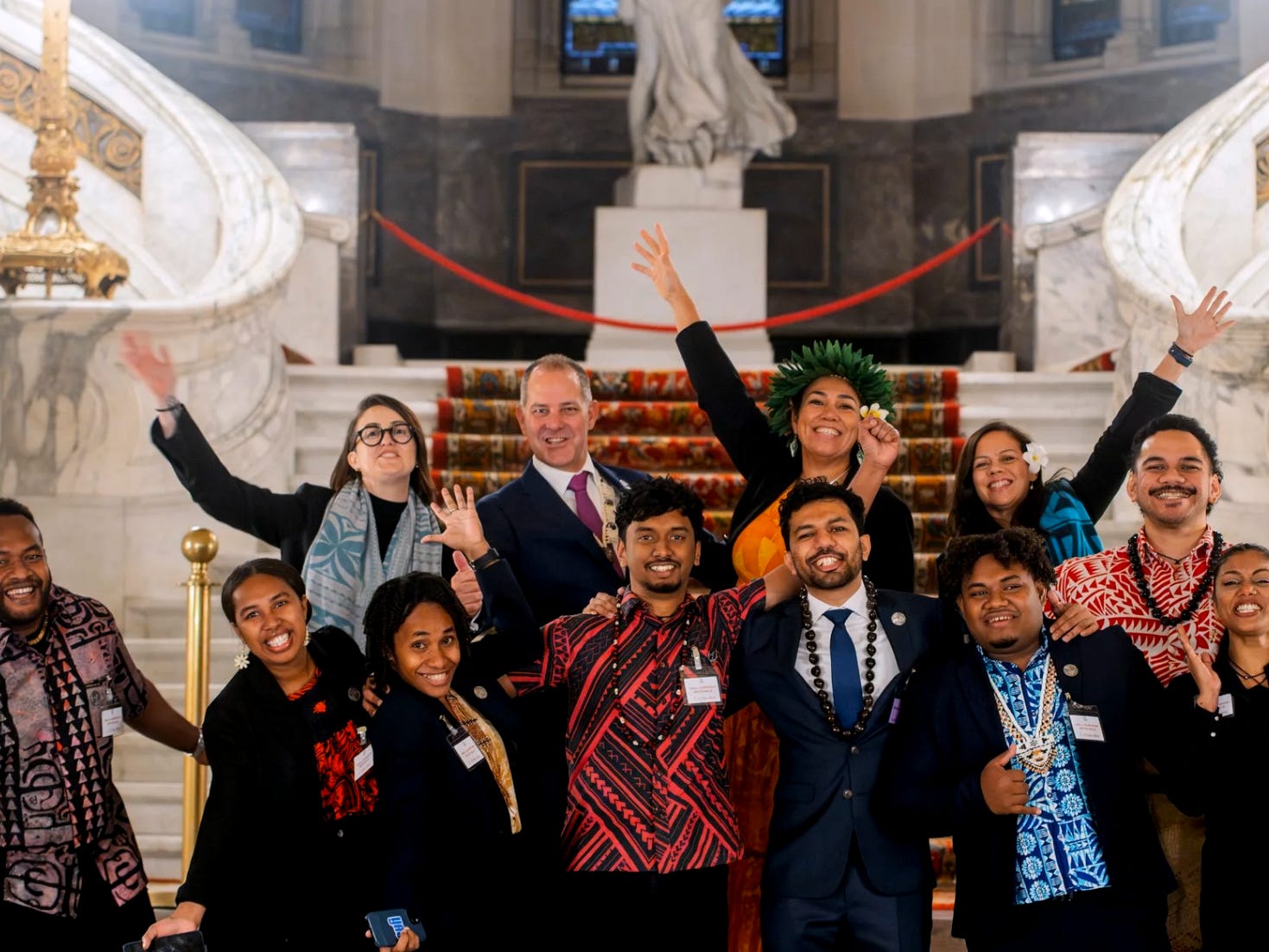
Pacific island nations led by Vanuatu spent years pressing international institutions to treat climate change not only as an environmental challenge but as a matter of international law and human rights. The effort began outside the traditional climate negotiation process and gradually moved through the United Nations system, first reaching the General Assembly and then the International Court of Justice.
In July 2025, the court concluded that countries have legal obligations under international law to protect the climate system. A subsequent General Assembly resolution in May of this year welcomed the court’s findings and called on governments to comply with those obligations under international law. The vote was overwhelming: 141 in favor to 8 against, with 28 abstentions. Those opposed were Belarus, Iran, Israel, Liberia, Russia, Saudi Arabia, the United States and Yemen.
The achievement was not simply a diplomatic victory for a small island nation. It helped redefine the terms of the debate. The ICJ opinion marked the first time the court comprehensively addressed climate change through the framework of international law and human rights. The judges declared that a "clean, healthy and sustainable environment" is a human right and said greenhouse gas emissions pose "an existential problem of planetary proportions."
Questions that had previously been discussed primarily through the language of emissions targets, climate finance, and political commitments were increasingly framed through legal responsibility, human rights, and potential reparations.
Vanuatu did not merely join an existing conversation; it helped change the conversation itself. Recognizing the importance of agenda-setting, some organizations have begun investing in the capacity to operate at the boundary between science and policy.
Quebec recently launched a network of science diplomacy research chairs designed not only to support research but to train advisers, negotiators, and intermediaries capable of working across scientific and diplomatic communities.
Projects that the program funds must have international partners and external funding, embedding cross-border collaboration into their structure. The initiative reflects a broader recognition that participation alone does not guarantee influence, and a shift in how science diplomacy is understood. It is a capacity that can be built and sustained, not merely an informal collaboration across borders.
“You have to repeat and repeat and repeat,” Québec’s chief scientist Rémi Quirion said in an interview, because policymakers “have so many things on their minds.”
The ability to shape priorities depends on expertise, relationships, institutional knowledge, and the capacity to connect different communities. Similar questions are emerging in artificial intelligence governance.
Governments remain the formal actors in international negotiations, but increasingly they depend on technical expertise concentrated inside a small number of companies. The debate is no longer simply about who participates in governance discussions. It is increasingly about who defines the risks, priorities, and governance challenges that policymakers are attempting to address.
The result is a more complicated governance landscape. Companies are not simply subjects of regulation. They are becoming participants in governance processes themselves.
That does not mean governments are losing authority. It does mean that agenda-setting is becoming more distributed. Decisions about safety, risk, standards, and oversight increasingly emerge from interactions among governments, companies, researchers, standards bodies, and international organizations.
The United Nations has responded by creating new mechanisms intended to broaden participation in those conversations. Secretary-General António Guterres has argued that the future of AI “cannot be decided by a handful of countries” or left to a small number of powerful actors.
In late May, Pope Leo XIV warned in Magnifica Humanitas, the first encyclical of his papacy, that AI risks concentrating economic and political power, normalizing warfare and undermining human dignity if governments fail to establish stronger international oversight.
Joining the pope at the Vatican press conference, Anthropic co-founder Christopher Olah argued for broader scrutiny of AI development.
“We need more of the world — religious communities, civil society, scholars, governments — to do what His Holiness has done here: to take this seriously, to look closely, and to push events in a better direction,” Olah said.
“We need informed critics who will tell the labs when we are failing,” he added. “We need moral voices that the incentives cannot bend.”
The concern is not only who participates but also who helps define the questions being asked. Over time, some participants move beyond participation itself. They frame debates, define priorities, convene coalitions, and influence how problems are understood before formal negotiations begin.
By the time governments debate solutions, participants have often spent years competing to define the problem itself.
As Pacific climate advocate Vishal Prasad observed after the General Assembly endorsed the International Court of Justice’s climate opinion, “The journey of this idea from classrooms in the Pacific to The Hague and the United Nations gives us continued hope that when people organize, the world can be moved to act.”