


Part 1 of a two-part analysis on science, governance, and the erosion of public research systems
Governments are demanding more from science than at any point in recent decades.
Research systems are expected to provide early warning on emerging technologies, usable evidence for AI regulation, stronger pandemic preparedness, security analysis, and productivity gains that can sustain long-term growth.
Scientific capacity is no longer treated as an academic resource; it is increasingly framed as strategic infrastructure. Yet the public research model that produces that capacity is being destabilized at the same time.
Across the United States and Europe, funding freezes, contract cancellations, and political interventions are interrupting precisely the kinds of work that cannot easily be restarted: clinical trials, long time-series monitoring, shared international facilities, and cross-border research networks.
The gap between what governments say they need from science and what their policies are allowing science to deliver is widening.
In the United States, the termination of more than 80% of U.S. Agency for International Development contracts has disrupted or halted research programs across global health, agriculture, and development.
“USAID cannot be restored to what it was,” Dr. Atul Gawande, an assistant administrator for global health at USAID during the Biden administration, told the U.S. Senate Foreign Relations Committee last year. “But we must salvage what we can of our health, science, and development infrastructure and stop the destruction.”
Clinical trials for HIV and malaria vaccines have been interrupted. Implementation research on long-acting HIV prevention tools, including injectable therapies shown to be highly effective, has been canceled midstream. Once paused, such trials are rarely resumed, wasting years of preparation and putting participants at risk.
The impact extends far beyond U.S. borders. Research teams in Africa, Asia, and Latin America that relied on U.S. funding for disease surveillance, health systems analysis, and treatment delivery models were forced to shut down programs with little warning.
In Uganda, for example, an initiative backed by USAID that had been designed to test scalable approaches to delivering HIV services in underserved communities was canceled less than a year after launch, eliminating both immediate services and the evidence base needed to inform broader policy adoption.
The cuts are not confined to development or health research. In Washington’s proposed 2026 budget, funding for international scientific collaboration was sharply reduced, including support for the European Organization for Nuclear Research, the particle physics laboratory long regarded as a flagship of science diplomacy.
U.S. contributions to CERN’s Large Hadron Collider would fall substantially, calling into question the reliability of the United States as a long-term partner in large-scale scientific infrastructure. Similar reductions were proposed for gravitational-wave observatories, astronomy facilities, ocean research fleets, and accelerator research, with cascading effects on international partnerships built over decades.
Europe is experiencing its own contraction. In Switzerland, a country that has positioned itself as a hub for science diplomacy and anticipatory governance, proposed federal budget reductions would cut hundreds of millions of francs from education, research, and innovation over the next several years.
Universities and funding agencies warn that reduced flexibility will limit contract extensions, international mobility, and long-term research planning, precisely the conditions needed for sustained scientific excellence.
Taken together, these developments expose a structural mismatch between political expectations and institutional support. Science is asked to anticipate crises, support governance, and sustain growth but the institutions that enable those functions are being eroded.
Key takeaways
Governments ask science to anticipate risk, inform regulation, and support growth while destabilizing public research systems that make those functions possible.
Funding disruptions in the United States and Europe break research continuity in global health, long-term monitoring, and international scientific infrastructure.
As public research capacity erodes, shared evidence fragments, policy time horizons shorten, and governments default to crisis management.
The loss of stable, publicly accessible data shifts power toward the private sector and weakens multilateral decision-making.
Rebuilding public research systems is now a governance requirement, not simply a science funding choice.
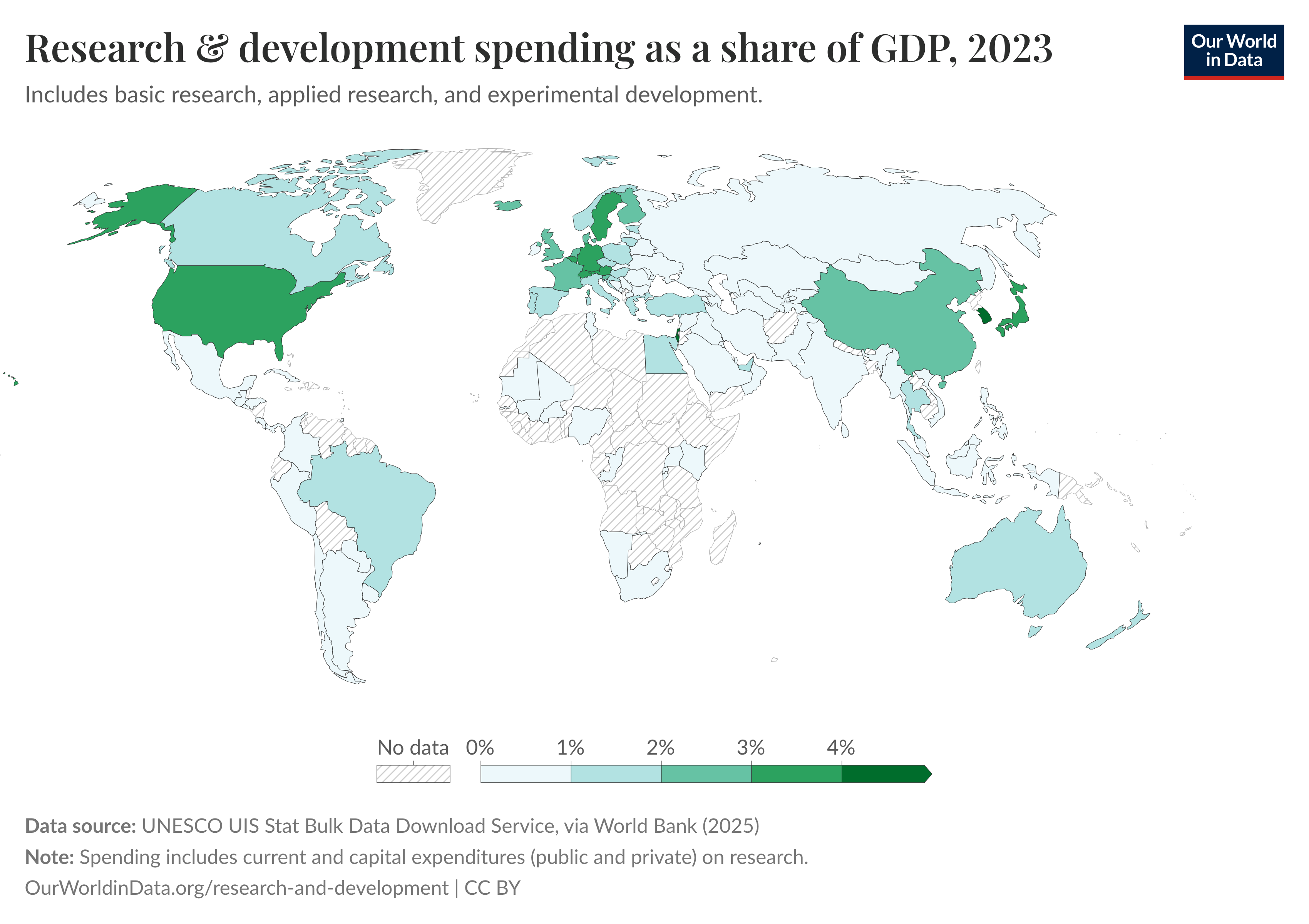
The erosion of public research support reflects political choices about time horizons, fiscal priorities, and national identity that are reshaping how science is funded and governed.
In the United States, changes since 2025 illustrate how political calculus can sharply reorient research systems. Multiple federal science agencies have faced dramatic cuts or disruptions, with funding for universities and federal laboratories reduced across several disciplines.
Some proposals would halve budgets for major science agencies such as the National Science Foundation and NASA’s science directorate, undermining long-standing commitments to sustained, basic research infrastructure. These shifts have triggered widespread concern within the scientific community: a Nature poll found a large majority of U.S. scientists are considering leaving the country in response to funding instability and a deteriorating research climate.
The Trump administration’s broader fiscal strategy has not only proposed steep reductions but has also restructured foreign and collaborative research programs. For example, the National Institutes of Health halted most new grants to foreign partners, a move that directly affects global clinical trials and international research networks in Belgium, Canada, France, Germany, Kenya, South Africa and the United Kingdom.
These decisions are rooted in competing priorities of deficit reduction and nationalist politics, and a view of science funding as discretionary rather than strategic. In the U.S. Congress, budget battles have seen sweeping measures such as the Rescissions Act of 2025, which rescinded billions in funding for international assistance programs that historically supported research collaborations, including in global health.
Europe’s response illustrates a contrasting political logic, but one with its own structural limitations. The European Union rolled out initiatives designed to position the bloc as a magnet for scientific talent and investment. A €500 million “Choose Europe for Science” package, announced by European Commission leadership, is intended to attract researchers dislocated by U.S. and other funding cuts, offer “super grants,” and signal Europe’s commitment to open, collaborative research.
As European Commission President Ursula von der Leyen put it at the launch of the initiative in Paris: “The investment in fundamental, free and open research is questioned. What a gigantic miscalculation.”
Yet E.U. research investment remains modest relative to ambitions. Eurostat data show that research and development expenditure in the E.U. in 2024 stood at about 2.24% of GDP, well below long-standing European targets and significantly behind the ratios seen in the United States, China, and East Asian peer economies.
The result is a strategy that signals openness and attraction but still relies on incremental funding growth, not a systemic expansion of public research capacity. European Commission member nations’ own R&D spending decisions vary widely, and while there are calls for increased national investment to support competitiveness, experimentation with new funding mechanisms remains limited.
The political logic reflected in these choices is instructive. In the U.S., retrenchment is driven by short-term fiscal framing and domestic political realignment; in the European Union, strategic ambitions coexist with structural constraints on public spending and a patchwork of national priorities.
In both cases, the result is a research funding environment that is less stable, less predictable, and more subject to political negotiation than in previous decades.
The turnover in political priorities changes how science is funded and conceived. Research is increasingly seen through the lens of industrial strategy or geopolitical competition, but less often as a public good enabling global evidence systems, long-term monitoring, and neutral baselines for policy decisions.
When funding stops, research systems fracture
The immediate effects of research cuts are often measured in canceled grants and shuttered programs. The deeper consequences emerge more slowly, as networks fracture, talent disperses, and shared evidence systems erode.
In global health, the effects have been swift and destabilizing. The termination of thousands of contracts at USAID and the suspension of international sub-awards by NIH have disrupted clinical trials, implementation research, and disease surveillance across Africa, Asia, and Latin America.
Research on HIV prevention, malaria vaccines, tuberculosis treatment, and maternal health that is often conducted via multinational consortia is paused or abandoned midstream. Once interrupted, such trials rarely resume; data integrity is compromised, participant trust is damaged, and years of investment is effectively lost.
These disruptions do not remain local. Global disease-control strategies depend on continuous data flows and coordinated research protocols. When funding collapses in one major donor country, the effects ripple through multilateral platforms coordinated by institutions such as the World Health Organization, weakening early-warning systems and delaying the translation of new tools into practice. The result is not only slower innovation, but diminished global preparedness.
Large-scale scientific infrastructure has proven equally vulnerable. Proposed U.S. budget reductions affecting participation in CERN raised alarms about the durability of decades-long international partnerships. These facilities depend on predictable, multi-year commitments; sudden withdrawals undermine planning cycles, disrupt workforce pipelines, and erode confidence among partners.
Similar effects are felt across astronomy, climate monitoring, and ocean science, where shared platforms underpin global datasets used far beyond the scientific community.
Talent mobility is another casualty. Funding instability already prompted a measurable rise in scientists seeking positions abroad, particularly early-career researchers whose contracts are most exposed. While the E.U. has moved to attract displaced researchers through targeted grants and mobility programs, these efforts are uneven and cannot fully absorb the shock.
Countries in the Global South, meanwhile, face a sharper dilemma: as international projects collapse, local institutions lose both resources and opportunities to retain trained researchers, accelerating brain drain rather than capacity building.
Less visible, but equally consequential, are the effects on scientific baselines. Long-term environmental monitoring, epidemiological surveillance, and social science data collection rely on continuity. When funding gaps interrupt time series, the loss cannot be retroactively repaired. This undermines the very evidence base governments increasingly say they need to anticipate risks, design policy, and manage crises.
Taken together, these developments expose a structural contradiction at the heart of contemporary policymaking. Governments are asking science to anticipate risk, inform governance, and sustain long-term growth, while simultaneously dismantling the institutional systems that make those functions possible.
This is not simply a matter of budgets or efficiency. When funding stops, research systems do not pause cleanly; they fracture. Networks dissolve, data streams break, trust erodes, and capacities that took decades to build disappear in months. What follows is not just slower science, but thinner governance.
The consequences extend well beyond laboratories and grant cycles. As public research capacity weakens, the foundations of evidence-based decision-making shift, reshaping who produces knowledge, whose expertise is trusted, and which risks are visible early enough to act. That is where the erosion of the public research model becomes a governance problem, not merely a science policy one.
What happens next is slower science and thinner governance, because as public research erodes, so does the shared knowledge base on which authority, coordination, and legitimacy depend.
Author’s note:
This analysis is published in two parts. Part I examines how public research systems are being weakened at the same moment governments are asking science to do more. Part II examines what that erosion means for governance itself—who sets agendas, whose knowledge carries authority, and what rebuilding the public research model would require. The piece was split to keep each argument focused and readable.