

For decades, the vast blue wilderness covering half of our planet has been a lawless frontier. Nations protected their shorelines, but not the high seas where anyone could fish, sail, or explore with almost no rules protecting life beneath the waves.
That era of unregulated exploitation is officially ending. The U.N. High Seas Treaty enters into force on Jan. 17, marking the most ambitious effort in human history to govern the global commons. Formally known as the BBNJ Agreement, the treaty builds on the U.N. Convention on the Law of the Sea.
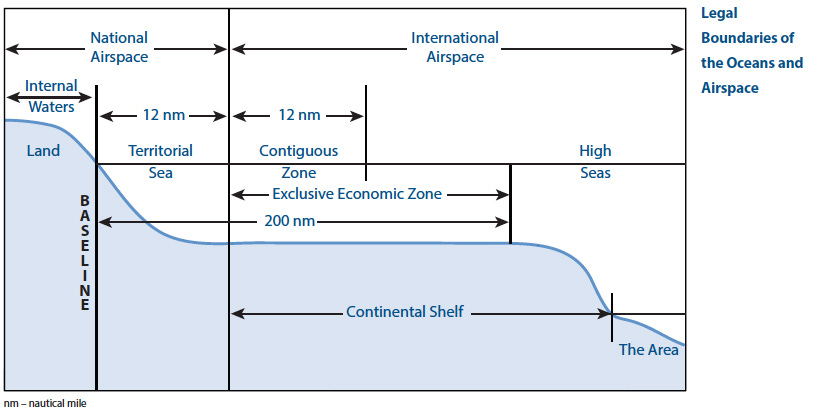
It transforms two-thirds of the ocean from an empty space on the map into a shared responsibility, creating new rules for waters more than 200 nautical miles from shore.
“We’ve seen a real momentum in terms of commitment in terms of dealing with the problems that the oceans are facing,” said the U.N.’s legal counsel Elinor Hammarskjöld. “And that is a real contribution to the legal protection of the oceans.”
The stakes could not be higher. As the U.S. steps back from global science bodies, the treaty creates a new “constitution for the ocean.” For diplomats, it is a major win for international teamwork. For scientists, though, it is more complex.
The treaty is starting off just as the technology for exploring the deep sea is improving, yet many basic questions persist about how these underwater systems work. That reflects a common challenge in science diplomacy: leaders are asked to set rules for an environment that scientists are still only beginning to understand.
For developing nations hit hardest by climate change, the treaty brings a strong sense of hope. Palau’s President Surangel Whipps Jr., whose nation was the first to sign on to the treaty, called it a victory for the entire planet.
Sierra Leone and Morocco were the final two nations to push ratification to the 60-country goal. African nations’ leaders have described themselves as champions of the idea that the ocean belongs to all of humanity, and its benefits should be shared fairly.
From expeditions to constant observation
For over a century, knowledge of the deep ocean depended on short research trips. Scientists sailed to specific locations, collected samples, and returned home. Today, a system of persistent monitoring operates around the clock.
Robotic underwater drones, fixed sensors on the seafloor, and floating platforms now send data directly to satellites. Artificial intelligence systems then process this information as it arrives.
Instead of capturing marine life to study it, researchers use environmental DNA to identify which species are present by detecting the tiny traces of genetic material left behind in a cup of seawater.
The new technologies turn oceanography from disconnected explorations into a continuous data stream. This “always-on” approach is vital because ecosystems covered by the treaty change rapidly due to rising temperatures, acidity, and pollution.
The priority is to establish a scientific baseline that provides a clear record of the ocean’s current state before these environments change beyond recognition.
Visibility without completeness
Greater visibility does not always lead to more complete understanding.
As of early 2026, only about 27% of the global ocean floor is mapped using modern, high-resolution sonar. The remaining three-quarters is known primarily through low-resolution satellite measurements.
While satellites detect large features like massive underwater mountains, they do not capture fine details of terrain. The Seabed 2030 initiative aims to achieve full, high-resolution coverage by the end of this decade, but today’s baseline is a partial picture.
The limitation is because satellites cannot see through the water to the ocean floor. The exact topography of most of the seabed remains a mystery; the area of the seafloor actually seen through high-quality photography is small.
“With pictures, we have seen probably the size of Belgium,” Sabine Gollner, a senior scientist at the Royal Netherlands Institute for Sea Research, told the 2025 GESDA Summit in Geneva.
Identifying blind spots
The gap in biological knowledge is even larger than the map of the seafloor.
Total marine biodiversity is estimated at 700,000 to 2 million species. Among those, scientists have officially named and described roughly a quarter million marine species. That leaves about two-thirds of the planet’s ocean life still to be documented.
Recent efforts show both significant progress and clear limits. Programs like the Ocean Census accelerated discovery, finding hundreds of new species, such as the “bumpy snailfish” and the “death-ball sponge,” in a single year.
Despite these advances, the formal scientific process remains slow. On average, it takes more than 13 years for a species to be officially described after its first discovery. Many organisms detected by sensors or genetic tools exist in a state of limbo, seen by technology but legally and scientifically undefined.
That creates a paradox for global diplomacy: The international community is attempting to govern a global space that is increasingly visible through technology but is still largely unmapped and only partially catalogued.
Switzerland’s role in ocean governance
Although landlocked, Switzerland has become a significant player in the future of the high seas. Swiss research institutions like ETH Domain have developed specialized underwater technology, including compact autonomous drones and sensors.
These systems are designed to operate in harsh, deep-water environments with little to no human help. Alongside this hardware, Swiss experts created advanced data tools that track biodiversity and monitor whether nations are following international rules.
At the same time, Geneva hosts numerous U.N. agencies, along with science diplomacy proponents like CERN and GESDA, that make it a hub where scientific discovery more broadly meets international law. Ocean governance is spread among organizations mainly in the United States, Europe, the Caribbean, and Africa.
As the High Seas Treaty moves from a signed document to a set of active rules, the work of science diplomats focuses on practical implementation steps to ensure that the new scientific tools are used for the benefit of the entire planet.
The treaty’s aim is to make sure the data collected from the deep ocean supports collective protection, rather than serving only narrow commercial interests or the strategic goals of a few powerful nations.
The governance bottleneck
The treaty also is intended to create essential frameworks for protecting ocean life, such as marine parks, and to spread the benefits of deep-sea discoveries.
However, as technology makes the ocean more visible, the main challenge is no longer just collecting data. The real obstacle is data governance: the rules about who owns, manages, and uses that information. Modern robotic platforms produce massive streams of information, much of it collected by a mix of public universities, private companies, and international research groups.
The complexity raises difficult questions: Who has the right to access that data? How is it processed? Who can turn that information into a profitable product like a new medicine? These questions are now central to ensuring the ocean is managed fairly.
Without strong rules for data sharing, a “first-mover advantage” emerges. Nations and corporations that have the most money and best technology are best positioned to exploit new discoveries. Smaller nations, meanwhile, struggle to participate in research or get their fair share of the benefits. That’s why the treaty introduces a “labeling” system and central digital hub to track discoveries and ensure transparency.
In practice, the treaty’s success in moving away from a “first come, first served” model may depend less on its legal text and more on whether scientific transparency can lead to real accountability.
Governing an ocean that is coming into view
Depending on how quickly legal, institutional, and technical systems can work together, the immediate risk is a failure to turn data into shared rules, trusted checks, and fair results.
As the treaty starts, the international community has a small window of time to ensure new scientific tools strengthen global teamwork rather cause new divisions. Any future use of the ocean must include a way to control and monitor those activities said Gollner, noting that the technology does not even exist to fully monitor something as simple as whether underwater sea cables are being cut.
“What’s really important is that if humanity in the future wants to use the ocean, it has also to come with control,” she said. “And at the moment, we cannot control if the cables are cut or not. Simply technologically, this is not possible. And this is true not only for cables, but for whatever we do in the deep ocean.”
The ocean is becoming easier to see through new technology. The more difficult task now is governing responsibly what science has only just begun to reveal.
The Science Diplomat examines how science, technology, and international affairs intersect, and how scientific knowledge increasingly shapes diplomacy, security, and global governance.