Why parliaments are emerging as the next frontier of AI governance
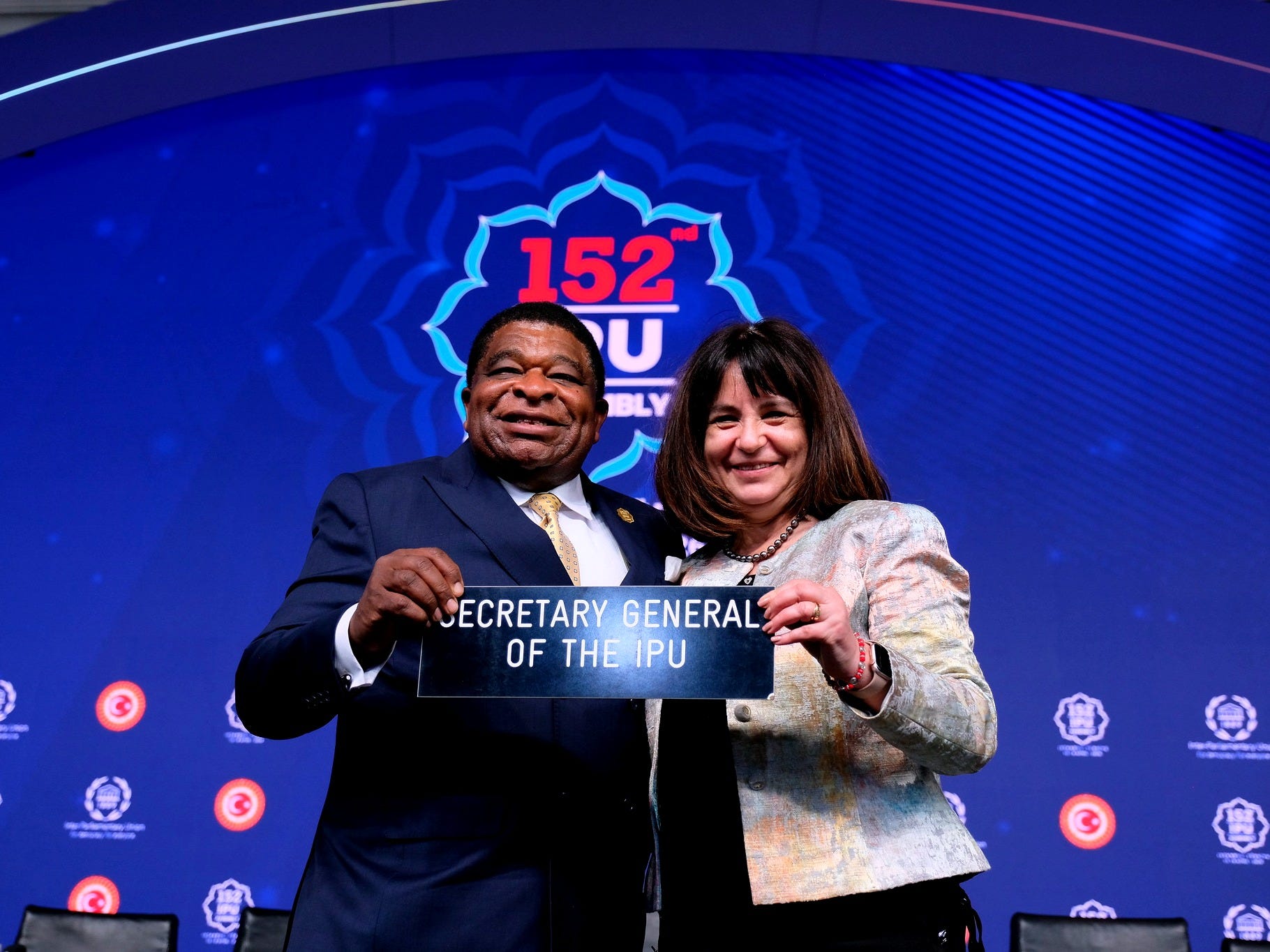
Incoming IPU Secretary General Anda Filip argues that lawmakers must play a larger international role as artificial intelligence reshapes democratic institutions.

GENEVA — The next secretary general of the Inter-Parliamentary Union says national parliaments will need to play a larger role in international governance as artificial intelligence, democratic backsliding and geopolitical tensions reshape the institutions that underpin international cooperation.
Speaking ahead of taking office on July 1, Anda Filip outlined a vision in which parliamentary diplomacy complements traditional diplomacy by giving legislators a greater role in addressing cross-border challenges ranging from armed conflict to artificial intelligence.
“We see parliamentary diplomacy as the fifth pillar of parliamentary action, alongside legislation, representation, government oversight and budgeting,” she told a press briefing at the U.N. in Geneva on Friday.
The concept lies at the heart of the IPU’s new 2027–2031 strategy, which calls for strengthening democratic institutions, reinforcing parliamentary diplomacy and deepening cooperation with the United Nations at a time when many multilateral organizations face growing political pressures.
Founded in 1889, the Geneva-based IPU brings together 183 national parliaments. Filip argued that its role has expanded as international disputes have become more difficult to resolve through traditional diplomatic channels alone.
She pointed to parliamentary dialogue between Israeli and Palestinian lawmakers, contacts involving Russian and Ukrainian parliamentarians, and four meetings between the speakers of the Armenian and Azerbaijani parliaments that she said helped reduce mistrust and sustain communication even during periods of political tension.
At the same time, Filip, a Romanian former diplomat who has worked at the IPU for more than 20 years, described democracy itself as coming under increasing strain.
Artificial intelligence, Filip argued, is becoming part of that broader democratic challenge.
She warned that generative AI has accelerated the spread of abusive content, manipulated images and deepfakes that disproportionately target women in public life. Women remain underrepresented in legislatures worldwide, while the number of younger parliamentarians has also declined, she said. Against that backdrop, Filip argued that artificial intelligence is creating a new barrier to political participation.
“This is clearly not just a technological issue, it also has to do with democracy, because it deters good candidates, especially young women, from entering politics,” said Filip, the first woman and the first Eastern European to lead the organization in its 137-year history.
The IPU currently monitors about 840 cases involving parliamentarians whose rights are alleged to have been violated, including arrests, intimidation, suspension from office and restrictions on political participation.
The issue, she argued, extends beyond regulating technology. Democracies must also ensure that digital intimidation does not narrow political participation or weaken representative institutions.
Filip said the IPU has already begun building what it sees as a parliamentary response to artificial intelligence. The organization adopted a resolution on AI last year and developed ethical guidance on science and technology. It is tracking legislative approaches adopted by national parliaments and is preparing further work through its e-Parliament initiative.
The IPU also plans to participate in the series of international AI meetings taking place in Geneva this summer, where governments, international organizations, researchers and technology companies are debating how artificial intelligence should be governed.
“More and more we are hearing that the only option going forward is to regulate,” she said, arguing that lawmakers increasingly need opportunities to exchange legislative experience as governments develop AI governance frameworks.
“Yes, we have regulations on tobacco, on alcohol consumption. I was a couple of weeks ago in Warsaw, where the Polish Senate organized a very interesting workshop with expertise on the relationship between AI and child protection,” she said. “So this is how we are trying to raise awareness, to encourage action, and to try to get the MPs to play a much more proactive role in tackling the challenges and the risks associated with AI.”
Filip was elected in April at the 152nd IPU Assembly in Istanbul with 72% of the votes cast in a single round. Hundreds of lawmakers from the IPU’s global membership took part in choosing her to succeed Martin Chungong of Cameroon, whose third and final term ends next week.

