Measurement is Power
How measurement shapes who decides. Part 2 of a five-part series.

Power in global science governance is built into who can operate, measure, access systems, and persist. This series examines those dynamics in five parts, continuing here with measurement.
In international diplomacy, power is usually framed as negotiation — the weight of a vote, the leverage of a coalition, the terms of an agreement. Yet beneath that visible layer sits a more durable form of influence. It lies in defining the baseline: the metrics through which reality is rendered measurable, comparable, and actionable.
What cannot be measured cannot be governed. Those who control measurement shape the terms on which governance proceeds. Nowhere is this clearer than in a system that appears, at first glance, to be neutral: the International System of Units.
For more than a century, the global definition of mass was anchored to a single physical object — a platinum-iridium cylinder known as “Le Grand K,” stored in a secure vault in Sèvres, France. To verify a kilogram with absolute certainty, national laboratories ultimately had to compare their standards to that artifact. Precision radiated outward from that location, creating a quiet hierarchy rooted in physical access.
In 2018, that system was fundamentally restructured. The kilogram was redefined not as an object, but as a value derived from the Planck constant, a fixed quantity embedded in the laws of physics. Measurement was detached from matter and anchored instead to universal constants.
In theory, the shift was democratizing. Any laboratory, anywhere, could now realize the kilogram without reference to a guarded artifact. In practice, it introduced a more demanding form of control.
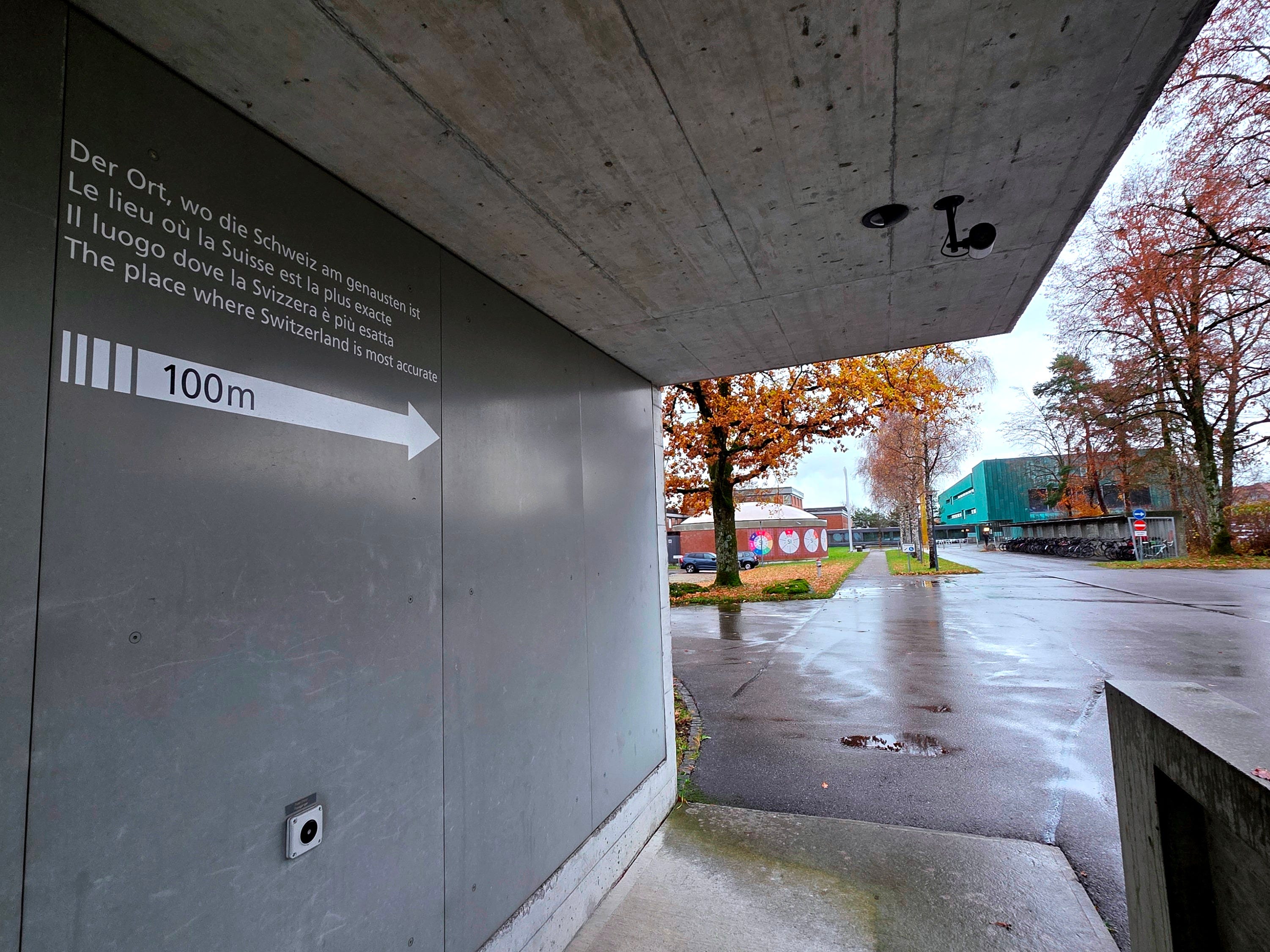
Realizing the kilogram under the new definition requires a Kibble balance, an instrument capable of linking mechanical and electromagnetic power with extraordinary precision. These systems are technically complex, financially prohibitive, and concentrated in a small number of national metrology institutes — including the United States’ National Institute of Standards and Technology, Germany’s Physikalisch-Technische Bundesanstalt, and Switzerland’s Federal Institute of Metrology METAS.
Power did not disappear with the artifact; it relocated. Where authority once depended on proximity to a vault, it now depends on the capacity to operate advanced measurement systems. The definition of the unit is universal, but its realization is not.
From this asymmetry emerges a hierarchy structured through traceability. Every precise measurement, including those in manufacturing, medicine, or research, must be linked through a chain of calibration back to a primary standard. Nations unable to realize those standards independently must rely on those that can.
If their measurements are not recognized within the system maintained by the International Bureau of Weights and Measures, their high-precision exports risk exclusion from global markets. Once a standard is established, it defines what counts as accurate, what qualifies as compliant, and what enters circulation as fact. Contesting such a baseline is not a matter of argument; it requires replicating the technical capacity that produced it.
This is a different form of power from the one exercised in negotiation. It operates earlier, at the stage where reality is made legible. Few numbers carry as much weight in contemporary diplomacy as 1.5°C. It appears in national commitments, corporate strategies, and multilateral agreements as both a target and a constraint — a boundary between manageable risk and systemic disruption.
Yet it did not emerge from negotiation in the conventional sense. It was produced through decades of scientific assessment, most prominently through the work of the Intergovernmental Panel on Climate Change and the modeling systems that underpin its reports.

The Architecture of the Baseline
By the time delegates gathered at major climate summits, the baseline had already been established. The question was no longer what level of warming was acceptable in abstract terms, but how to align policy with a quantified threshold that had acquired scientific authority.
The 2009 U.N. climate summit in Copenhagen illustrated this dynamic. The conference struggled to produce a binding agreement, ending instead with a nonbinding accord. Yet even in the absence of legal force, the temperature threshold, grounded in scientific assessment, entered the political mainstream, shaping subsequent negotiations.
As delegates wrapped up their marathon talks, the U.N.’s then-climate chief Yvo de Boer assessed the results for reporters. It’s “an impressive accord,” he said of the three-page document, which reflected an emerging baseline. “But it’s not an accord that is legally binding, not an accord that pins down industrialized countries to targets.”
The baseline endured, however, paving the way for the 2015 Paris Agreement, which consolidated a shift from a top-down, legally binding structure to a bottom-up, voluntary approach.
That reflects a broader shift in the architecture of governance. Authority does not only reside in formal rules; it is embedded in the systems that define what is measurable.
In the case of climate, that system is built on Integrated Assessment Models and Earth system simulations. These tools do not simply describe possible futures. They map a constrained range of trajectories, attaching quantitative meaning to thresholds that circulate through policy discussions as if they were fixed points rather than constructed outputs.
The capacity to produce these models is unevenly distributed. They require sustained computational infrastructure, long-term data integration, and methodological continuity that only a limited number of institutions can maintain. As a result, while countries negotiate collectively, the parameters of negotiation are shaped by a smaller technical core.
For those outside that core, participation takes a different form. They engage with outputs, align policy with scenarios, and negotiate within thresholds, but the underlying architecture remains external, something received rather than produced.
This pattern extends beyond climate systems. In global health, classifications determine which conditions are counted and funded. In finance, statistical standards shape how economies are evaluated and compared. In technology, technical specifications determine interoperability and market access.
In each case, authority operates through standardization: the alignment of global practice around shared metrics that become difficult to displace once established. These systems rarely command; they organize.
They establish the reference points against which risk is calculated, evidence is evaluated, and decisions are justified. Once embedded in institutions, supply chains, and regulatory frameworks, baselines acquire inertia. They become the default conditions under which alternatives must compete.
What appears, on the surface, as political disagreement often unfolds within boundaries already fixed in laboratories, modeling centers, and standard-setting bodies that do not typically occupy the foreground of diplomacy. “A model’s blind spots reflect the judgments and priorities of its creators,” mathematician and data scientist Cathy O’Neil writes in Weapons of Math Destruction.
If the first stage of power is the ability to operate within a system, this second stage is the ability to define the system’s terms. It determines not who is present at the table, but what the table contains. Decisions are negotiated. But the range of possible decisions is bounded by what can be measured, modeled, and recognized as credible.
In this landscape, the most consequential shifts in global power do not always occur in treaties or summits. They occur in the calibration of instruments, the design of models, and the establishment of standards that render the world legible.

Part 3 examines how this epistemic control is converted into physical influence through the infrastructures that determine who can access, move within, and extract value from global systems.

