Humanity has never possessed more scientific knowledge, more computing power or more research capacity than it does today. Yet progress on many of the world’s most pressing challenges continues to lag.
A new UNESCO report released on Wednesday highlights that contradiction. The report’s central argument is straightforward: the problem is no longer a lack of scientific knowledge.
“The gap is not a shortage of scientific knowledge,” the report says. “It is a failure to translate that knowledge into policy, governance and action at scale.”
The report’s release coincides with the start of UNESCO’s first Global Conference of the International Decade of Sciences for Sustainable Development this week. More than 800 ministers, scientists and policymakers have gathered at UNESCO’s headquarters in Paris to assess the role of science in addressing global challenges.
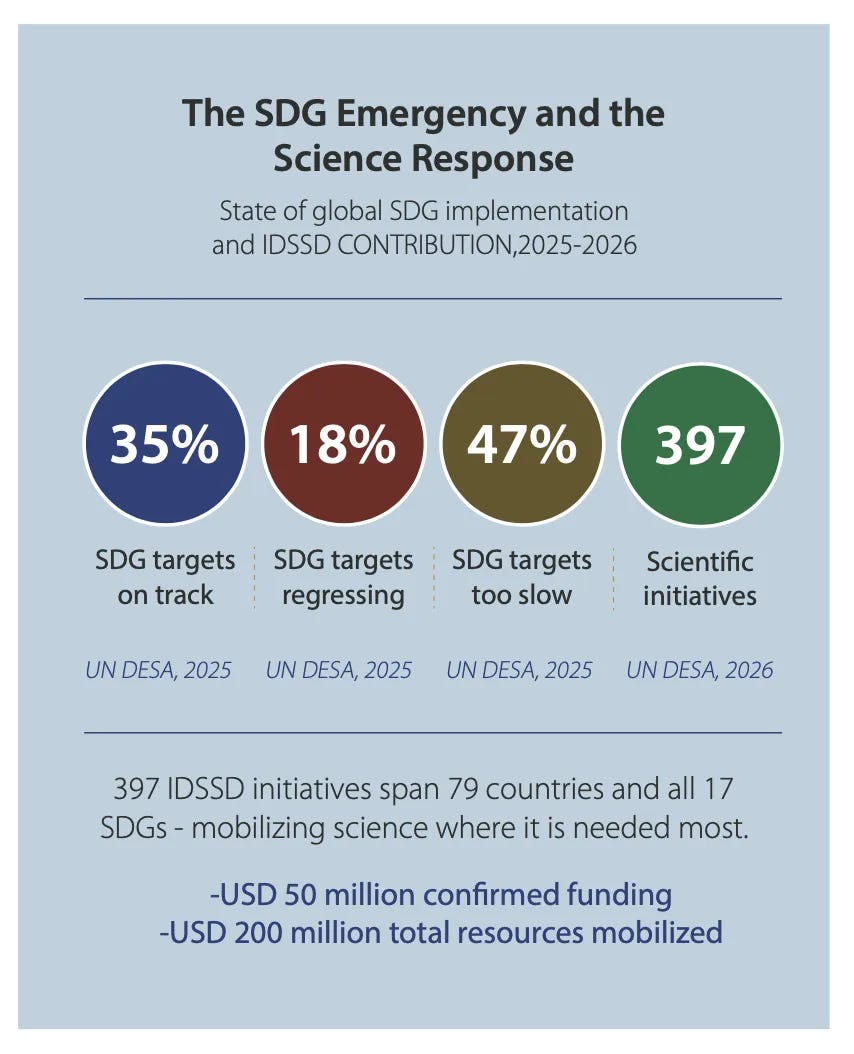
The gathering, which runs through Friday, is intended to examine how scientific evidence can better inform government decision-making and the post-2030 development agenda. But the report’s conclusion arrives at a difficult moment for the Sustainable Development Goals. Nearly half of the monitored targets are advancing too slowly to meet the 2030 deadline, while 18% have moved backward since 2015.
For decades, international discussions about science and development largely focused on generating more research, expanding scientific capacity and accelerating innovation. UNESCO’s assessment suggests a different challenge may now be emerging.
The world knows more than ever about climate change, biodiversity loss, public health threats and the risks and opportunities associated with emerging technologies. The harder question is why so much knowledge struggles to shape public decisions.
“For a country like Haiti, science is not a luxury,” Haiti’s Environment Minister Valéry Fils-Aimé said of the governance gap between science and public policy.
“The gap between what we know and what we do continues to widen. It is frequently a deficit of connection between science and public policy,” he told the conference. “Science should become a government reflex, not an occasional exchange.”
Cuba’s Science Minister Armando Rodríguez Batista similarly emphasized a need to “update your policy every day” due to the fast pace of breakthrough advances. “Our researchers, our innovators are continually looking for solutions.”
A decade built around a familiar problem
The International Decade of Sciences for Sustainable Development was launched by the United Nations in 2024 as a ten-year effort to mobilize scientific knowledge in support of sustainable development. UNESCO serves as the lead agency.
According to the report, the initiative has received 397 submissions across 79 countries during its first two years, with activities spanning all 17 Sustainable Development Goals and approximately $50 million in confirmed funding.
The numbers suggest substantial engagement from the scientific community. Yet the report repeatedly returns to a more fundamental question: what happens after knowledge is produced? Between discovery and decision lies a complicated landscape of politics, institutions, competing interests, limited resources and public trust.
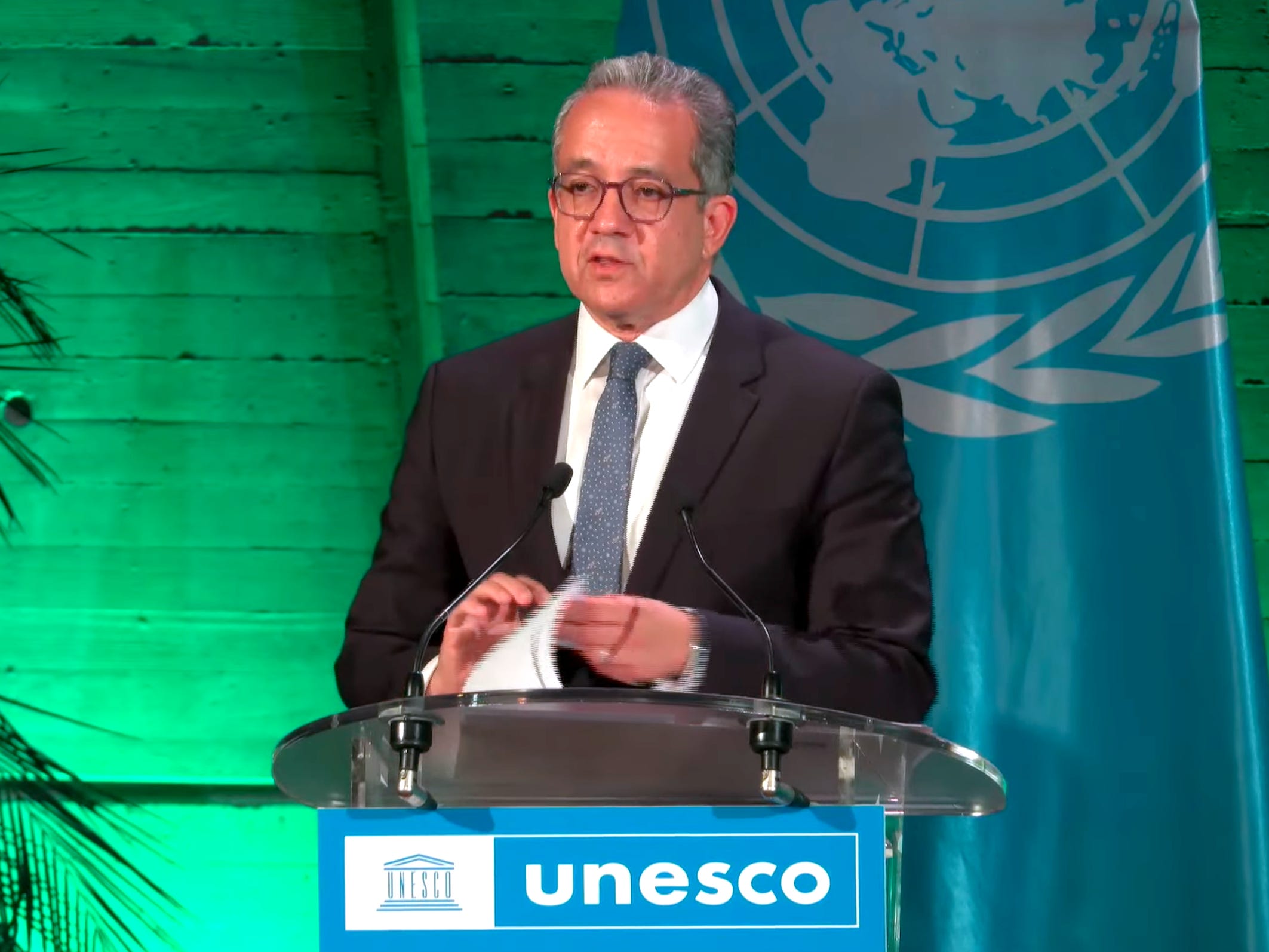
“The world is not lacking scientific knowledge. What we need now are stronger systems to put that knowledge to work for people and the planet,” UNESCO Director-General Khaled El-Enany said.
Whether stronger governance alone can close the gap between scientific knowledge and political action remains a matter of debate. But UNESCO argues that the imbalance is becoming more pronounced as emerging technologies advance faster than regulatory systems.
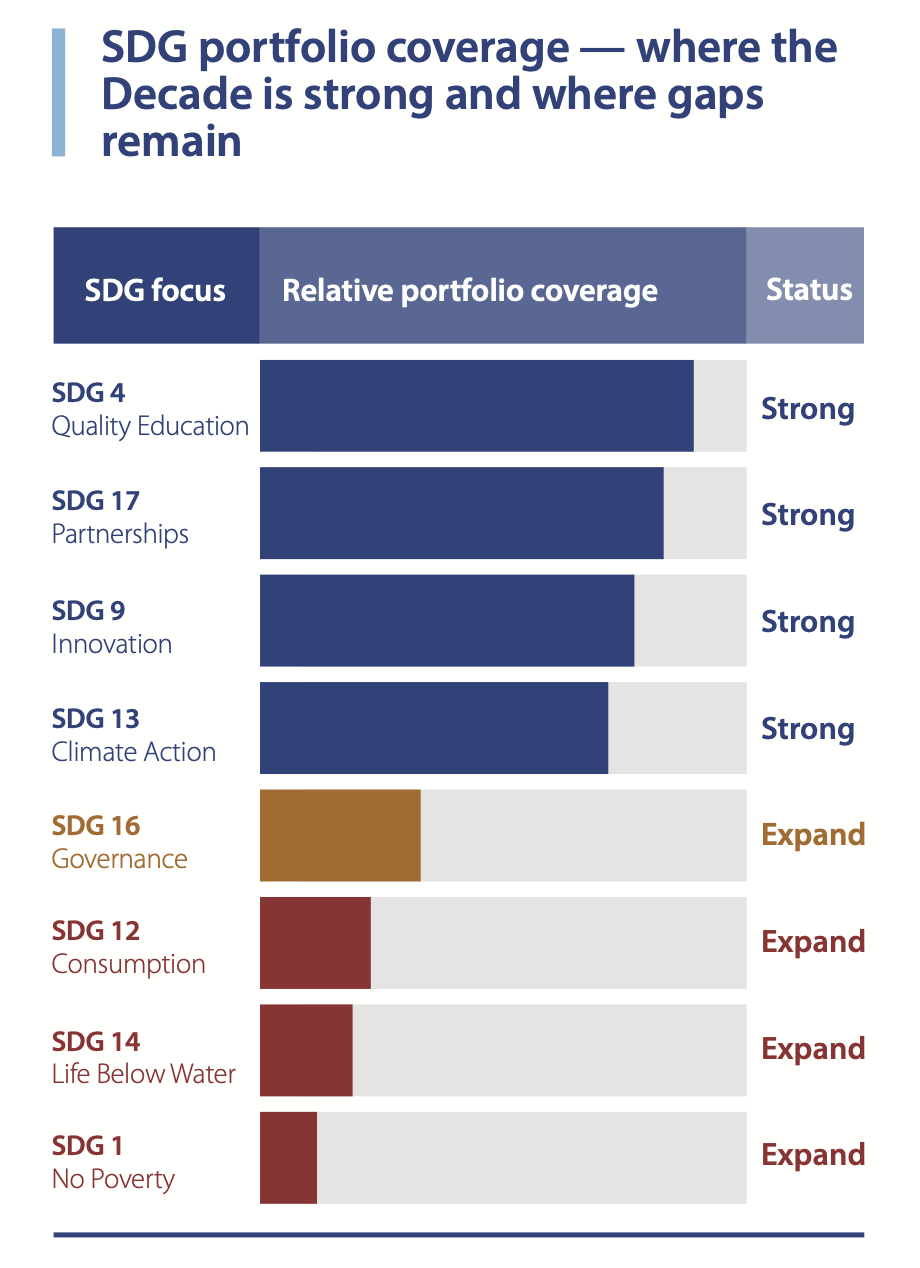
One of the report’s more striking findings concerns the balance between innovation and governance. Initiatives associated with SDG 9, which focuses on innovation and infrastructure, outnumber those linked to SDG 16, which focuses on institutions and governance, by more than three to one.
UNESCO describes this as a growing risk as artificial intelligence, quantum technologies and other emerging fields continue to advance — a concern increasingly voiced across multilateral institutions.
Scientific and technological capabilities continue to accelerate while governance systems often move far more slowly. The challenge is visible in debates over AI, where governments struggle to establish rules and oversight mechanisms even as increasingly powerful systems are deployed worldwide.
Similar debates are unfolding around quantum technologies, biotechnology and neurotechnology.
“Science allows us to imagine possible futures but above all gives us the tools to build them,” Guatemala’s Vice President Karin Herrera told delegates, calling science a “global public good” that provides the evidence needed for sound government policies.
Science remains unevenly distributed
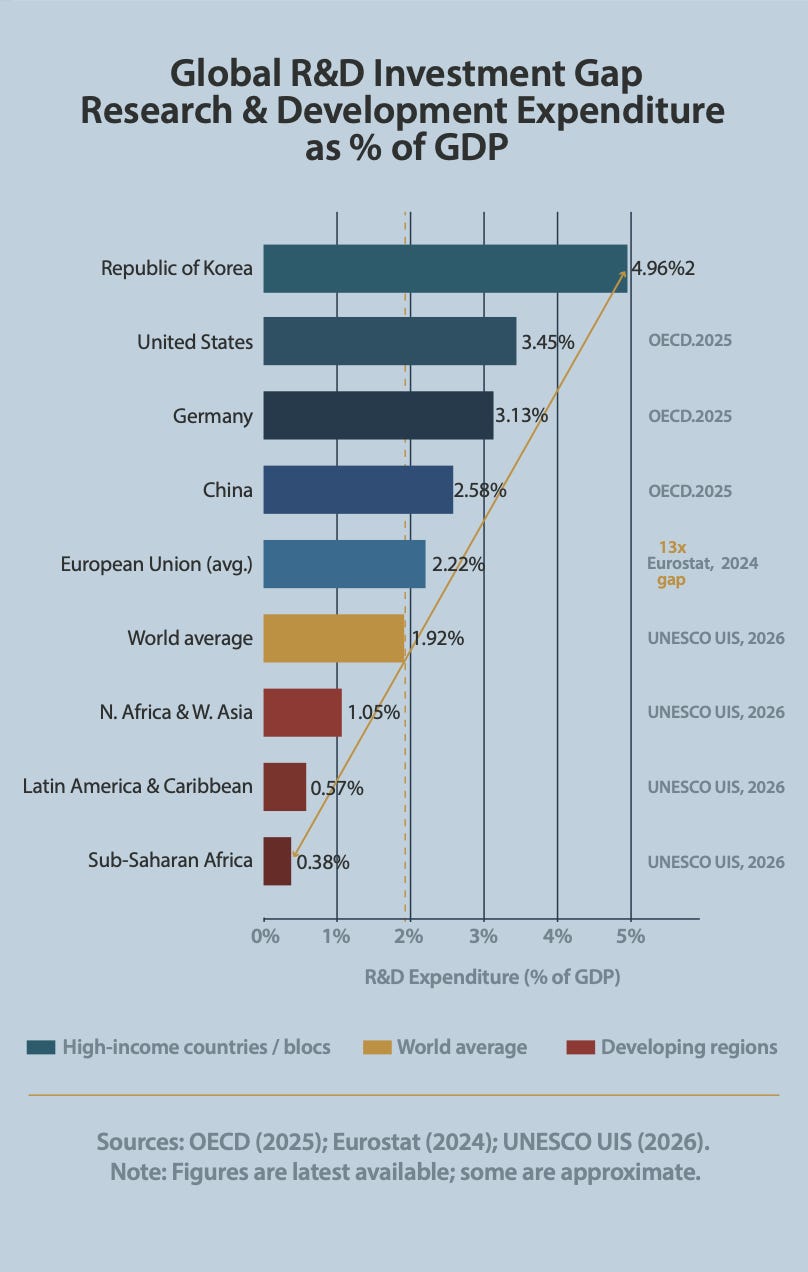
The report also highlights longstanding inequalities in the global scientific landscape. Africa accounts for fewer than 10% of the Decade's initiatives despite representing 17.5% of the world's population, according to UNESCO’s assessment. Research spending remains heavily concentrated in North America, Europe and East Asia.
Those disparities shape who produces scientific knowledge, which questions receive attention and which countries are best positioned to benefit from scientific advances. “The scientific future cannot belong to the few,” the report argues.
The imbalance has consequences beyond research itself. Countries facing some of the most severe challenges related to climate change, food security and public health are often those with the weakest scientific infrastructure and the fewest researchers.
Perhaps the most unexpected result in the report concerns what participating initiatives identified as their biggest obstacle. Some 40% cited coordination as their primary challenge. Only 10% identified funding as the principal barrier.
The finding complicates a common assumption that the primary problem facing science for sustainable development is a lack of money.
“Science is a human right imperative,” El-Enany told delegates. “Everyone should have the right to participate in science and benefit from its advances.”
The report calls for stronger science advisory systems, expanded access to research infrastructure, reforms to academic incentives and new approaches to governing emerging technologies.
According to UNESCO’s assessment, many of the difficulties arise elsewhere: fragmented institutions, weak links between researchers and policymakers, and difficulties connecting scientific expertise to decision-making processes.
The report focuses on the relationship between science and decision-making. But some delegates raised concerns about the conditions in which science itself operates. Iran’s Science Minister Hossein Simaee Sarraf pointed to yet another danger.
“Today we must ask an important question: How can science help solve problems when science itself is in danger?” he told the conference. “We should all agree on one principle: Scientists must never become victims of crises and scientific institutions must never become targets in conflicts.”