NPT review ends in deadlock as Iran dispute exposes nuclear divisions
The third consecutive failure of a nuclear treaty review shows widening tensions over the world's nonproliferation regime.

A major United Nations conference reviewing the global nuclear non-proliferation treaty ended without agreement after weeks of negotiations exposed widening divisions over Iran, nuclear disarmament and the growing risk of a renewed arms race.
The outcome on late Friday marked the third consecutive failure of a five-year review conference of the Treaty on the Nonproliferation of Nuclear Weapons, the cornerstone international agreement intended to prevent the spread of nuclear weapons, promote disarmament and support peaceful nuclear energy cooperation.
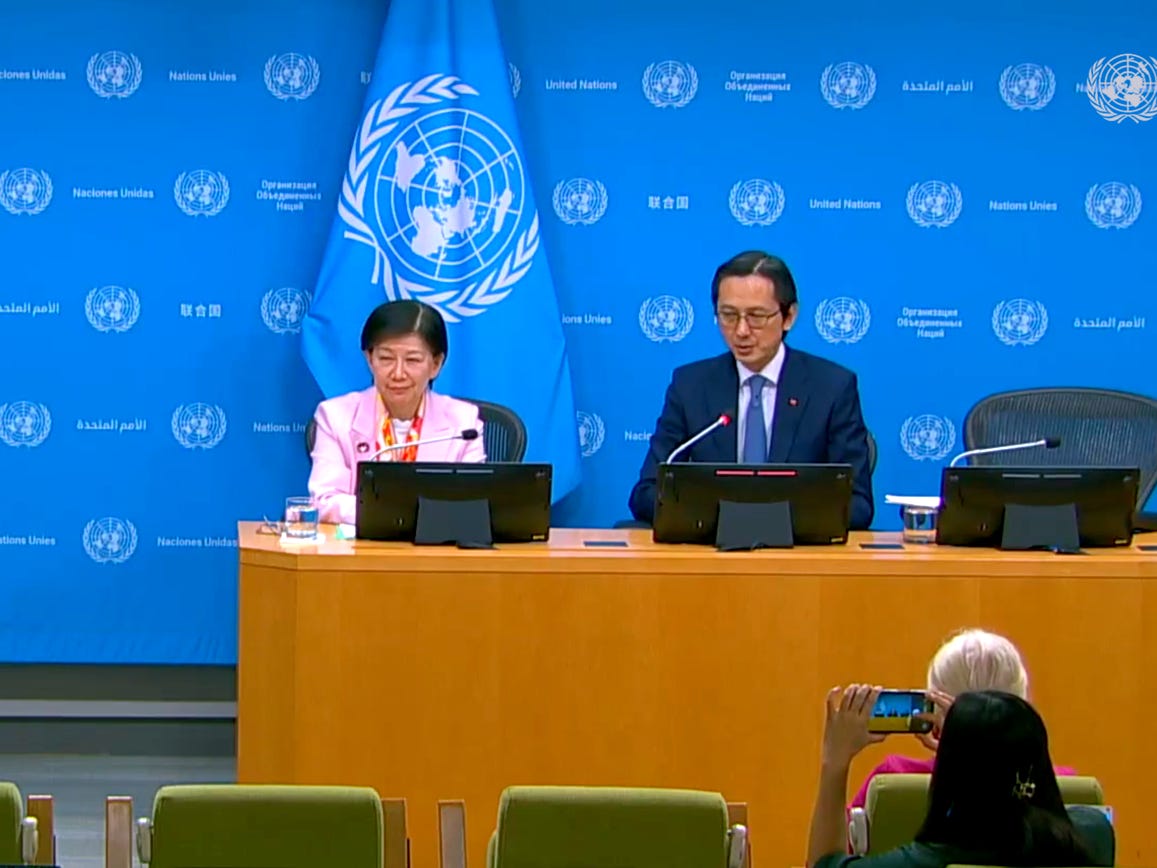
Vietnam’s U.N. ambassador, Do Hung Viet, who served as conference president, said delegates had engaged in “very honest reflection on the current situation” but ultimately could not bridge differences in an increasingly tense geopolitical environment.
“I am disappointed that the review conference was unable to reach consensus on an outcome document and really seize this critical opportunity to make our world a safer place,” Viet told reporters after the conference concluded.
The final breakdown centered publicly on language concerning Iran’s nuclear program, though diplomats indicated broader disagreements over disarmament obligations, nuclear deterrence and regional conflicts had accumulated throughout the month-long negotiations.
A revised draft outcome document included a disputed paragraph stating that “Iran can never seek, develop or acquire any nuclear weapons.” Iran opposed the language, while the United States insisted it remain.
Viet declined to formally blame any single country. “No one blocked consensus because I understood that there was no consensus and I decided not to put the draft outcome document for a decision,” he said.
Still, he acknowledged that the Iran paragraph was “a very important reason” the conference failed.
The conference unfolded amid worsening global nuclear tensions. Russia’s war in Ukraine, growing rivalry among major powers, modernization of nuclear arsenals, concerns over Iran’s nuclear activities and the erosion of arms-control agreements have all heightened fears of a new period of nuclear competition.
Beyond geopolitics, the failure underscored growing strain on the international technical and verification architecture that has underpinned nuclear governance since the Cold War.
“And in the meantime, a nuclear arms race is, I guess, in the horizon,” Viet said. “We are seeing the modernization of nuclear arsenals, we are seeing the quantitative increase in some nuclear arsenals as well.”
The United States sharply criticized Iran during the closing session, calling Tehran “a prolific treaty violator” that had “succeeded in holding treaty members hostage.”
Iran responded by accusing the United States and Israel of attacking Iranian nuclear facilities and abusing the conference process to legitimize military strikes.
The diplomatic deadlock also reflected broader frustration among non-nuclear states over what many see as the failure of nuclear powers to fulfill long-standing disarmament commitments under Article VI of the treaty.
Izumi Nakamitsu, the U.N. high representative for disarmament affairs, warned that confidence in the treaty regime is eroding.
“Non-roliferation and disarmament are two sides of the same coin,” she said. “It is simply wrong for nuclear weapon states to assume that nonproliferation obligations will be just adhered to without nuclear weapon states’ commitment and implementation of disarmament commitment under Article VI.”
She said governments must “take this third time failure very seriously if they want to preserve this regime.“
The negotiations illustrated how much the nuclear debate has shifted since earlier review conferences. Earlier drafts contained stronger language on arsenal modernization, nuclear testing, “no first use” policies and reductions in nuclear risk, but many of those provisions were diluted or removed in later revisions as consensus proved impossible.
References to North Korea’s nuclear program and the Russian-occupied Zaporizhzhia nuclear power plant in Ukraine were also removed from later drafts.
At the same time, disagreements surfaced over newer strategic concerns, including artificial intelligence, military automation and the relationship between conventional and nuclear systems.
The failure also highlighted growing divisions between nuclear-armed nations and a broader coalition of countries pushing for faster progress toward abolition through the Treaty on the Prohibition of Nuclear Weapons, which several nuclear powers continue to oppose.
Civil society groups warned that the inability to reach agreement reflected a broader weakening of the international nuclear order.
“The disappointing outcome to this NPT meeting, at a time when nuclear threats are being made and tensions are sky high, has to be a wakeup call for everyone,” Melissa Parke, executive director of the International Campaign to Abolish Nuclear Weapons, said after the meeting. “The world overwhelmingly does not want nuclear weapons.”
Despite the failure to agree on a final document, officials stressed that the treaty itself remains legally binding and continues to underpin the global non-proliferation system. The next review cycle begins in 2028, with the next full review conference scheduled for 2031 in New York.

