

As nations gather for a high-stakes review of the Nuclear Non-Proliferation Treaty, growing geopolitical tensions and emerging technologies are complicating efforts to sustain cooperation on nuclear risks.
Countries began meeting at United Nations headquarters on Monday for the 2026 Review Conference of the Parties to the Treaty on the Non-Proliferation of Nuclear Weapons, opening a monthlong assessment of the world’s main nuclear arms control framework at a time of renewed testing threats, major-power tensions and repeated failures to reach consensus.
The meeting will review implementation of the treaty across its three pillars: nuclear disarmament, nonproliferation and the peaceful use of nuclear energy — a structure that has long required coordination between security policy, scientific expertise and international verification systems.
The U.N.’s top disarmament official warned that those foundations are under strain.
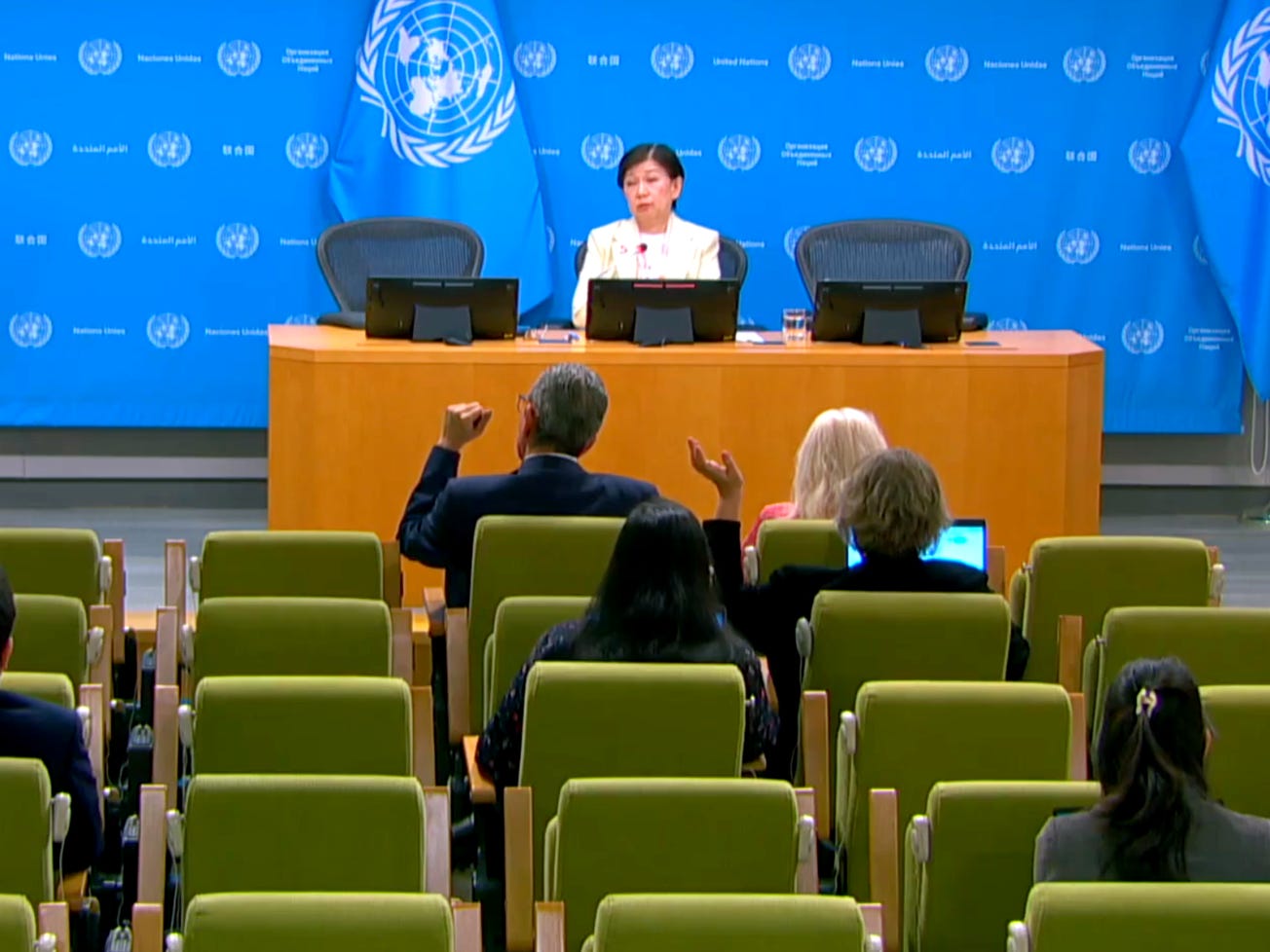
“All the disarmament gains are now really, one by one, gone, and we are beginning to see a reversal in that trajectory,” Izumi Nakamitsu, the undersecretary-general and high representative for disarmament affairs, told reporters ahead of the conference.
“The basic reason for that is the geopolitics, the tensions and competitions amongst and between nuclear weapons states. And the immediate Russian invasion of Ukraine really started to change the security perception in the European continent, which resulted in a higher proliferation driver.”
That shift, she said, has begun to affect public thinking about nuclear deterrence.
“That reflects a sentiment amongst the public that maybe they should think about possessing their own nuclear weapons,” she said, “as a guarantee of security and sovereignty.”
She warned that the risks are no longer theoretical.
“The threat of the use of nuclear weapons is becoming more frequent and we push back on that because we don’t want that to become normalized. I still don’t believe that states would want to use nuclear weapons intentionally. But the more nuclear weapons states there will be, there will be more risk of nuclear weapons use by mistake, miscalculation, et cetera. So we are talking very seriously about the risk of nuclear weapons use also increasingly as well.”
Her remarks come as wars continue in Ukraine and Sudan and tensions persist around Iran. Nakamitsu said a U.S.-Iran ceasefire appears to be holding but remains uncertain.
Alongside geopolitical pressures, emerging technologies are beginning to intersect with nuclear governance in new ways.
“The integration of artificial intelligence into nuclear command and control communications systems is now beginning to be discussed in different platforms,” she said, adding that “there is an increasing awareness that when it comes to nuclear weapons command and control, obviously, humans have to retain the oversight.”
The review conference is taking place alongside broader U.N. efforts to assess the role of artificial intelligence in global governance, including work by an Independent International Scientific Panel on AI. While neither process is expected to directly regulate military applications, both have acknowledged the need to address the implications of AI for security systems.
Nuclear testing is expected to be a central issue in the coming weeks.
Nakamitsu pointed to the Comprehensive Nuclear-Test-Ban Treaty “which has not entered into force but already is creating a good impact in terms of verification capacities,” and said more than 2,000 nuclear tests have been conducted historically, with lasting health and environmental effects.
“I hope that this norm against nuclear testing will be recognized as a critical issue also within the NPT,” she said.
The NPT, which took effect in 1970 and was extended indefinitely in 1995, aims to prevent the spread of nuclear weapons, promote disarmament and encourage the peaceful use of nuclear energy. It remains the central framework for global efforts to limit nuclear proliferation.
The meeting follows three years of preparatory sessions in Vienna, Geneva and New York, where countries held 29 meetings on substantive issues and agreed on the conference’s structure and agenda. The process, however, deferred the question of a final outcome document to the conference itself, leaving the most politically sensitive negotiations to the weeks ahead.
The conference is chaired by Vietnam’s U.N. ambassador, Do Hung Viet, giving the Non-Aligned Movement a central role in steering negotiations expected to focus heavily on the obligations of nuclear-armed countries.
Although the treaty has 191 members, only five nuclear-armed countries — China, France, Russia, the United Kingdom and the United States — are parties. India, Israel, North Korea and Pakistan remain outside the treaty framework, posing a continuing challenge to nonproliferation efforts.
“The NPT does not actually ignore those issues,” Nakamitsu said. “The states parties of the NPT so far have dealt with those issues by calling for the universalization of the treaty, which I think is also very important.”
The review process itself has repeatedly broken down. The 2005, 2015 and 2020 conferences failed to produce outcome documents. The last review conference, held in 2022, ended without agreement when Russia rejected language referring to the Zaporizhzhia nuclear power plant in Ukraine.
That record has raised questions about whether consensus-based arms control can still function amid deep geopolitical divisions.
Those divisions have sharpened further since the last conference. The United States has moved toward resuming nuclear weapons testing, Russia has withdrawn its ratification of the Comprehensive Nuclear-Test-Ban Treaty, and China is rapidly expanding its nuclear arsenal.
“We’re now in a situation where after so many decades, we don’t have any bilateral arms control agreements between the two largest nuclear weapon states, the New START Treaty, as you know, expired in February this year. This is a very new situation in the world,” Nakamitsu said. “Now we are also beginning to see a qualitative increase of nuclear capabilities in all nuclear weapon states, by the way.”
The conference agenda reflects those pressures. Main committees will address disarmament and security assurances, safeguards and nuclear-weapon-free zones, and peaceful uses of nuclear energy, while separate discussions will focus on regional issues, including the Middle East.
Alongside the security debates, countries are also expected to emphasize cooperation on civilian nuclear applications, including energy, medicine and development — one of the few areas where agreement has historically been easier to reach.
But even that pillar depends on trust and verification, underscoring the broader challenge facing the treaty. As U.N. Secretary-General António Guterres warned at the last review conference, “Today, humanity is just one misunderstanding, one miscalculation away from nuclear annihilation.”
Whether countries can move beyond that warning to reach agreement is the central question facing the 2026 conference.