

Season 1, Episode 1
Duration: 52:35 minutes
Recorded: 27 January 2026
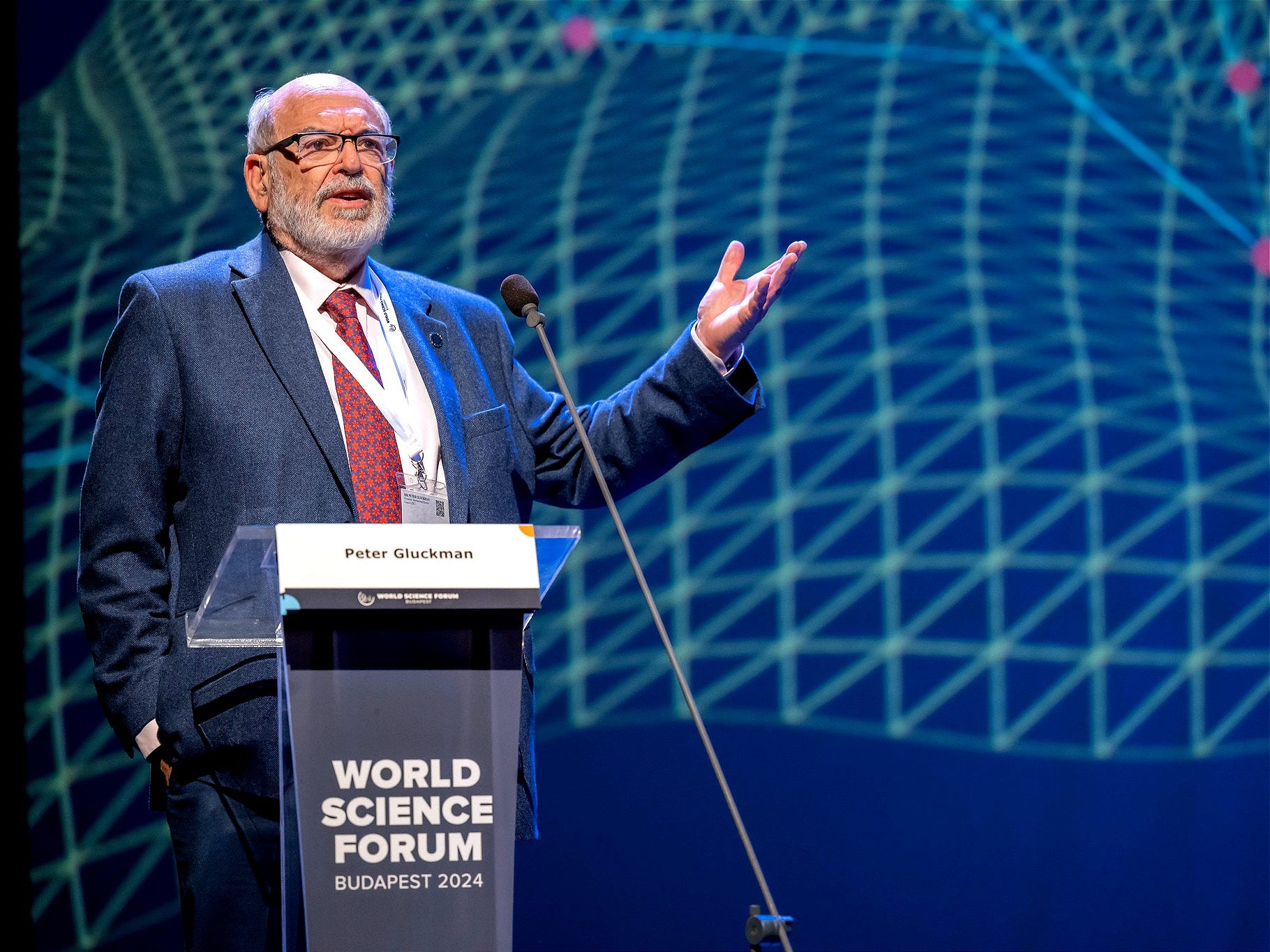
Sir Peter Gluckman, president of the International Science Council and former chief science adviser to the Prime Minister of New Zealand, joins The Science Diplomat for a wide-ranging conversation on how science advice operates in a period of geopolitical fragmentation and rapid technological change.
Drawing on decades of experience at the intersection of science and public policy, Gluckman discusses the distinction between scientific evidence and political decision-making, and why clarity about that boundary is essential for maintaining credibility. He argues that science advice is most effective when it is institutionally embedded, politically literate, and careful not to overstep into advocacy.
The conversation also addresses multilateral science diplomacy, including the role of global scientific bodies in sustaining dialogue when political trust between countries is strained. While public trust is frequently described as being in broad decline, Gluckman cautions against sweeping generalizations, emphasizing that trust varies across contexts and that scientific institutions must avoid contributing to polarization.
Finally, he reflects on the governance of emerging technologies, including artificial intelligence, and the conditions required for evidence-informed cooperation in a competitive global environment.
Listen to the full conversation below.
S1E1: Peter Gluckman on science advice, trust, and the limits of evidence

Season 1, Episode 1 — Peter Gluckman on science advice, trust, and the limits of evidence
Key Themes
The distinction between science advice and political decision-making
Institutional design and the credibility of scientific input
Science diplomacy beyond crisis response
Trust, polarization, and the responsibilities of scientific institutions
Governing emerging technologies in a fragmented geopolitical system
Transcript
This is the verified transcript of Season 1, Episode 1 of The Science Diplomat Podcast, featuring Sir Peter Gluckman. The text has been lightly edited for clarity and minor transcription corrections. The substance of the conversation has not been altered.
Amna Habiba: Well, I’ll start. Scientific authority is being called on more often in governance and at a time when geopolitical pressures are high and global institutions are under real strain. Welcome to The Science Diplomat. I’m your host, Amna, and today our guest is Sir Peter Gluckman, president of the International Science Council. I’ll pass it over to you, John.
John Heilprin: Well, you’ve also served as the inaugural Chief Science Advisor to the New Zealand Prime Minister from 2009 to 2018, and you’ve been a Founding Member and inaugural Chair of the International Network for Government Science Advice, and you now serve as Director of the Center for Informed Futures at the University of Auckland. And you’re a Royal Society of London Fellow and a trained pediatrician. I just want to say it’s really been a pleasure to cross paths with you at science summits in Geneva. And I really want to say that we’re just delighted to have you on this conversation as we inaugurate our new podcast series. So back to you, Amna.
Amna Habiba: Thank you, John. So, I’ll start off with our first question. Do you consider yourself a science diplomat? And if so, how do you personally define that, given your career has spanned deep scientific work with more than 700 papers published and also stretches inside policy spaces?
Sir Peter Gluckman: Well, I do consider myself a science diplomat, and I’ve been a science diplomat in two ways. When I was Chief Science Advisor to the Prime Minister of New Zealand, I also had an appointment as Science Envoy to the New Zealand Ministry of Foreign Affairs and Trade, where I actually had an active role on behalf of the New Zealand Government as a science diplomat. I’m also a science diplomat in that the role of the International Science Council is about what we call Track-Two science diplomacy. That is science diplomacy conducted by non-governmental organizations for various purposes. And so, I think most of my last 20 years has in one way or the other been as a science diplomat in different forms.
Amna Habiba: Thank you so much for saying that. And given how 2026 has been so far, when you look at the year ahead, what are some of the key priorities that the council has set and what is really driving those priorities at the moment?
Sir Peter Gluckman: Well, we cannot deny the geopolitical situation. We have a set of issues in the global commons, far broader than people realize, ranging obviously from climate change and environmental degradation, biodiversity loss, to issues of the deep oceans, ocean space, deep outer space, outer space issues, inner space issues, the internet and all these derivative things of the internet of share of technologies that cross boundaries. We cannot ignore the fact that these are intimately connected - a connection between science, technology, economics, security, and geopolitical power are all intertwined. And yes, the influence of geopolitical issues is confronting the planet in multiple ways. But that doesn’t mean we cannot make progress. We have made progress in previous times of tension. You only have to look back to the Cold War of the 1960s and 70s to see how science crossed the boundaries between the Soviet Union and the United States in ways that were very constructive: the Montreal Protocol, the Villach Conference, which led ultimately to the IPCC being formed, the formation of IIASA. There were lots of things that went on where science supported diplomacy, and diplomacy and science worked hand in hand. And that can happen now. But there’s a second set of issues which are more complex, which is not trust in science, because there’s little evidence that trust in science has actually declined, but trust in the use of science is being confronted by polarization, populism, and so forth, and that creates real challenges. Politicians have always picked and chosen which science they want to use, that’s not changed. But it’s become more acute and more extreme, and in some cases, science pushed right to the side. We actually see that the discipline of science advice is perhaps not as robust as it was in the pre-COVID era. So, there’s a set of issues here that are very real. The science community must work closely with policy makers and NGOs of different kinds and the multilateral system so that the benefits that science can bring to decision-making either for policy or for diplomatic purposes are achieved. It’s difficult in different contexts. We have a very fractured world. The enthusiasm of the more globalized world, which followed the collapse of the Berlin Wall, dissipated. It was dissipating already before COVID, but has dissipated much more rapidly following COVID for a range of reasons, not all related to any one particular country. The multilateral system does need to be strengthened, but we need to confront some of its real weaknesses. And so, there’s a lot to do here. And science, both natural sciences and social sciences, are really important if the world is to get onto a track which meets the needs of every one of the geopolitical poles, namely to improve the well-being and state of people in all countries, be it in one technopole or another geopolitical pole in the Global North or Global South. It’s difficult, it’s more difficult perhaps than it was, but sometimes the tensions that have emerged in a more polarized world forces people to look at what are the real issues and what are real things that need to be protected. And science is one of those.
Amna Habiba: Thank you for sharing that. You mentioned that there’s a lot of things that need to be done and science definitely is one of the most important aspects of that. What does maybe a day-to-day at the council look like as part of your role as the president?
Sir Peter Gluckman: Well, the council is a relatively small organization. I wish it had a much bigger budget so it could do a lot more. But it relies on members, our members. There are approximately 270 organizations, most of the world’s scientific academies, most of the world’s international scientific bodies - there are some holes that you want to fill - representing literally every country on the planet. It’s actually more complete, if you analyze it, than the United Nations, in the territories it recognizes and engages with. But we are trying, on one hand, to help our members do things within their own disciplines or their own member states. But also, we have to work very closely with the United Nations. We have people that go to New York. We have an office in New York; we need to work in Geneva. We work with the multiple UN agencies. We are very close to the Secretary-General’s Scientific Advisory Board in providing access to them to the global scientific community. We work very closely with a number of the UN agencies. In some cases, we’re in partnership with them. So, we’re in partnership with the World Meteorological Organization in a number of climate and environment-related areas. We’re in partnership with the Intergovernmental Oceanographic Commission in other areas. We’ve had a longstanding close relationship with the United Nations Environment Program, United Nations Development Program in various areas. We have an MOU with FAO and with WHO, which are now turning into really productive areas of expertise, where we can provide expertise and perspectives from the active scientific community to go alongside what comes from the intergovernmental organizations. We have a new Director-General in UNESCO and are looking for a much stronger relationship than has been there in recent years, and so forth. There’s a lot that has to be done by a small team. There’s only 22 people in the office in Paris, and then we have small, we call them regional focal points in Latin America, in Africa - it’s being rebuilt at the moment. In the Asia-Pacific region, we have an office in Canberra, Australia, but we also just have reached an arrangement with Uzbekistan for Central Asia, and with the government of Oman for an office in the Middle East, based in Muscat, Oman. We also have a very close relationship with China, which in its own right has an organization that looks after our interests in China. And we’ll be in India in a few weeks’ time to talk about something similar there, in the two most populous countries in the world. There’s an active group in Europe. So, it’s a very active organization, but the organization has been undergoing change. The organization became quite inward-looking, probably in the 2010 to 2016 period, when a big decision was made that the two predecessor organizations, the ISC, which was only formed in 2018, the organization that looked after the natural sciences, which was called ICSU, and the International Social Science Council, which was formed after the Second World War, would merge. And that merger of the natural and social sciences into the ISC has been extremely trouble-free and extremely productive. Because the boundary between natural sciences and social sciences is far more artificial than we think. And if you just think of any of the technological advances, they don’t advance without thinking about the social sciences of technology at the same time. And so, in the early days between 2018 and 2021, we went through a period of just the merger and all the organizational changes that built. But now we have become very outward-looking. As I say, we’ve put an office into New York. We’re putting an office into Geneva. We’ve built all these relationships with the UN agencies. We’re sought by the Secretary-General’s office all the time for input. We’re a very different organization now. And we are right to do what our key role is: which is Track-Two science diplomacy, bringing science together across geographical boundaries to meet the interests of the planet, and of all the countries on the planet. And we’re well prepared, I think, for the next few years to do that.
Bupe Chikumbi: Thank you so much, Sir Peter. And just to keep us in this area that you’ve brought up, the artificial boundaries between the natural sciences and the social sciences, I want us to just for now shift the conversation towards the limits of scientific advice. We know that scientific breakthroughs, as you’ve already rightly said, they increasingly push political leaders to make decisions under very uncertain futures. And it’s often before the social, ethical, and political consequences are fully understood. You’ve done extensive work in anticipatory science, where governing means acting before certainty. For example, during your tenure as the Director at the Koi Tū Centre for Informed Futures. And even just in your previous role as the inaugural Chief Science Advisor to the Prime Minister of New Zealand. So, my question right now is what was the hardest for scientists to accept about how political power actually uses scientific advice, especially in those moments where, you know, when the evidence was strong, the scientific evidence was strong, but the human equity and trust dimensions were still incomplete. What was the hardest for scientists to accept in that interplay?
Sir Peter Gluckman: Well, I think you’ve actually answered your own question, in some ways, in the sense that science never makes policy, or except in very rare circumstances. Science informs policy, and science can’t answer every question. There are questions policymakers must address in the way they make decisions that science cannot answer. To be blunt, what is policy making? Policy making is making a choice between different options, including the option to do nothing, which affects different stakeholders in different ways. And yes, science provides, in many cases, the baseline knowledge on which decisions are made, but then you’ve got to think about what does it cost, what’s the impact, what’s the public opinion, what’s the ethical and social concerns, what are the diplomatic considerations. All of that comes into the decisions that are made. And we saw that in COVID with some countries went to compulsory mandates for lockdown, others did not, using the same science, but coming and using different attitudes for whatever reason, whether they were political or they’re weighing up the balance of these different options. One of the things about science advice: when governments want it, the science is never complete. And I think that scientists always assume, because they know that A causes B, therefore governments must act. It’s not like that. A, the science is never complete, we are not very good, as scientists, often admitting to the uncertainties of what we know. And I’ve always felt that we need to separate out the business of evidence synthesis, which is summarizing what we know from the scientific literature, from the business of scientific brokerage, which is the business of saying to the government: this is what we know, with the caveats on its uncertainties; this is what don’t know, which it’s equally important. In most situations, we don’t know everything. What are the uncertainties around those two aspects of what we know and what we don’t know? What is the inferential gap from what the science community concludes and the evidence suggests, and the conclusion they reach? If you know the work of Heather Douglas, you would know that there’s nearly always an inferential gap between what science knows and what it concludes. And what’s the quality of evidence that’s there? Is there a sufficiency of evidence to have a robust - that’s all part of good brokerage. But at the end of the day, all you can do is say to the government, except in a crisis situation, perhaps, these are the options ahead, these are the implications of each option from a scientific point of view, and these are the implications that we can see from a non-scientific point of view. But it’s for you, not for the scientists, to make those judgments on those other aspects. Now I think that is something that many scientists find it hard to believe, that the culture of policy and the culture of science are very different. And I often say, it’s a bit - you need to have people as brokers who understand the policy community and understand the science community. And they need to act as if you’re a person who speaks Swahili talking to a person who speaks German and understands the body language, the culture, all the historical and other issues that come into play when you have two people of vastly different cultures trying to find a resolution to something. It’s the same in science. Science itself is not a normal way of thinking; it’s a very abstract way of thinking to a lay person. Policymaking is also a very different way of thinking and it’s very abstract to a scientist. And so, you have two abstract systems that have to communicate. And so, I strongly believe, and it doesn’t matter the background of that person, they must understand both those cultures and be trained to communicate in ways that are transparently honest to the science, but recognize the limits of science and how the policymaker has to then add their layers of consideration on it. Equally it goes the other way. The number of times I had a prime minister or a politician asking a question to me and I said, ‘Wait on, you haven’t got the question right.’ You need to get to the underlying question if you’re going to get an answer which is going to be useful to you in your political or policy settings. So, it’s a two-way thing, it’s not a one-way thing, but it’s very sophisticated. And it leads really trusted people in the middle, who can be trusted to put their own biases aside, which is one of the reasons I used to avoid, when I was Science Advisor, talking about my own science. I would always get other people to talk about the areas I felt to be an expert in. Because that’s not the role of the science advisor to push their own barrel. I think the same messages apply just going back a step to the questions of how science works with diplomats. Diplomats have another set of issues different to those even of the ordinary policymaker. Because we’re talking at the national level, the role of diplomats is to advance the interests of their country, either in a bilateral or international discussion. And so, you’ve got to allow that alongside a discussion on the science. And I think the biggest challenge in science diplomacy is getting the diplomat or the country, because it may not be the diplomat, it may be the politician, to recognize that it’s in their national interest to work on the global commons issues. If they don’t see it from a national self-interest point of view, they won’t support issues, by and large, internationally. And that’s actually the hardest bit, I think, in this business of science diplomacy, just going back a question, is that question of how you get governments to see that the global commons issues actually are of vital self-interest to a country, whether you’re a big country or a little country, like Malawi or New Zealand.
Bupe Chikumbi: Okay, so just to, for the sake of our listeners, right, to just conclude with everything you’ve said, do you think the limitation is mostly political? Or is it the way science is? Is it the way the science is communicated? You know, from examples from the pandemic and right now, what’s happening? Like, can you just clarify further for our listeners?
Sir Peter Gluckman: I think it’s an unanswerable question. In my judgment, where science advice has worked well, it requires the personality of the politician to have an open mind, the personality of the bureaucrats to have an open mind. Often, they are the roadblock as well. But equally it requires a personality of the scientists not to be projecting their own agenda, their own personality, their own biases onto it. And so, I’ve seen science advice, and I come from the system of chief science advisors, rather than from more collective systems, where science advisors and politicians have had a very trusted relationship, and it’s worked very well. But I’ve seen situations where the chemistry has not been strong, and it has not worked well. And that could be on either side of the interaction. So, it’s hard to generalize, but I don’t think … We know that not every scientist makes a good communicator. And I don’t think every scientist makes a good broker or a good political person who engages with politicians. Equally, I think there are politicians who are confident to listen to advice that they may not be comfortable with. I mean, one of the hardest things for a science advisor is when you’re actually coming up against the cognitive or political biases of the politician, and you still need to want to be able to try and get the message across, even though you know that they may not want to hear it. And that’s a really hard discussion, and it really comes down to the interpersonal skills of the two people in that room, or the committee, if it’s a committee-based structure. The stuff that’s successful is easy to describe. There are many reasons why it can fail, and in a more polarized world it’s more likely to fail. I think emergencies always bring out the best in science advice, but they can also bring out the worst in science advice. As we saw in COVID, there were some very good countries where the science advice was very well developed. In other countries, we saw competition for access to power, competition for egos of the scientists came into play, and it became messy. And we do know that, over time, the knowledge of the virus changed. And we do know that different things came into play in the decisions to wear masks, not to wear masks, to social distance, to lockdown, not lockdown. These were hard decisions, and it required judgment by all the players involved, which is why you saw different outcomes. But I think that where it did better was where - and the ISC wrote a major report for WHO on science advice and policy lessons from the pandemic. And I still think that report, those two reports of the ISC on the ISC website, which were done as a global exercise over two years of the lessons from COVID, stand the test of time of thinking about risk, risk assessment, dealing with cognitive biases, which everybody has, and dealing with how science advice operates before and during an emergency. And I think they remain, I think, gold standard reports.
Amna Habiba: Thank you for sharing that. You described a lot about how the scientific environment and the policy environment differ and kind of having those brokers in the middle. But when it comes to uncertainty, usually we get scientific research and advice from scientists, but it’s difficult to really kind of translate it with full certainty if it’s going to work out or not. When you’re in those moments, what can really help science advice to be useful as opposed to just being accurate?
Sir Peter Gluckman: Well, it can’t be accurate. I mean, I think that’s the point. I think science advice is better when you acknowledge the uncertainties. It’s more trustworthy. If we’re honest about the fact that we don’t know precisely - let’s take something like climate change. We don’t what the world will be in 2050. We have a set of range across different models of how much warmer it will be from now to then, depending on how we respond to it. Acknowledge that there are uncertainties in the models. There’s nothing wrong with doing that. It makes it more honest. I think the worst crime that we can do almost in science advice is claim a certainty which is not there. I think the politicians - I think scientists think the politicians can’t handle uncertainty. They handle uncertainty far more often than we recognize. They know that many of their political decisions will have consequences they may or may not have thought about. They handle uncertainly every time, at least in a democratic country, they face an election. So I think this mythology that we have to be accurate and precise, when we can’t be, because we’re asking for science advice, usually when the science is uncertain, whether it’s natural science about a pandemic or social science around, I don’t know, dealing with youth mental health in the face of - should we ban social media or not ban social media for children under the age of 16. I mean, there are lots of uncertainties, as you see in the discourse, about what will happen to the young people, how mega companies will respond, etc., etc. This is not black and white stuff, but it doesn’t mean we can’t give advice to governments about what we know is happening to youth mental health in a social media age, when things will do well if we can limit it. One of the things that may not do so well will be children who have difficulty, because they’re in social isolation, etcetera, etcetera. We can still give the politicians useful advice so they can weigh up and make the decisions. Yes, they will ask us for their decisions. But I always used to say to the prime minister, these are the options ahead. And if he turned to me and said, ‘Well, what do you think I should do?’, I would say, ‘Well, I have a set of biases. These are my biases. I can’t answer for you those biases, but my biases do the following.’ Just be honest. And I think honesty leads to trust. And at the end of the day, the biggest thing for science advice is trust between the science community and the political community. So, the brokers in the middle must act as trustworthy as they can. Now that doesn’t mean we’ll get it right every time. But I think that if we look to trust - and related to trust is the word humility. And you know, you can’t go to a prime minister or a minister or even a senior bureaucrat and say, ‘You must do the following.’ It doesn’t work that way. The second you do that, you’ve lost your credibility, because you don’t have - the scientist doesn’t have all the dimensions to the problem the policymaker has. And again, we saw that in many countries, coming to a fore around COVID. And it’s one of the reasons that we’ve had this reaction to science and science advice. And trust in the use of science has followed the COVID debacles, in some cases. I think the science community has to learn a lot more from the COVID - just as the policy community must learn a lot from the COVID example, the multilateral community certainly must learn a lot more from the COVID example. The science community too must learn.
John Heilprin: You know, before we even get to the scientific advice or the understanding or the uptake by governments or institutions, of course we need the research. And so, I’m wondering, you know, across countries, we’re seeing enormous pressure on public research funding. And so, from the council’s vantage point, what does that do to the kinds of scientific knowledge that actually make it into policy discussions?
Sir Peter Gluckman: Well, that’s a really complex question, John, in many ways. First of all, what’s happening across the Western world, and it’s not the same in every part of the world, as you know - China continues to invest very heavily in science - that we’re seeing a tendency for more downstream research, more towards the innovation end of what is assumed to be a linear pathway, but we should have known for a long time, that it’s not linear. It’s not the way Vannevar Bush first described it. It’s not linear, but we do need, what you want to call it, discoveries research, upstream research, basic research, whatever language people want to use for the more upstream research. We do need that, and we need to continue to do that. And we need to protect that. And I’m more concerned about how that’s protected in the countries that have traditionally led in that space. And in domains like environmental science, biological science, and so forth. The other phenomenon that we ignore is this big shift of a lot of discovery science to the private sector. And we, you know, if you think about what’s happening in synthetic bio, biology, what’s happening in the quantum digital space, a lot more of that discovery science, which is a term I tend to use, is occurring in the private sector than before. And there’s calculations saying that there’s been a much greater investment in private sector discoveries. And that’s got all sorts of dangers to it. It’s less transparent. It has implications for training in lots of ways. It has applications for Global North, Global South, and North-North, and South-South, and North-South relationships in all sorts of ways. And so there is a real concern. It’s largely in the West that we’re seeing a reduction of basic science, which in turn may reflect things that the science community is not entirely blameless about. There’s a lot of indulgent science has gone on, which is not necessarily really taking the frontiers of knowledge on, or necessarily pushing towards the innovation potential of it. And you know, if you just look at the number of scientific papers that are never quoted, that largely serve to give the academic community more citations or more publications than the publish or perish game, the enormous growth in the number of scientific papers, explosion of scientific journals, which is putting pressure on the peer review system beyond its ability to cope. The generation of AI-generated papers, predator journals, etcetera, etcetera. The scientific community itself needs to think about what’s going on here. I mean, I’m not saying that I want to see any reduction on the investment in science. But I think we need to work with the science policy community to make sure that the investment in science is being used well. And that includes upstream science, that includes training, the next generations of scientists from all around the world, etcetera, etcetera. But I think we need to be a little bit more self-critical on what gets funded and why, because I think the mere fact that - I don’t know the percentages - but I would guess at least 50% of all things that are published, maybe much higher than that, never get cited by anybody. But they are part of the industry of academia, if you understand what I mean. I think we’ve got - and yes, I understand why students must publish and we must help - but surely, we want them to publish on things that are meaningful and valuable. And so, I think there’s something here about the culture within the scientific community, how funders work, how institutions work, getting beyond the h-index, or the citation rate, or whatever impact factors, getting beyond that to how we actually look at how we make science really impactful. Because if science was truly impactful, there’ll be no shortage of governments wanting to put more money into it. And that can be upstream as well as downstream research. I mean, so I think, yes, we can criticize governments, and I’m the first to criticize my government for not putting enough money into science, and I am quite critical openly about that. But I also think we need to look at ourselves. Because in a funny way, that’s what the politicians have been saying in somewhat ugly ways, but they are actually asking the question, ‘Are they getting what they put the money into science to do?’ And I think that’s something the science community really does need to look at itself about. I think we’ve created, since the 1980s, an incentive system within science, which is not entirely healthy, built around the citation rate or bibliometrics. And it’s led to a lot of activity which gives people employment, gets them a grant, gets them a promotion, etcetera, etcetera. And the industry of publishing is built off that, so it’s become two industries intersecting around impact, the citation rates, and so forth. I think we need to look again at ourselves and say, ‘Are we training people, right? Are we giving young people the right careers for the future? Is the way PhDs are done, at least in much of the world, the right way to produce scientists that are right for the generation that are emerging?’ We can’t have scientists that don’t understand the digital dimension. We need more and more scientists to be doing trans-disciplinary research. There’s a whole lot of dimensions to this, which I could spend hours on if you gave me another podcast or two to talk about. But I think that we need to look at ourselves. I think if we sit there and wait for the political community to solve our problems, we’ll go nowhere. I think we need to start looking at how we say what we need to do from within the science community. So, our value to societies, whether they are developing or the most developed country in the world, is unequivocal, and I don’t think we’ve done a good job of that. And I can sell why we should understand basic issues, and the most fundamental science can turn on communities as being important, and they can take pride in that as much as we can in the most commercially relevant science. But we need to have a system that is credible in that regard. I’m sorry I’m on a hobby horse here, because I think we’ve not been willing, and the ISC - and one of my agenda items this year, as you’ll see in my last year as president, is to get the science community to look at itself in this current context. Because I think if we sit here and wait and just plead for change, it will not happen. We need to lead the change by saying we’ve got to take responsibility for the faults that we’ve created in the system. And that’s hard. I mean, if you just take the issue I’ve just discussed, you need to think about universities, you need to think about research institutes, you need to think about the publishers. You’ve got to think about academies. There’s a lot of actors in this that you need to think about.
Bupe Chikumbi: Thank you so much, Sir Peter. I like that you’ve brought in the aspect of responsibility and also the immense amount of pressure that young scientists, such as myself, are facing in these spaces, because oftentimes, apart from just, you know, the publications and everything you’ve mentioned, we are also being told now as young scientists to have a voice in public, and public policy spaces, and yet sometimes in these spaces, you know, there is no equal access. And at the same time, in the anticipatory science, they’ll ask young researchers to think about consequences before even certainty exists. So, speaking on behalf of young people around the world, I want your perspective with the International Science Council now involved in global efforts like the multilateral dialogue on principles and values, which is something that you have pioneered at the ISC. Where do you think responsibility should realistically sit? Is it with individual scientists, you know, like myself or yourself, or is it the bigger institutions and governance systems that shape how science is used? And what do you think tends to prevent the responsibility from being redistributed in practice?
Sir Peter Gluckman: I don’t think it’s either/or. We’re all human beings and we all have ethical values and, I hope, and moral values. But it’s fundamentally, at the end of the day, a systems failure. But systems need to create ways of thinking about what are the principles under which science operates? What are the values that need to be undertaken in any institution? We’ve got to avoid shortcuts. So, if I just take - as you know, I was a pediatrician in my earliest part of my career, and a medical scientist. Medical science is, as all the time I’ve been involved, been strict about ethical concerns and informed consent, etcetera, etcetera, etcetera. But if you move into the social sciences and to the digital sciences, we’ve seen lots of activities taken, which, had it been done from a medical school, you’d immediately be thinking about the ethical concern, ethical domain, and it’s not happening there. Every doctor gets - I think every doctor in the world - or certainly most doctors in the world get trained in medical ethics in their course of their training. Very few scientists get formal training in ethics. Very few scientists get formal training in the history of science, the philosophy of science. They tend to get trained through their bachelor’s degree, their master’s degree, their PhDs, their postdocs, in very narrow domains. One of the things that’s come through in recent discussions, and the ISC will be taking a lead on, in the course of the next year or so, is - is there a need for all scientists to get some core training? Core training in the principles of science, the values of science, the ethics of science etcetera, etcetera etcetera. We can’t put individual responsibility there without individuals having the knowledge. But at the same time, institutions are collections of individuals. And therefore, the systems-based responsibilities which is what you alluded to in your question, also require the institutions to understand the issues. And I think we’ve seen a number of examples, not only from the private sector, but primarily, often from the private sector, but also from the public sector, where the principles and values have been compromised. But add to that, and you asked it in the stem of your question - the principles and values need to be universal. Last year, I think, was the first year in which the Global South and China exceeded the traditional West in the number of scientific publications. Science is a truly global exercise, and I truly celebrate that. That means we have to have principles and values that genuinely reflect the global enterprise, not one part of the world’s enterprise. Now, principles in general, I think, are universal. Values, we need to do a lot of work. And what are the core values that are universal? And how they get interpreted locally? I have been involved on a number of occasions - I don’t want to go into details - where you’ve seen a clash in the way Global North scientists have operated in the Global South. Which shows that the recognition that the values that matter in conducting science are those of the community in which the science is conducted, not in the values, are issues that we need to confront, which is why I’m so pleased that the ISC will now be leading this multilateral dialogue on principles and values in science. I don’t pretend it’s going to be easy. There are going to lots of debates. We haven’t discussed here the role of Indigenous knowledge, and other knowledge systems that come into play. Science is not the only knowledge system that people use. We may argue that science is a particular place as a knowledge system, but that’s not how everybody sees it. And we need to understand how science interacts in the real world with other knowledge systems. And that’s something which, again, has been rather naively discussed and happens to be an area I’m personally working on with some scholars at the moment, and not just thinking about Indigenous knowledge, but religious knowledge, other forms of knowledge as well.
John Heilprin: So I’m wondering, how has the rise of dis- and misinformation changed the conditions under which scientific institutions try to communicate uncertainty or consensus?
Sir Peter Gluckman: Well, that’s a debated question, John. There are experts who I respect, who don’t think that disinformation really has a lot of an impact, because people hear what they want to hear through their cognitive biases. And there’s kinds of experiments that people like Stephen Lewandowsky have done, which has said you show the same information to a person who’s a climate change skeptic or climate change enthusiast, and the same data will push them further apart rather than closer together. And I think I’ve seen data on disinformation from experts like Hugo Mercier and others that really question the extent to which disinformation is the primary issue. It’s how - as I said, disinformation comes from people who have an agenda, which is trying to influence other people. But the people who are influenced by it have already got their cognitive biases, and their attitudes there, just to be reinforced. I think there are issues there. I think they relate to young people and giving them critical thinking and ability to live in a digital world. I think that there are more issues around the polarization that societies have, which is fueled in disinformation, as part of maintaining that polarization. But I think we’ve got to be careful here. Yes, there is disinformation. And yes, there are examples where it confuses people. But I think if we just take the current vaccine debate, which has gone on, particularly in the U.S., is it disinformation? Or is it that people are making assertions in a way that reinforces people’s biases already? And that’s the issue that I think we don’t fully understand. And some of the experts we talk to would argue it’s more the latter. Having said that, we also know that fact checking doesn’t work, that if we’re going to deal with disinformation, we have to deal with it with creating a more trustworthy understanding of the scientific process, and make science a more - better communicated. I mean, one of the things that bugs me immensely is the hyperbole that universities often put around scientific discoveries. So, a minor discovery of finding, say in molecular biology, is suddenly on the headlines of the paper as curing cancer, or a breakthrough for Alzheimer’s disease. And it’s just not like that. And the public is getting more and more cynical of those claims. So again, I think the whole, the whole area of science communication needs a rethink. It’s been, it might have arguably moved from a deficit model, but I’m not sure it’s moved that far from a deficit model. It’s been relatively self-serving for the science community, and I think we need to take a lot more learnings from those who are really expert in communication - understand, it’s got to be for the benefit of the listener, not for the benefit of the person speaking. And that’s a hard lesson, again, for a lot of scientists.
Amna Habiba: Well, before we wrap up, just one final note. When you think about the next few years, what would feel like a warning sign that the relationship between science and global governance is moving in the wrong direction?
Sir Peter Gluckman: Well, we’re not going to let it move in the wrong direction, are we? I mean, that’s a fatalistic - I don’t mean to be rude - I don’t like to think of it as fatalistic. I mean, I think if we’re not optimistic that we can work within this context, we will fail. We need to work differently to the way we’ve worked in the past. We need to look at ourselves as well as looking at other people. But the world needs science, all said and done. And, in fact, there’s research to show that people who claim they don’t believe science, actually do believe in science. It’s what bits of science they tend to use, or not use. And so, the issue is the use of science, which is the issue at hand. But I think we’ve got to look at ourselves, the scientific community. We’ve got to address the issues within the science community, make sure that it is truly a global community, coming back to the earlier questions about Global North, Global South, young scientists, etcetera, etcetera. We’ve got to respect the fact that there are other knowledge systems there. We’ve got to respect the fact that decisions are made by societies, and by political leaders, and others. And the role of science is to help them make better decisions for a better world. It’s complicated. But if we get away from a hubristic or an arrogant answer that we know what to do in every case, and they must listen to us, and rather, we can tell them what science can tell them, so they can take other dimensions into account, I think we’ll make progress. At the end of the day, the world is a much better place because of science and its actions over the last 100 years, 150 years, since modern science really took off. That will remain the case. Science will continue to improve the human condition. Yes, we have complicated politics, and they may be more complicated than they were a decade ago, but that doesn’t mean we can’t make progress. We must respect and understand why the world is more complicated - that itself is a question of the social sciences - and understand that science can progress in those ways, but it will not go back to the heady days of the 1970s and ‘80s, where there’s more money than there is now, in relative terms. There was a lot of money. The system was much simpler, much smaller, much more Western dominated. It will be different. And we’ve got to accept that it’s evolving. And I think that, as long as those who lead in the science community, be it in academia or in organizations like the ISC and national science council, acknowledge that the science system will have to evolve to be effective and do what it can do for the global public good, then we will make a difference in a positive way. Of course, it won’t be easy in the current context, where the financial situation is difficult, there’s a polycrisis, as some people call it, lots of issues. But I’m actually optimistic rather than pessimistic. And I refuse to believe, absolutely refuse to believe, that science cannot help make a better world, even if some people don’t want to use some aspects of that knowledge.
Amna Habiba: Well, I’ll sit with the concept of positivity and hope for the future and science diplomacy bringing that. This conversation has really shown us that science diplomacy isn’t really a single role or toolkit, but it’s the day-to-day work of navigating evidence, institutions, and judgment across very different cultures of decision-making. Sir Peter, thank you so much for being part of the Science Diplomat. It was a pleasure to have you on our podcast.
Sir Peter Gluckman: My pleasure.
John Heilprin: Thank you so much.