Position is power
How position shapes who decides. Part 5 of a five-part series.

Power in global science governance is built into who can operate, measure, access systems, and persist. This series examines those dynamics in five parts, concluding here with position.
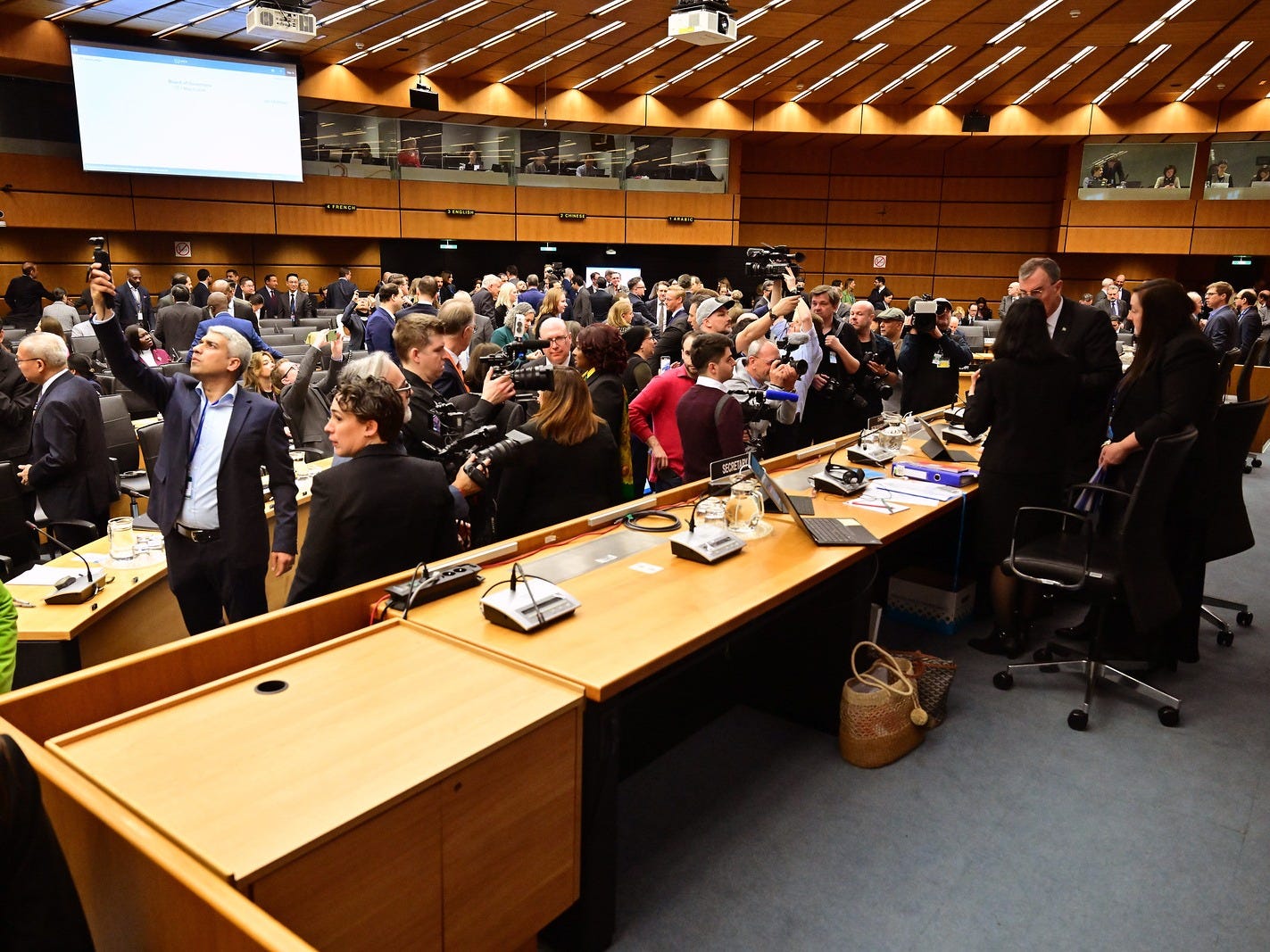
Within the U.N.’s atomic watchdog, the structure of influence is written into its governing rules.
At the International Atomic Energy Agency in Vienna, not all seats on the 35-member Board of Governors are filled through elections. Under the agency’s statute, a portion are designated for countries considered “most advanced in the technology of atomic energy,” alongside members selected through regional representation.
The designation is reviewed periodically, but it reflects long-standing technical capacity rather than short-term diplomatic alignment. Countries with established nuclear industries, regulatory systems, and research programs tend to remain central to the board’s composition through this mechanism, linking accumulated capability to recurring participation. The IAEA Board of Governors includes 13 designated seats and 22 elected by the General Conference.
The structure operates within a sector that continues to expand. More than 400 nuclear power reactors are now operating in over 30 countries, providing close to a tenth of global electricity, according to IAEA data. Dozens more are under construction, and additional countries are exploring nuclear energy as demand rises, including from data centers supporting artificial intelligence.
“Interest in nuclear power continues to expand, across countries and technology companies looking to power data centers for artificial intelligence,” IAEA Director General Rafael Mariano Grossi said in March. “Across the world, some 60 countries are now considering introducing nuclear energy.”
Within that expanding landscape, participation in governance continues to reflect earlier investments in capability. A similar pattern appears in scientific coordination bodies, though in less formal ways.
The Global Research Council, which brings together major public research funders, does not issue binding rules. It publishes common principles on peer review, data sharing, and research integrity that are adopted voluntarily. Over time, those principles shape how funding decisions are made across national systems.
For research institutions seeking to collaborate internationally or access external funding, alignment with these standards is often a condition for participation. Evaluation criteria, reporting practices, and transparency requirements tend to converge around frameworks developed by the largest and most established funding agencies.
In large-scale research projects, a comparable dynamic is anchored in physical location.
The ITER reactor under construction in southern France has drawn long-term commitments from a consortium of countries, with development extending across decades. Once operational, it is expected to concentrate expertise, funding, and data in a single site.
Similarly, the Square Kilometre Array, based in South Africa and Australia, establishes those countries as hosts of one of the largest scientific instruments ever built. The location of the arrays, determined well in advance, continues to shape where research activity is centered and how collaboration is organized.
These projects are not easily moved or replicated. Their placement reflects earlier decisions about investment and coordination, and those decisions continue to influence participation over time.
Standards in telecommunications and digital systems produce comparable effects through less visible mechanisms. Within frameworks coordinated by bodies such as the International Telecommunication Union, technical standards define how devices connect to networks and how data is transmitted. Many incorporate patented technologies held by a relatively small number of firms. Once adopted globally, those standards become part of the infrastructure of everyday activity.
Devices connect and data moves without reference to the underlying agreements. At the same time, licensing arrangements tied to those standards continue to channel revenue and influence toward the entities that developed them.
“Standards help us innovate at scale and share innovation worldwide. They are the common understandings we all need to prosper,” said Seizo Onoe, director of the ITU’s Telecommunication Standardization Bureau, in a 2025 report on AI standards.
In emerging areas of governance, similar patterns take shape. The Artemis Accords, which set out principles for civil space exploration, include provisions for establishing “safety zones” to prevent interference between activities. The framework presents these zones as coordination measures, but their application depends on which countries are able to operate on the lunar surface.
Analysts say early missions are likely to influence how those zones are defined in practice, particularly in areas considered valuable for sustained activity, such as regions with access to water ice or consistent sunlight.
“From a space law perspective, sustained human activity on the Moon and beyond depends on shared expectations about safety and responsible behavior,” University of Mississippi School of Law space law professor Michelle Hanlon wrote in The Conversation. “In practice, the countries that show up, operate repeatedly and demonstrate how activity on the lunar surface and in outer space can be carried out over time shape these expectations.”
Similar patterns appear across science diplomacy. Earlier investments in capability, funding, and coordination are reflected in how systems are organized. Participation remains formally open, and new entrants continue to join.
At the same time, the roles available within these systems often reflect conditions established over longer periods, whether through institutional design, infrastructure placement, or standard-setting processes. By the time negotiations take place, those arrangements are already in place.
This concludes the five-part series.

