


Part 2 of a two-part analysis on science, governance, and the erosion of public research systems. This part examines how governance is reshaped and what rebuilding requires.
As public research systems erode, the damage is no longer confined to science. It is reshaping governance itself.
When shared evidence thins, decisions tilt toward private analysis, shortened time horizons, and uneven access to expertise. Governments continue to invoke science to justify authority and manage risk, but the public knowledge base that once anchored those claims is fragmenting.
What follows is not simply weaker research, but a redistribution of power over who defines risks, sets agendas, and determines which futures are governed and which are merely endured.
Modern governance in public health, climate risk, digital regulation, and security depends on common reference points: trusted datasets, long time series, and institutions capable of sustaining analysis across political cycles. As public research capacity erodes, that foundation thins.
Governments are forced to base decisions on incomplete facts and uneven levels of knowledge often created by private groups without public supervision. This is happening at the exact time leaders say they need scientific guidance the most, a shift that slows things down and affects the fairness and quality of decisions.
“In a world faced with widespread misinformation and distrust, we must come together to ensure that science is not reduced to a mere commodity or a political instrument,” Director-General Audrey Azoulay warned. “Science must instead be guided by ethics and solidarity, serving the common good.”
The International Science Council has similarly cautioned that unstable public funding is eroding the global research commons, making it harder for governments to rely on shared evidence when managing transnational risks.
The effects are immediately visible in multilateral governance. Institutions across the United Nations system depend on publicly funded science to establish common reference points: climate assessments, disease burden estimates, food-security projections, and technological risk evaluations.
Without the science, consensus becomes harder to build. Not because political disagreement has intensified, but because the underlying facts are no longer jointly produced or universally trusted.
When data is discontinuous, systems that should spot problems early can only report on disasters after they have already happened. This forces governments to constantly react to emergencies instead of preparing for them in advance.
In global health, gaps in tracking diseases make it harder for bodies like the World Health Organization to issue timely guidance or trigger coordinated responses.
While the institutions often produce high-quality work, they do so according to their own priorities, timelines, and incentives. Governments also may consume this expertise, but they increasingly neither set the agenda nor control access.
This has direct regulatory consequences. When nations rely on privately generated expertise to govern complex technologies such as artificial intelligence, biotechnology, space systems, they risk regulatory capture by default, even without overt lobbying.
The asymmetry is structural: regulators with shrinking in-house capacity are asked to oversee industries whose research budgets and technical depth vastly exceed their own.
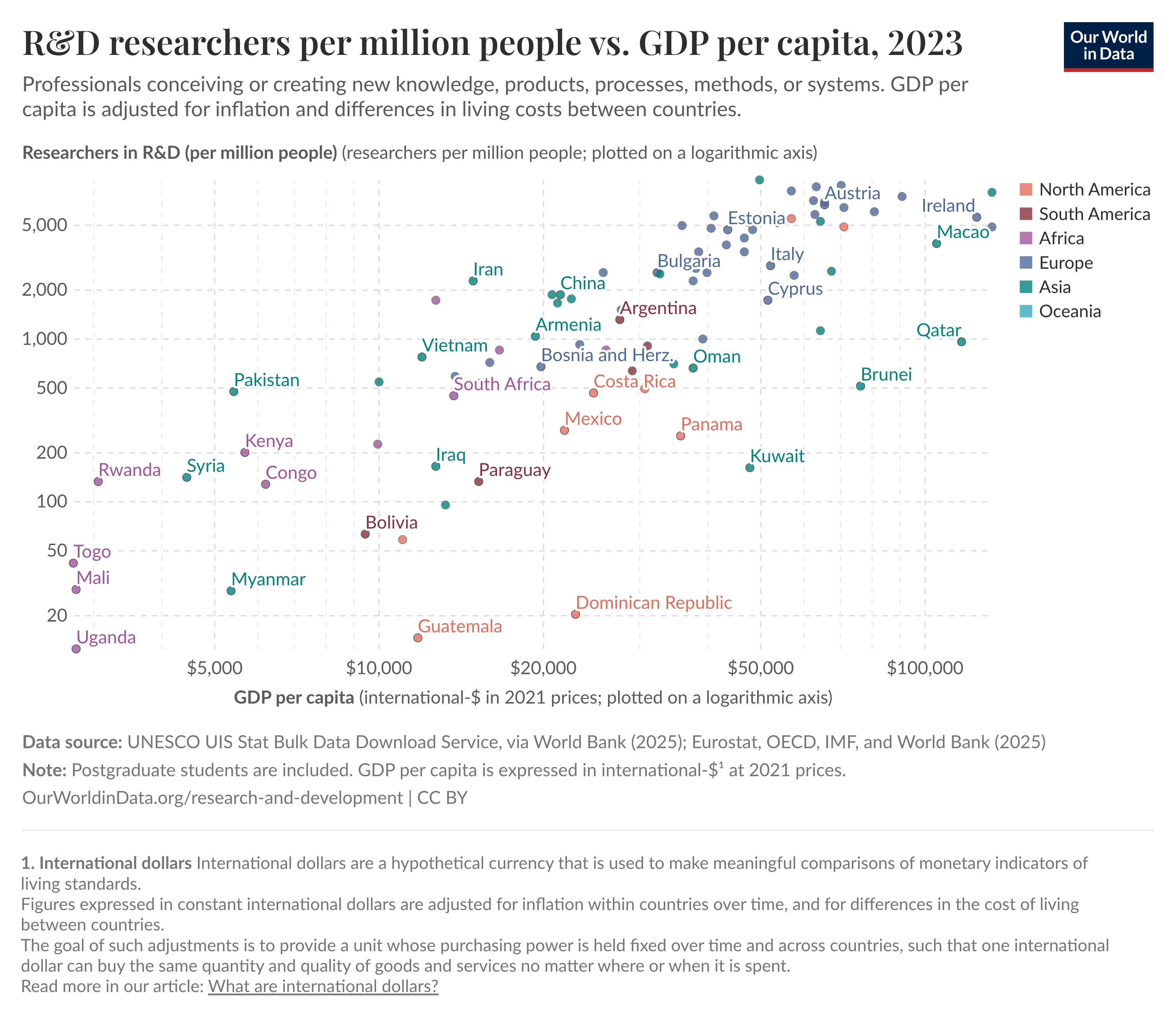
The implications extend to equity. Countries with limited domestic research infrastructure depend disproportionately on international public funding and multilateral science platforms. As those supports weaken, their ability to participate meaningfully in global rule-setting declines.
Anticipatory governance, in practice, becomes a privilege of wealthier nations, particularly those able to model futures, test scenarios, and shape norms, rather than a shared global function.
There is also a temporal cost. Anticipation requires long horizons, but governance systems under fiscal stress shorten their time frames. When research funding becomes episodic, policy planning follows suit.
Governments default to crisis management because the institutional memory and analytical continuity required for it have been stripped away. In this sense, the erosion of the global public research model is a governance issue: it determines whose knowledge counts, which risks are visible early, and which futures are actively shaped rather than merely endured.
Key takeaways
• As public research erodes, governance increasingly relies on fragmented, private, or non-transparent sources of expertise.
• The weakening of shared scientific baselines slows multilateral decision-making and makes precaution harder to sustain.
• Diminished public research shifts agenda-setting power toward actors with independent capital.
• Regulatory systems face growing structural asymmetries as public institutions lose in-house scientific capacity.
• Restoring public research is essential to governance credibility, not just policy effectiveness.
What governing with science requires
Governments are not wrong to ask more of science. The scale and speed of contemporary risks, such as pandemics, AI and climate instability, make reactive governance untenable. Anticipation is no longer optional; it is a prerequisite for credible decision-making.
But anticipation cannot be improvised. It requires durable public institutions, predictable funding, and international research systems designed for continuity rather than crisis response. Without those foundations, calls for “science-based policy” remain rhetorical rather than operational. What is missing today is not insight, but alignment.
First, public research funding must be treated as core infrastructure, not discretionary spending. Long-term scientific capacity functions like early-warning systems or strategic reserves: its value lies in readiness, not immediate return. That logic must be reflected in budget design, multi-year commitments, and insulation from short-term political cycles.
Second, anticipatory governance depends on protecting the global research commons. Shared datasets, continuous monitoring, and multinational trials cannot survive episodic funding or unilateral withdrawal. Reinvesting in multilateral science platforms is a prerequisite for collective risk management.
Third, governments must rebalance their dependence on privately generated expertise. Industry and philanthropy will remain essential partners, but public authorities must retain sufficient in-house capacity to set agendas, evaluate evidence independently, and regulate without structural asymmetry. Governing with science requires public knowledge, not just access to expert opinion.
Finally, rebuilding trust in science demands more than communication strategies. It requires visibly maintaining science as a public good: open, ethically grounded, and oriented toward collective benefit rather than narrow advantage. That, in turn, requires institutions capable of outlasting electoral cycles and geopolitical swings.
The erosion of public research funding is therefore not a secondary issue. It directly shapes who can anticipate risk, whose knowledge informs policy, and which societies are positioned to act before crises escalate.
Governments are already governing through science, whether they acknowledge it or not. As Azoulay has cautioned, trust in science cannot be commanded, it must be built, and that takes sustained investment, institutional continuity, and a renewed commitment to science as a common good.
Author’s note:
This two-part analysis examines how public research systems are being weakened at the same moment governments are asking science to do more. Part I focuses on the erosion of research capacity itself; Part II explores how that erosion reshapes governance: who sets agendas, whose knowledge counts, and what restoring the public research model would require.