

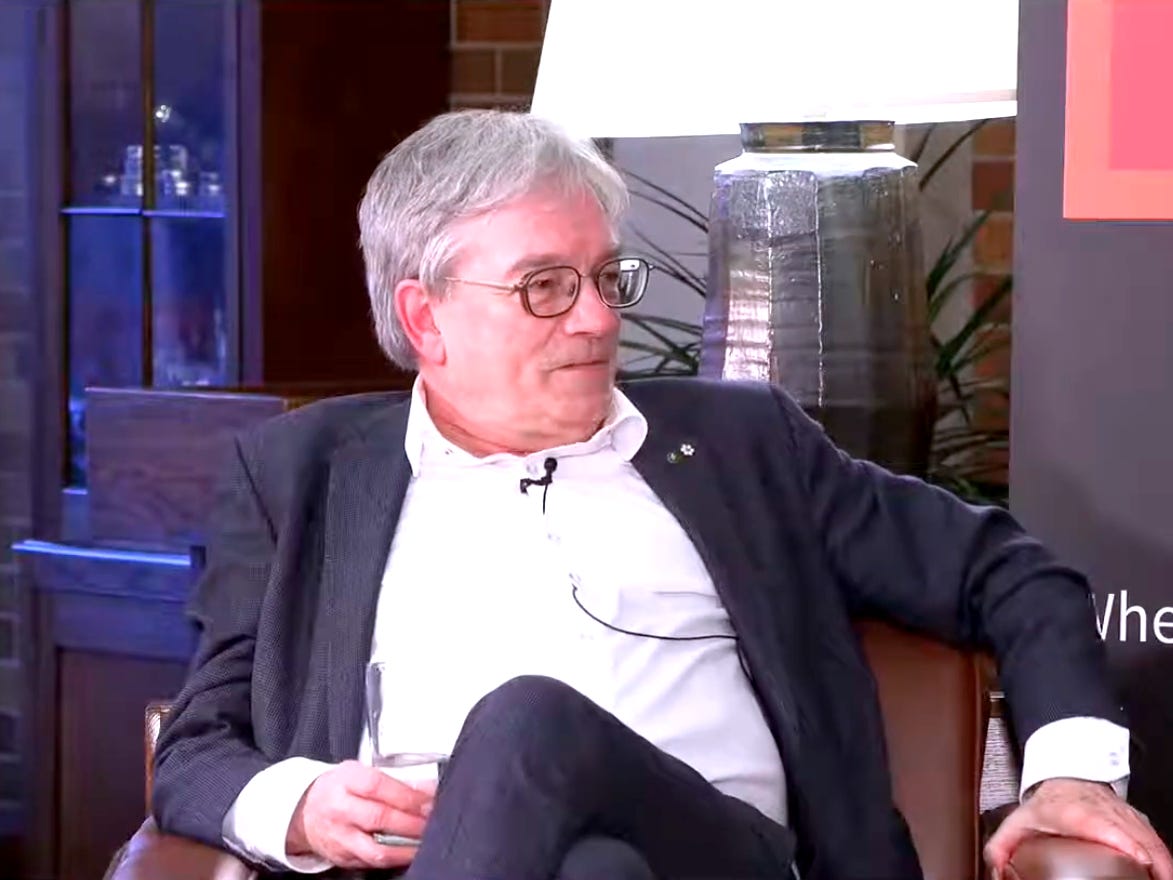
Science advice does not operate as a simple bridge between research and policy, according to Québec’s chief scientist Rémi Quirion. It is a system that must be built and maintained over time.
“The role was created because there weren’t strong enough links between the research world and the government,” Quirion said on The Science Diplomat Podcast.
He took on the position in 2011, when Québec’s chief scientist role was new. “I would be the first one,” he said. “So you start from nothing and you try to build it.”
What he built depends less on authority than on credibility, he suggested. One of his early goals was to create what he called “a one-stop shop” for government. Instead of ministers or deputy ministers relying on a narrow circle of familiar academic contacts, the office would connect them to a wider network of expertise.
That system, he said, only works if it is reinforced constantly. “You have to repeat and repeat and repeat,” he said, because policymakers “have so many things on their minds.”
The challenge of science advice became especially clear during the COVID-19 pandemic, he recalled. Quirion also is president of the International Network for Governmental Science Advice (INGSA). When Québec’s premier asked what was known about the virus in the early days of the outbreak, Quirion replied: “Nothing.”
He said the most important thing in such moments is to “stick to the data” and explain clearly what is known, what is not known, and the trade-offs between options. “It’s much better to keep the trust of these officials, instead of trying to convince them when you don’t have data that are not solid,” he said.
Québec’s model is unusual in part because the chief scientist role is defined in law rather than tied directly to the government of the day. Compared with systems where science advisers change with political leadership, Québec’s model offers greater continuity. Quirion, a neuroscientist by training, has now held the job under governments of different parties.
He argues that this legal structure provides a degree of stability lacking in systems where science advisers turn over with political leadership. “There is more stability in the Quebec model,” he said.
His role is also unusual because it overlaps with research funding through the Fonds de recherche du Québec, which he leads as well. In his view, that dual function has been an advantage rather than a conflict.
“It was a good thing. It was a positive thing,” he said, pointing to the ability to move quickly when government backed a scientific initiative. During the pandemic, that included the creation of a Québec biobank. More recently, it helped support a network of science diplomacy chairs.
For Quirion, science advice is not only about getting evidence into government but about building institutions durable enough to carry that evidence across crises and political transitions. That task, he said, has become harder over the past two years.
“What’s happening, for example, in the USA, but not just the USA about science,” he said, has created “a very challenging now new world that we are into.”
He described efforts to help U.S. researchers working in fields that have come under pressure there, including climate science and vaccines, and to redirect Québec postdoctoral researchers toward Europe and Asia.
Those shifts, he suggested, are one reason science diplomacy has become more important. Asked whether he would describe himself as a science diplomat, Quirion answered cautiously. “In a sense,” he said. “I’m a science advisor.”
But he added that Québec’s international presence, and the growing need to project scientific influence abroad, gradually pushed the role in that direction. “With time, I started to see, well, we needed to show the type of influence that can have abroad, and science diplomacy is one tool that we are using.”
Listen to the podcast:
S1E3: Rémi Quirion on science advice, trust, and building systems that last

S1E3: Rémi Quirion on science advice, trust, and building systems that last