

As governments cut research budgets and international relations become more transactional, the relationship between science and political decision-making is entering a more fragile phase.
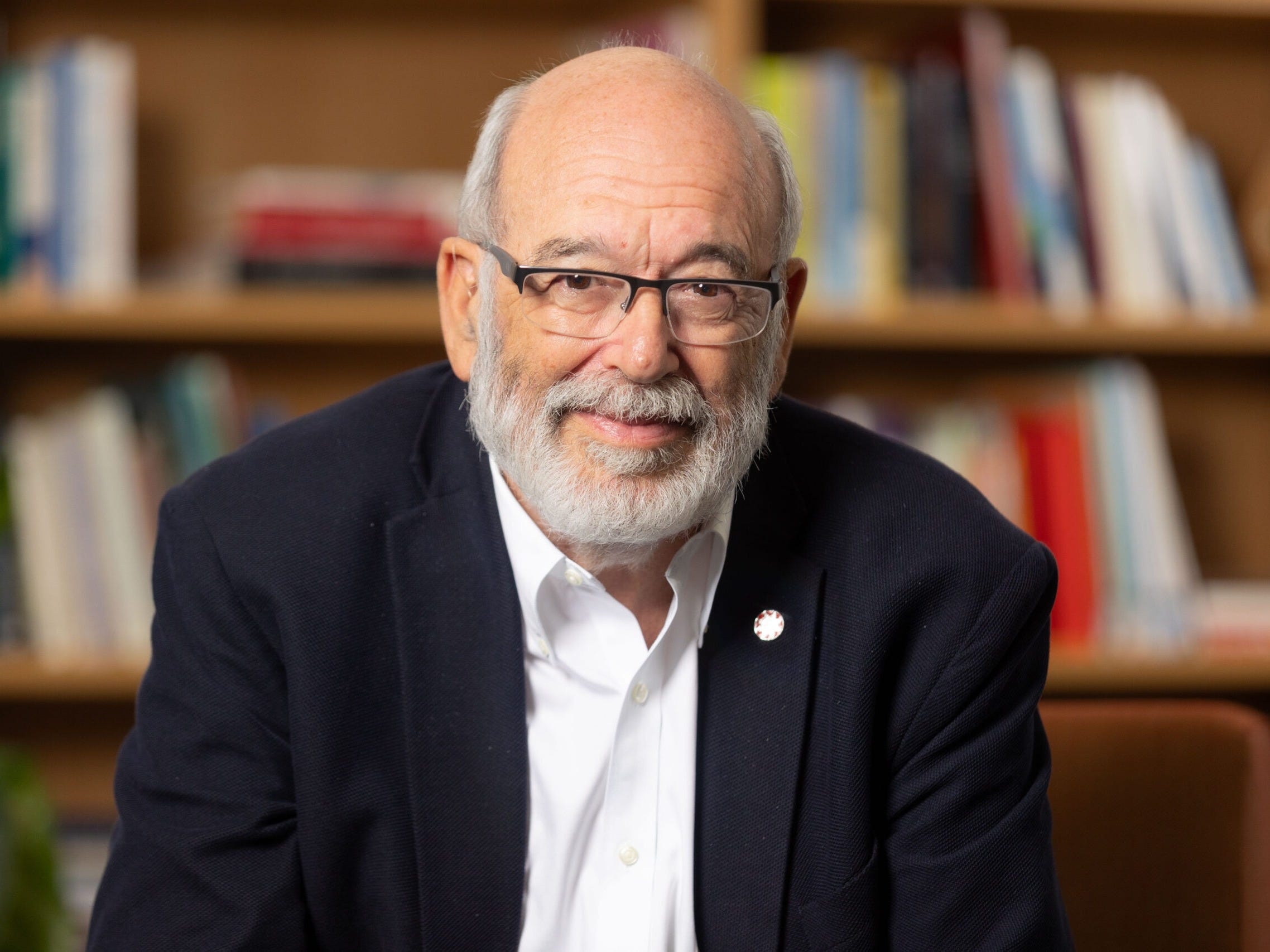
The risk, according to Sir Peter Gluckman, president of the International Science Council, is not that science itself has lost credibility. It is that the cultures of science and policymaking operate on different logics — and that scientists have been reluctant to examine weaknesses within their own system.
“Science never makes policy,” Gluckman said in a wide-ranging interview with The Science Diplomat Podcast. “Science informs policy. Policymaking is making a choice between different options, including the option to do nothing, which affects different stakeholders in different ways. Yes, science provides, in many cases, the baseline knowledge on which decisions are made. But then you’ve got to think about cost, impact, public opinion, ethical and social concerns, diplomatic considerations. All of that comes into the decisions that are made.”
That distinction, he argues, remains widely misunderstood, particularly during crises.
The International Science Council is a non-governmental organization that was created in 2018 through a merger of the International Council for Science and the International Social Science Council. Based in Paris, it serves as a global voice for science, bringing together about 270 international scientific unions, associations, and national or regional academies to advance science as a global public good.
During the COVID-19 pandemic, countries often relied on similar epidemiological evidence but adopted sharply different policies, from lockdown duration to school closures to vaccine mandates. For Gluckman, that divergence did not reflect scientific failure so much as the reality that evidence is only one component of political judgment.
“When governments want science advice, the science is never complete,” he said. “We are not very good, as scientists, at admitting the uncertainties of what we know. There is nearly always an inferential gap between what science knows and what it concludes. Our job is to be honest about what we know, what we don’t know, and what the uncertainties are. But it is for policymakers, not scientists, to weigh the other dimensions.”
In his view, one of the most persistent misconceptions is that elected officials cannot handle uncertainty.
“I think scientists assume that because they know that A causes B, governments must act,” he said. “It’s not like that. Politicians handle uncertainty all the time. They handle uncertainty every time they face an election.”
Trust, he argues, depends less on projecting confidence than on acknowledging limits.
“The worst crime we can commit in science advice is to claim a certainty that is not there,” he said. “Honesty leads to trust.”
Gluckman has spent much of the past two decades working at the intersection of science and governance. He served as New Zealand’s inaugural chief science advisor from 2009 to 2018 and now leads the International Science Council, which convenes scientific bodies across regions outside formal treaty negotiations — what is often described as Track-Two science diplomacy.
But he cautions that the strain in science advice cannot be attributed only to populism or partisan politics. The scientific enterprise itself, he said, has developed incentive systems that reward volume and visibility over relevance.
“There’s been a lot of indulgent science,” he said. “If you look at the number of scientific papers that are never cited, that largely serve to give the academic community more publications in the publish-or-perish game, you have to ask questions. We’ve built an incentive system around bibliometrics — citation rates, impact factors — and it has led to activity that is not always pushing the frontiers of knowledge in meaningful ways.”
At the same time, he noted, more early-stage discovery research is financed and conducted by private firms rather than public institutions. That shift can reduce transparency and weaken the training and mentoring functions that universities traditionally provide.
“It’s largely in the West that we’re seeing reductions in basic science,” he said. “But we also need to look at ourselves. If science was truly impactful, there would be no shortage of governments wanting to put more money into it.”
That self-examination, he said, must extend beyond funding models to questions of ethics, principles and values. Scientific production is now more geographically distributed, with significant growth in Asia, Latin America and parts of Africa. Governance norms developed in North America and Europe can no longer be assumed to define the global enterprise.
“Science is a truly global exercise,” he said. “That means we have to have principles and values that genuinely reflect the global enterprise, not one part of the world’s enterprise.”
Despite the pressures, Gluckman rejects the idea that scientific cooperation is collapsing. He points to Cold War-era collaboration on nuclear risk reduction and environmental monitoring, and to institutions such as the Intergovernmental Panel on Climate Change, as evidence that scientific collaboration can persist even when diplomatic relations are strained.
“The world needs science,” he said. “The world is a much better place because of science and its actions over the last 100 or 150 years. That will remain the case. It will be different. The system will evolve. But I refuse to believe that science cannot help make a better world.”
For him, the greater danger is overreach within science itself. In a political climate where research funding is contested, public expectations are high, and policymakers face competing economic and security pressures, that recalibration may matter more than defending authority alone.
“If we get away from a hubristic or arrogant answer that we know what to do in every case and rather say, here is what science can tell you, so you can take other dimensions into account, then we will make progress.”
S1E1: Peter Gluckman on science advice, trust, and the limits of evidence

Season 1, Episode 1 — Peter Gluckman on science advice, trust, and the limits of evidence