
Science Diplomacy in Practice: A Conversation with Archana Sharma
A prominent CERN physicist reflects on collaboration, trust, and how large-scale science operates across institutions, countries, and generations.

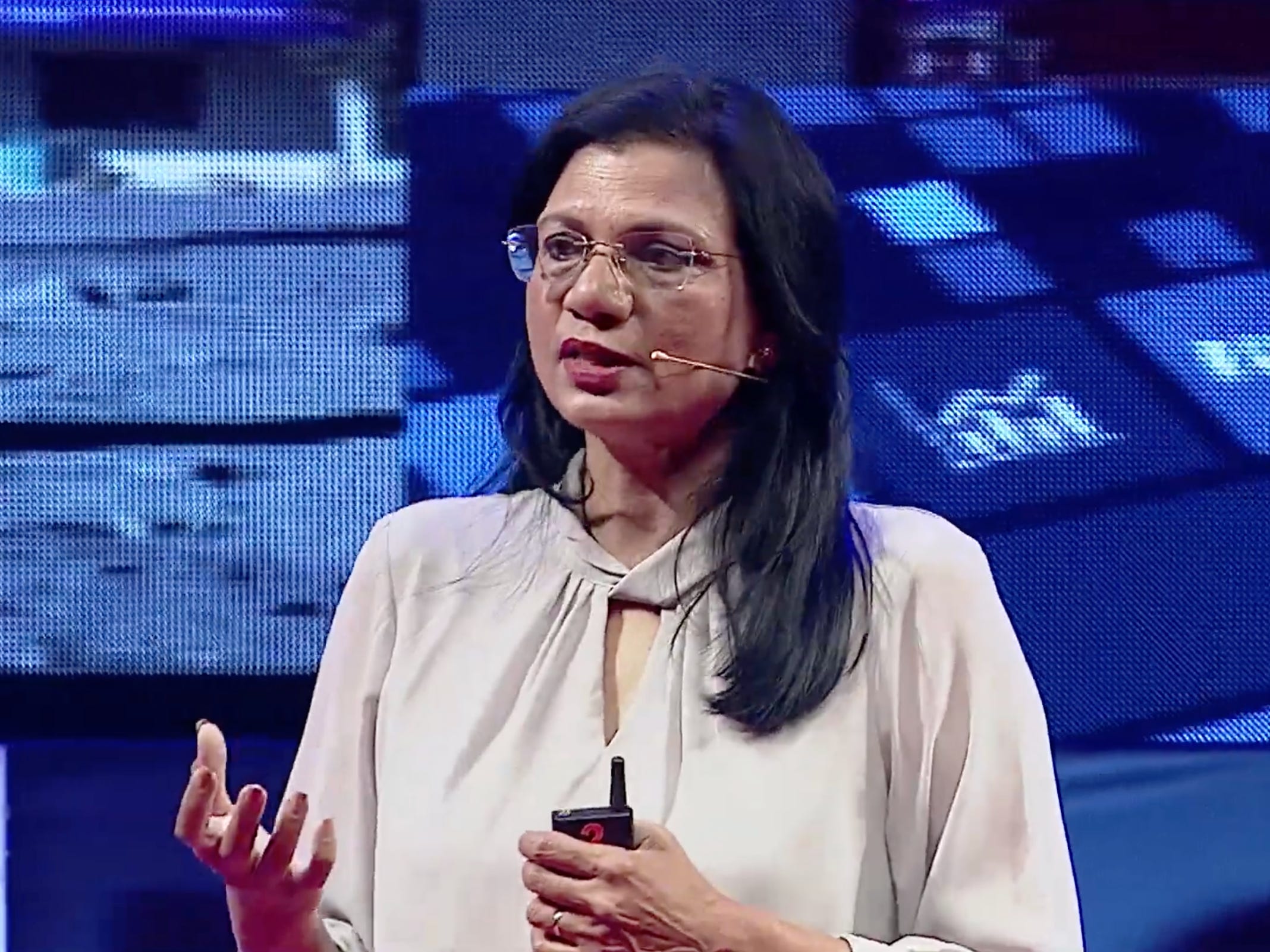
Season 1, Episode 2
Duration: 37:14 minutes
Recorded: 23 March 2026
Dr. Archana Sharma, a senior scientist at CERN and a long-time contributor to international scientific collaborations, joins The Science Diplomat for a conversation on how large-scale science operates as both a technical and diplomatic system.
Drawing on her experience in experiments that contributed to the discovery of the Higgs boson, Sharma describes collaboration not as a singular moment of discovery but as a long-term process built on coordination, governance, and shared responsibility. She emphasizes that large scientific systems function through interdependence, where no individual, institution, or country can succeed independently, and where trust and reliability are as critical as scientific insight.
The conversation explores how scientific collaboration is shaped by unequal access to resources and infrastructure, and how participation depends not only on capability but on the ability to build and sustain trust over time. Sharma highlights the structural challenges of recognition in collaborations involving thousands of contributors, and the mechanisms developed to ensure visibility and career progression within such systems.
She also reflects on leadership and negotiation within international collaborations, including her role in developing the Gas Electron Multiplier (GEM) collaboration across multiple institutions. These efforts required aligning funding cycles, technical standards, and institutional priorities — demonstrating that scientific progress often depends on diplomatic skill as much as technical expertise.
Throughout the discussion, Sharma frames science diplomacy at an institution like CERN as something embedded in the daily practice of large-scale science.
The conversation concludes with reflections on the future of global science, including the need for sustained investment in shared infrastructure and the importance of maintaining trust between nations in an increasingly complex geopolitical environment.
Listen to the full conversation below.
The Science Diplomat Podcast - Season 1, Episode 2
Key Themes
Scientific collaboration as interdependence rather than coordination
Trust and credibility as conditions for participation
Recognition and visibility in large-scale scientific systems
Inequality in access across countries and institutions
Leadership, negotiation, and alignment in global collaborations
Science diplomacy as embedded practice rather than formal framework
Transcript
This is the verified transcript of Season 1, Episode 2 of The Science Diplomat podcast, featuring Dr. Archana Sharma. The text has been lightly edited for clarity and minor transcription corrections. The substance of the conversation has not been altered.
Amna Habiba: Hello and welcome back to the Science Diplomat podcast. I’m your host, Amna Habiba. And today with us we have a very special guest. But before I introduce her, let me talk a little bit more about what we’ll be talking about today. We often hear a lot about major scientific discoveries, but not as much about the people in the years of collaboration that makes it possible. Because behind these moments are thousands of researchers, working across countries and institutions, trying to build something together over time. Dr. Archana Sharma is a physicist who has spent decades working in large international collaborations. At CERN, she has served as a Senior Scientist, contributing to major particle physics experiments, leading the GEM collaboration and helping develop the detector technologies used in global research today. Her work has involved coordinating teams across institutions and countries. And today we’re not just talking about the science but what it feels like to actually work in such environments — how decisions get made and what really holds everything together over time. So, Dr. Sharma, you’ve moved from Jhansi into one of the most international scientific environments in the world. When you first arrived, what were you stepping into?
Dr. Acharna Sharma: Thank you, Amna, for this question. And I must say that it is a humbling moment to reflect on the journey. I indeed arrived from Jhansi, a very small place in India, into an environment that was not just international, but it was very institutional. Because CERN is not just a laboratory. It’s a living system. And that living system will outlast individual careers like mine. All the people who came before me. So what really struck me was the scale of continuity of the experiments that were planned for decades, of the detectors that were the size of buildings, and teams who spent a large portion of their lives here. So indeed coming from India, and from someone outside that ecosystem, you quickly realize that you’re entering a structure which has its own rhythm and its own norms and hierarchies. So yes, it was also another knowledge that comes to the fore, that you are surrounded by extraordinary competencies and expertise. And you have to learn how to function in that machine, being a tiny cog that is already in motion even long before you arrived. So yes, I had no clue what I was stepping into.
Bupe Chikumbi: So what did you understand early on about how that environment actually functions day to day that you wouldn’t have seen from the outside?
Dr. Acharna Sharma: From the outside, you know, large science looks very glamorous. You know, in those days, in the ‘80s, late ‘80s, coming out of a country like India was also quite something that you’re coming to another planet. And large science, it looks like pure intellectual collaboration. But once you’re inside it, then you realize that it’s the logistics. It’s the governance. It’s the negotiation. It’s the patience that you need. And of course, decisions are not made instantly, because they affect thousands of people and millions in public investment. Indeed, progress depends as much on reliability and trust as on brilliance or intelligence, I would say. And if people you know will deliver what you promise, on time, transparency and collaboration, the doors will open. And if not, even great ideas can stall.
Amna Habiba: What made this early period in your career difficult to adjust to or anything that you tried to tackle moving into this new environment?
Dr. Acharna Sharma: Yeah, I would say again it was coming to another planet, but the difficulty was not scientific, if I may say so. It was cultural and it was structural as well. One has to learn how to speak, when to intervene, to find your own voice, in addition, and how decisions are actually made, and how you build your own credibility without overstepping from your role or without being too visible. And clearly, there’s also a psychological adjustment. Because you are moving, for me particularly, I would say that I was the most accomplished in the context when I was in India doing my studies. And then you come to another place where you are one tiny, unaccomplished person among very accomplished scientists. So this transition requires a tenacity and resilience that one was not prepared for, and therefore the difficult period initially. And one needs also a willingness to start again, professionally speaking.
Amna Habiba: So during your time at CERN over the past years, what does collaboration really look like? I know that a lot of these institutions bring together people from many different countries over long periods of time and the projects, they span longer than the people that stay there. But how did the collaborative environment feel for you at least?
Dr. Acharna Sharma: I think the key word I have learned over the last decades, and my only job was working at CERN all my life, so that is collaboration. And day-to-day, it is less dramatic than we can imagine. Mainly it is about meetings, about documentation, controlling versions of software, safety reviews, technical debates, and indeed coordination across time zones, as we are doing today as well. I mean, large experiments must have a process, must have a system. And at the same time, there’s a very strong sense of shared ownership, because we all have a common goal. And indeed, no single person, or no single institution, or no single country can build or operate these detectors, nor the facility for that matter. One has to depend on other people. And this creates both solidarity and also some tension. So I would say collaboration is not just cooperation. It is interdependence and co-dependence as well, which is based on a strong sense of trust and transparency.
John Heilprin: So, I just want to thank you again for joining our podcast. It’s really exciting to talk to you. And I feel like we would be remiss, obviously, if we didn’t talk about the Higgs boson, and your experience during that time. And I feel like I have to preface that by saying for me, I joined The Associated Press in Geneva in 2010, and I knew that it was really an exciting time to be reporting on CERN, knowing that something was up. And my father was a physicist, and, you know, I knew that there was a big story out there. And so I spent a lot of time working the story and managed to break the story for The Associated Press, which I was very proud of. But I also got to be in the room for the formal announcement. I somehow wound up seated pretty near Peter Higgs. And I know that you were there. I think what struck me was just the scale of it. I think I had had a tour privately of some of the facilities and it was amazing to me just the number of people who were involved and across all these countries. So can you talk about what was that like for you? What exactly was your role and your team’s role? And how did that work?
Dr. Acharna Sharma: Thank you, John. First of all, congratulations that you chose very well the time to come to Geneva, because the Higgs discovery was around the corner when you came, and I’m so glad that you got to cover that story. And I might say that when we are working within an experiment, this discovery was not just a single moment. Because in 1964 came the equation which described what could a Higgs boson and what would be its role in understanding the origins of the universe, namely completing the standard model. So while we are working like a big beehive, everybody’s working and doing their job, my work was working in detector development initially. And then to build those detectors, to install them, to calibrate them, collecting data, and then analyzing that data. And once again, I will highlight collaboration, because it was not my work, it was our work. And this work, together with my colleagues, this involved ensuring that the instrumentation performed reliably and that the data were trustworthy. Everyone in the collaboration could trust and look at the data and analyze the data. In addition, there were two experiments. One was CMS, that was my experiment, the Compact Muon Solenoid, and the ATLAS experiment that you certainly know and you must have visited. That was a sister experiment, but both of them were healthily competing with each other for the Higgs boson. And of course, nature is the same wherever you are. You know, gravity is the same in New York or in Geneva. In the same way, the Higgs boson, if it were to be seen in the Large Hadron Collider, it should be seen in both experiments. So yes, when the announcement came, it represented thousands of incremental contributions. Many of them were invisible. Many people were not there to see. We were so fortunate that Professor Peter Higgs was there to see in his lifetime the result of this large number of thousands of people working together and finally converging into a result that the world could see. And I must say that the Higgs boson discovery also gave life to this little less-known laboratory called CERN to the rest of the world. So this was a very important point in the life of all the scientists, engineers, technicians that were involved and students too, myself included. And then the life of CERN as well, which came into the limelight and everybody, and it became — the Higgs boson and CERN became the topic of discussion in drawing rooms and on the TV, you could see what’s happening at CERN. So very proud moment also for me.
Bupe Chikumbi: Amazing. So around that period working on the detectors, the CMS, or the ATLAS experiment, you know, when everything was building toward the Higgs announcement, was there a moment where collaboration became really difficult? And if so, what changed between the people or the institutions.
Dr. Acharna Sharma: Thank you for the question. I will say that collaboration is a challenge and a lot of tenacity is needed to continue these intergenerational experiments. When I came to CERN in 1987, I had zero idea about collaboration or about how things work in this large setup of an international cooperation. And collaboration becomes difficult when priorities will diverge. For example, when institutions face funding pressures, there are technical setbacks or national expectations. Nationally also we want to be in the forefront of the science and the technologies. And then the challenge comes to maintain the collective team goal. You want to have the same goal for every team and still keep acknowledgement of individual constraints, as well as individual contributions and individual careers. So often the solution is not technical, but it’s diplomatic and we need to listen very carefully. We need to find the right compromises, and we have to sometimes even slow down so that everyone can move forward together. So definitely not easy, but doable, as we have demonstrated by doing this kind of diplomacy in our work.
Amna Habiba: You mentioned how there were two experiments happening together, and of course, there’s lots of people across the world that are contributing to this research and even at CERN. So when you said that kind of CERN got into the spotlight after the discovery, how did things, or dynamics, particularly within your team or the collaborations that you were part of change post-discovery?
Dr. Acharna Sharma: So, yes, Amna, indeed, I mean, as I mentioned earlier, that this is rather a management of the large collaboration. It’s a human system that is embedded in political, financial and cultural realities. And these scientists are not only scientists, but they are citizens coming from different countries, employees of different institutions, and different public accountability structures. So pure science is actually science operating within a web of obligations. And therefore, the dynamics is also very different when you’re working at a small scale. So small scale collaboration can rely on personal relationships. And I do remember when I was working in a small group, when I arrived at CERN, we were about 10 people and it’s like a family almost. And when you go to the large scale, and requiring formal governance committees, voting procedures, spokespeople and MOUs, all these things then I would say that coming to the large scale, it absolutely forces to have a structure.
John Heilprin: So, I have just a quick follow up on that. You know I covered, as a reporter I covered diplomacy for years, and then I covered science for years. And until recently, I never actually really heard the term ‘science diplomacy.’ And only in retrospect did I realize that I covered things — like the Iran nuclear deal. Now in retrospect I think of it as a science diplomacy negotiation of sorts. But I’m thinking about what you were just saying and I’m wondering what is the difference between a scientific collaboration and science diplomacy?
Dr. Acharna Sharma: So I would say that CERN itself is the largest example of science diplomacy in action. We did not — just like you, we did not even know the words ‘science diplomacy,’ you know. We were just doing the work. And after the Second World War, when CERN was created in 1954, it was the result of science diplomacy. Where people got together to maintain and consolidate European science. So I think that we are scientists — big science in fact actually are the diplomats. And the future, I think, on the planet also depends a lot on scientists and science diplomacy. So we need to continue to understand how we can stay engaged year by year, because this is a challenge also to remain motivated decade after decade for large teams, which will be on the site. And there are very few individuals who are then carrying an enormous responsibility. So, how do we challenge — how do we somehow overcome these challenges, and how do take these critical responsibilities which take time and visibility, and then the country’s expectations as well have to come in the picture. So science diplomacy in action is what CERN is. We don’t speak about it too much, but we just do it, if I may say so.
Amna Habiba: Thank you for sharing that. I wanted to just go back a bit to the scientific collaboration environment at CERN and any other environments that you’ve observed. Where do you really think that differences in access or visibility appear in a collaboration this large? Are there certain areas where it’s like easier or harder for people to contribute or to be recognized?
Dr. Acharna Sharma: Indeed, I mean, resources are different in country to country, in funding agencies, in priority. And when you have infrastructure in your country that is as good as the infrastructure at CERN, you are coming right prepared to attack and hit the ground running when you come to CERN. But other people, they have to be engaged in an equal manner. But nevertheless they are not able to be up to speed on how they would be able to support, first of all, these teams on site, because institutions can or cannot manage large teams and travel ability for that matter and continuity of personnel. Because if I ask today that I want to have in my experiment, just giving you an example, take two engineers. I want to have two engineers for 10 years from an institution, say in the United States. Can they promise us? They might be able to, because they could be long-term employees of an institution. However, if I go back with the same question to another country that is less stable or less endowed in resources for science funding, it becomes a challenge for them to send people and maintain teams on the site. So, they will not commit to have this or give this resource. So time itself becomes a resource, and the ability to stay engaged becomes these kind of differences that you have asked me about. And you see then in the way people engage, because they pick up responsibilities that they will be able to deliver with you.
Bupe Chikumbi: That’s a really good point. And just staying on that point of access to funding, a lot of people around the world, such as myself, I myself come from Southern Africa. I come from Zambia. And we imagine global science as open and merit-based. But in practice, we get to see that where you come from, especially for researchers from the Global South, what you have access to shapes how you enter and how you are seen in these rooms. So for someone coming in from these kinds of contexts, what is actually hardest to access?
Dr. Acharna Sharma: I think it’s not very simple, I must say. However, there is something which is quite important, and I will call it — the access is not the equipment, but the trust. And building that trust takes time. Sometimes it begins just by a young student who would just come and spend, say, some time here, and starts being trusted, starts taking responsibilities, and then goes back home and continues that responsibility from back home. Then this is a demonstrated reliability and that trust, as I mentioned earlier as well, becomes critical to getting access to what we would like to be doing in the collaboration. So visibility, and visibility comes after being credible, and after being trusted upon for some kind of participation. And certainly without trust, participation definitely remains peripheral.
John Heilprin: And sort of following on that, I guess, trust — you know how are contributions themselves recognized and what determines a person’s visibility?
Dr. Acharna Sharma: This is a very important question and I worked upon this question some years ago in great detail for my experiment itself, because a single person’s recognition is very, very challenging in a large collaboration. Recognition becomes even more complex because the outputs are collective outputs, you know. I am working on a magnet that was designed in 1992 by an engineer, or somebody else who is not even there anymore, you know, and his teams. The Higgs boson was discovered by 10,000 scientists. So the visibility and the recognition becomes an equal challenge. So there are rules and regulations on how long-term contributions that other people rely upon are also recognized. And this has to be the job of a career development committee within a collaboration. And I worked very hard on that, too, to create channels by which visibility can be given to younger people particularly, and that comes through leadership roles or coordination responsibility. Because authorship, you know, there are thousands of people in the publications. So how do to capture the influence of one person in that particular paper? So we have now pre-publications, which are then fewer authors, and they can be cited and referenced by committees that understand the value of the work that has been contributed by individuals in these large collaborations. So indeed, it is a very important aspect of collaborations, and people work very hard to ensure that recognition, even if it is complex, it can be at least made affordable.
Bupe Chikumbi: Dr. Sharma, I know you are also very passionate about young people and ensuring that young people have access as well as visibility. So for young scientists entering today, what would you say has changed and what is still difficult in the same way?
Dr. Acharna Sharma: Well, a lot of things have changed after the three letters that came on the planet. That was WWW, right? Thanks to CERN, as you all know. So communication tools have improved dramatically. Remote participation has become easier. Knowledge seeking has become easier. Any question, you type, you get an answer instantly. But then competition has also intensified. Career paths are less secure. There are less opportunities for qualified students and younger scientists. So the challenge for now is to sustain a long-term engagement in this kind of science that we do at CERN. But I must also remind you of something that 90% of the students or PhDs or young scientists, they go to industry. And there CERN tends to be a very good training ground that is churning out professionals that can go to banks, that can to government jobs, that can go to engineering systems, or you name it, and a physicist can do it all, if I may be allowed to say that.
John Heilprin: So I just want to drill down a little bit more. You were talking about these issues of trust and recognition and the committee role. And I guess I’m wondering, you know how does somebody come to be trusted or listened to? And what determines whose voice carries weight?
Dr. Acharna Sharma: That’s an interesting question, John. And I think that navigation through understanding of how to become visible or how to gain influence is quite important. But again, it has to be lived to be learned. And one thing I learned really at CERN was because when you know in India, I was also part of the competition to other students or other teams wherever I was. And the big thing I learned was, once again, competition has to be replaced in our minds as collaboration. Take away the competition, bring the collaboration. What does it mean? That you consistently contribute to solutions, to shared problems, because we have problems every single day. Whenever you’re working, wherever you’re working, whether it’s at CERN or whether it’s a big, large collaboration inside an experiment, you know, whether you are on the accelerator front, or designing or in the R&D, there are always issues every single day. So when you become known as a troubleshooter — so influence is then earned when others know that involving you will make the project succeed. And then everybody wants to work with you and they want to bring you to their project. And that’s the way I think somebody can gain influence and visibility.
Amna Habiba: I wanted to talk a bit more about your collaboration for the CMS GEM collaboration, the international effort developing the gas electron multiplier detectors. And what were exactly some of the, I’d say, negotiations that kept the collaboration moving, considering it was at such a large scale?
Dr. Acharna Sharma: Thank you for this question, because GEM is very close to my heart, you know, it was an idea that came out of my head and I had to of course work very, very hard to get everyone on board those ideas. But the good thing is that you know I have a lot of young talent around me, which is students. And I’ve been constantly having students with me even for my previous projects. So when I started thinking about the GEM collaboration, I first got a couple of students to help me to create prototypes, test them and demonstrate that what I am saying is actually possible. And then of course there was a lot of negotiation, everything from funding cycles and technical standards to the credit and timelines schedules. And every institution operates under different constraints, different time cycles of funding. So all these alignments then require continuous dialogue, which threw me out of the laboratory and made me into a manager. But I did learn that leadership really is less about authority and more about facilitation. How much can you facilitate what the person sitting in front of you would like to obtain out of the project, you know. And once we align those goals, I feel that negotiation then becomes much easier.
Bupe Chikumbi: So, when you are working across institutions with very different levels of capacity, how do those differences show up in decision-making and what did you have to manage to make that work across those differences?
Dr. Acharna Sharma: I love this question, because when I came to CERN, I was exactly in the same situation. I felt that I knew nothing and obviously my capacity was way below par, as I would expect somebody coming to a premier laboratory like CERN. But I do believe in inclusion, first of all, which means that talent can come from anywhere. It is widely distributed. But the opportunities are not as widely distributed. So what do you want to do? You want to create pathways. You want to create training programs. You create exchanges. You create collaborative projects. Then participation expands rapidly. The point for a good leader is to sustain these pathways so that there is an institutional commitment. What do we do for different, let’s say, readiness? We create work packages so that institutions can see and contribute and commit according to their strengths. So inclusivity does not mean to have identical roles. It means meaningful roles for all participants. And I do feel that everyone can contribute.
Amna Habiba: Just going on from there, what do you see going ahead changing within scientific collaboration? And especially with the rise of how we’re defining science diplomacy. What have you seen work and what do think hasn’t worked, and could potentially change to make scientific collaboration and science diplomacy, as a concept, more accessible to scientists and policymakers?
Dr. Acharna Sharma: Yeah, so I feel that there are complex problems on the planet, lots and lots of different problems, and we need to understand how science diplomacy that is in action at CERN can contribute to society. So once you start looking at international cooperation, and when you combine large science with the development, with education, with people who want to really not just be a scientist but also a bridge or a lever between two worlds. So that’s what has changed now. The focus has pretty much shifted from the technical details into social impact, as you rightly said about, spoke about, the Sustainable Development Goals. But I do believe that we should not look at the fuzzy goals, rather we should look at deliverables. So that’s what I have learned in my career, that when you can define the deliverable to the last detail, you will be able to find a solution to that challenge that you are looking to solve. So CERN and science and the way we do science has definitely shifted a little bit, not only from the details of the science and the models and the equations, but linking them and speaking about them for social impact is what people want to understand. And science diplomacy definitely has a role to play as a translator here.
John Heilprin: I’m wondering when you think about how all the pieces of science diplomacy or scientific collaboration fit together, working within the institutions and working with other institutions — which parts feel like they work the best, and which parts maybe need some work?
Dr. Acharna Sharma: Well, I think technological connectivity is the easier part. You know you can speak the same language, the scientific language, and collaborations can be easy, of course, if you’re sitting on the science and technology front. But the challenge are the geopolitical tensions and funding pressures. So that makes it very hard. So definitely large science will depend on the long-term trust between nations and that trust, unfortunately, cannot be taken for granted. So we definitely need sustained investment in shared infrastructure. A facility like CERN is a shared infrastructure for Europe initially, and now it is a share infrastructure for the world — and in the human relationships that support it. So, science diplomacy is not just an episode, you know, that you do it today, and tomorrow you forget about it. This is a continuous maintenance of the collaboration and cooperation.
John Heilprin: Just one quick follow on that. I’m just wondering — I feel like the more that we’ve done this project, the more I see, I feel like science diplomacy is a really interesting lens to view the entire world through. Do you feel that way sometimes?
Dr. Acharna Sharma: Well, I think I am very, very privileged in what I do. And global science really is the work of a large, large community. And I feel that we do need to continue, be patient, and wait collectively and just work together in peace. Science can really bring peace, I think, and that’s the way to go forward.
Bupe Chikumbi: Amazing. Just on a lighter note, and I think the viewers will be very excited about this. So I always make it a point to ask a scientist from CERN, you know, two very important questions when it comes to physics and the world of physics. So the first question is, do you watch ‘The Big Bang Theory,’ the TV show? And if not, would you rather talk about dark matter?
Dr. Acharna Sharma: I see. You see how much time I have, because I do not — I have not watched ‘The Big Bang Theory,’ and dark matter is definitely something which is very intriguing, very elusive as well. And this is why we are working so hard, upgrading the Large Hadron Collider, and, you know, having plans to run it until 2042. Can you believe the kind of scale at which we have to work? To have our detectors work for so long, number one, and second, to keep on schedule, so that you know we can keep within the budget as well. So indeed, we have struggles, we our own struggles, we can disagree, but on the other hand, Big Bang theory and dark matter is what takes us forward to continue to build together and take science forward.
Amna Habiba: Well, thank you so much, Dr. Sharma, for taking the time to speak with us and sharing your experiences from inside these systems. This has been a wonderful conversation about how science is not just produced, but organized across institutions, across countries, and over time. And one word to summarize it, which is, of course, something that we picked up from today’s conversation, is collaboration, which is something we hope that continues to happen within the scientific world. Thank you for joining us. This is the Science Diplomat broadcast, and we’re signing off.
Dr. Acharna Sharma: Thank you so much for having me.
Amna Habiba: Thank you.
John Heilprin: Thank you so much for being on it.
Dr. Acharna Sharma: Thank you.