

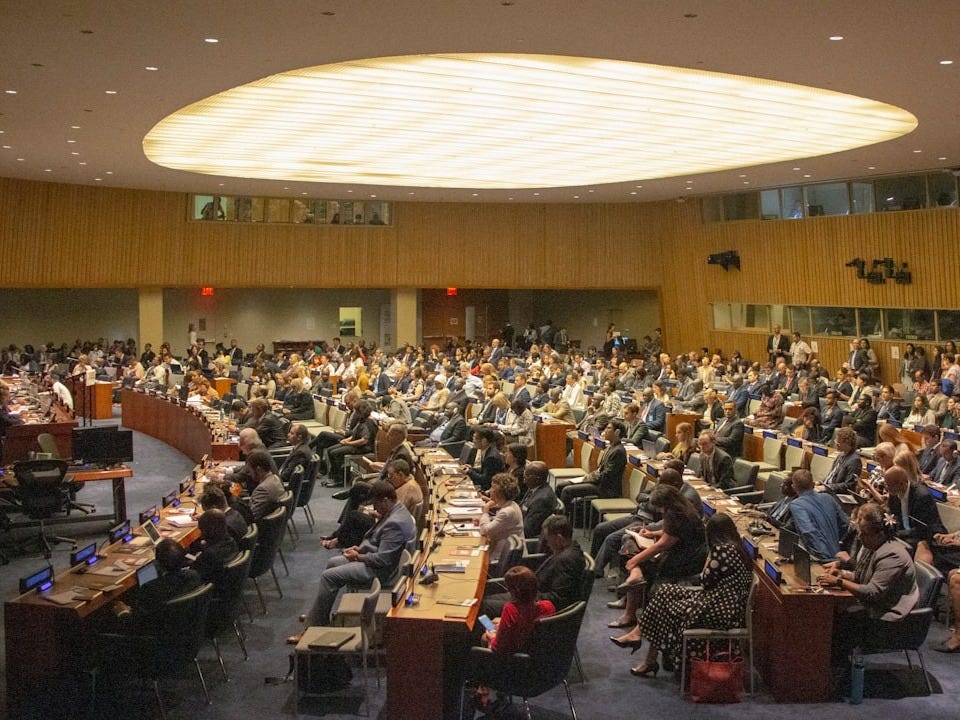
Much of science diplomacy does not rely on treaties, signed agreements, or official government orders. Instead, it works through influence, reputation, and steady, long-term relationships, often happening away from official government meetings.
But science diplomacy is more than just a side activity. In many cases, it is effective specifically because it works alongside, beneath, or even years before official diplomacy begins. Understanding how it functions requires looking at activities that depend less on a leader’s authority and more on access, trust, and expertise.
This informal approach, often called track two diplomacy, allows researchers and experts to keep talking even when official relationships between nations are frozen.
Because these people do not officially represent a government, they can explore risky ideas or test new solutions without the pressure of a public negotiation. This “informal” work often builds the foundation of trust that later makes a treaty possible.
Expertise as influence
Scientific expertise carries weight in international affairs because it shapes how problems are understood. Technical reports and scientific models influence global outcomes by narrowing down possible solutions or by defining risks in ways that multiple nations can agree on.
Climate forecasts, health data, and risk assessments for new technologies often become the foundation for negotiations, even when the data itself is not a legal requirement.
The role of the World Health Organization illustrates this clearly. Through monitoring systems and technical advice, WHO determines which health risks are prioritized worldwide.
While its recommendations are not legally binding laws, they frequently become the standard for national decision-making during emergencies. This shows that the organization’s strength comes from its expertise rather than from formal power.
The limits of this influence were seen during the COVID-19 pandemic, which show how much scientific authorities must depend on political trust. When science is caught up in politics, trust can disappear quickly.
For expertise to function as influence, it must remain credible, transparent, and independent. If these qualities are lost, the ability of science to guide international action is weakened.
Track two and informal channels
Scientific exchanges and professional networks allow communication to continue even when official relations between nations break down. At times of high tension, these channels enable experts to stay in touch about shared risks like nuclear safety, environmental crises, or disasters.
The Pugwash Conferences are a famous example. By bringing together scientists from rival nations, these meetings helped maintain communication on security issues even when governments were unwilling or unable to speak directly to one another.
The gatherings provided a neutral space where technical experts could discuss the dangers of nuclear weapons without the constraints of official political roles. While these informal mechanisms do not solve deep-seated political conflicts on their own, they serve a vital purpose.
They preserve open lines of contact, clear up technical misunderstandings, and reduce the risk of a situation spiraling out of control due to a simple lack of information or a misperception of an opponent’s capabilities.
Standards, norms and quiet coordination
Another way science diplomacy works without official orders is through the creation of shared standards and rules. Technical standards covering everything from how data is saved to specific safety steps usually come from experts reaching an agreement rather than from high-level government negotiations.
Once these rules are set, they dictate how markets operate, limit which technologies are used, and influence laws across different nations.
The European Union provides a clear example of how this quiet coordination works. By setting strict rules for its own region, deciding who gets research funding, and participating in international groups, the E.U. shapes global standards for things like data privacy, environmental tracking, and new technologies.
These processes are rarely called diplomacy, but they have major global effects. They influence how technology is built and managed far beyond European borders.
Taking part in these technical meetings has deep diplomatic meaning. The results can often seem small or purely technical at the time, but they eventually become the invisible foundation for how the world operates.
Because these rules are hard to change once they are in place, they give the nations that helped create them a long-term advantage in shaping the future.
Science attachés and boundary roles
Inside governments, science diplomacy often relies on people who work in hybrid roles, such as science attachés and technical advisers, and act as a bridge between the research community and the world of diplomacy.
Success in these positions comes from the ability to translate complex scientific discoveries into practical information for policymakers.
Such roles have clear limits. Attachés must work within their national priorities, follow security rules, and navigate hierarchies. Despite the constraints, they make international cooperation easier by finding common ground, managing potential risks, and stopping technical disagreements from turning into major political crises.
The influence of these experts is usually subtle, happening behind the scenes. Their impact is most often visible during times of crisis, such as the negotiations over the Iran nuclear deal more than a decade ago, when they keep communication lines open and provide the technical clarity needed to resolve a conflict.
By acting as a steady link between different nations, they ensure that scientific evidence remains a part of the diplomatic conversation even when tensions are high.
Trust without illusions
Trust is often described as the main goal of science diplomacy, but in reality, it is rarely a simple or purely friendly feeling. Instead, science diplomacy focuses on building functional trust.
This is the confidence that partners will share data accurately, follow agreed-upon steps, and report technical risks honestly, even when their nations are having major political disagreements.
That type of trust is limited and depends on specific conditions. It can disappear quickly if scientific teamwork gets tied up in national security worries, business competition, or local politics.
Because functional trust is so fragile, it cannot survive on good intentions alone. It requires constant, repeated interaction between experts and strong support from stable institutions like the United Nations or African Union to keep the relationship working.
When this trust is maintained, it allows scientists to work together on global challenges like climate change or disease outbreaks, even when their governments are not on speaking terms. This creates a “technical bridge” that remains standing even when other diplomatic paths have crumbled.
Limits of informal power
The very mechanisms that allow science diplomacy to function without official authority also make it vulnerable. Because informal channels are not protected by legal treaties, they can end abruptly when political winds change.
Expert networks are highly sensitive to external pressure. A sudden funding cut or new travel restrictions can instantly disconnect researchers who have collaborated for years. Similarly, technical standards that were built through expert consensus can be ignored or bypassed by nations seeking a competitive edge.
When scientific advice contradicts a government’s immediate political goals, that advice is often sidelined, regardless of its technical accuracy.
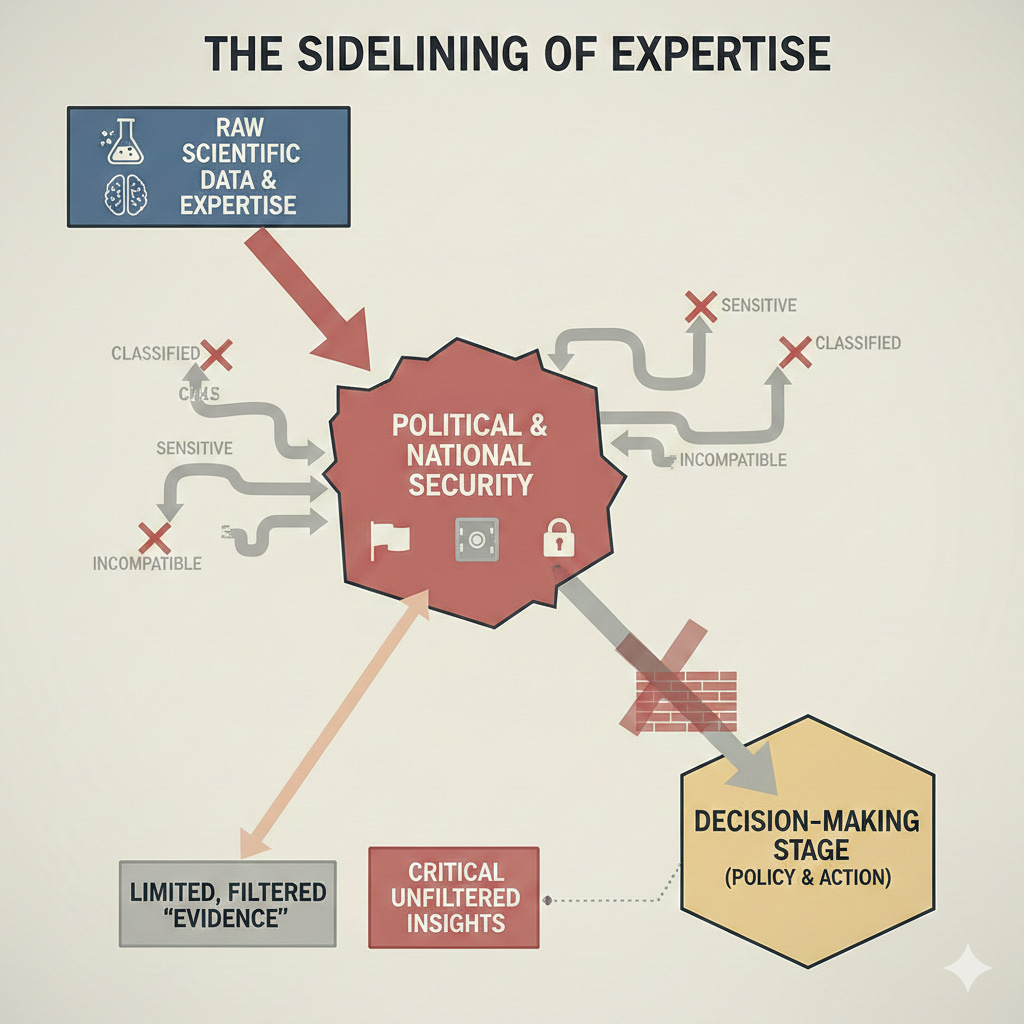
Science diplomacy cannot replace political decision-making. Its influence depends on specific conditions, such as open borders, stable funding, and a shared respect for evidence, that are not available in every part of the world.
In many regions, the ability to participate in these networks is increasingly contested or limited by a lack of resources.
Recognizing these limits is essential for understanding what science diplomacy can realistically achieve. It is a powerful tool for building bridges and managing risks, but it remains a “soft” form of influence that can be overruled by the “hard” power of national interests and political conflict.
Looking ahead
Science diplomacy is most vital where official government power is limited. It works through expert knowledge and long-term relationships rather than through force. The next part of this series focuses on the barriers that cause this cooperation to fail.
These breaking points include national security worries, the gap between wealthy and developing nations, and global competition. Understanding these limits is necessary to see how international teamwork can survive when nations have conflicting goals.
Next: Part 4 — The limits of science diplomacy