Global Science Runs on Trust, Not Just Technology
CERN senior scientist Archana Sharma argues that large-scale scientific collaboration depends on negotiation, credibility, and long-term coordination across unequal systems.

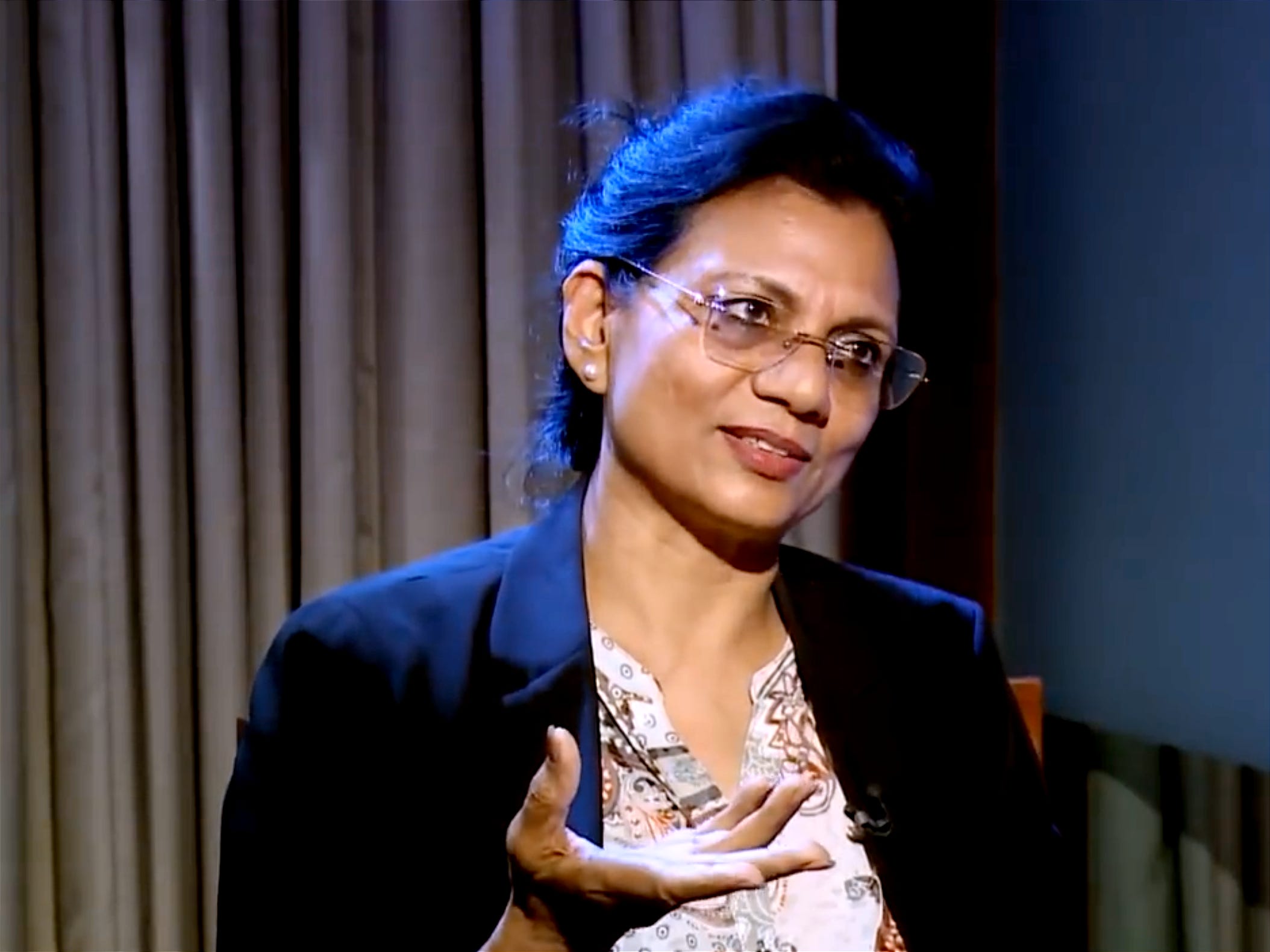
After decades at CERN, one of the world’s largest scientific collaborations, physicist Archana Sharma sees global science as something more than a technical enterprise.
It is a system sustained by relationships as much as by technology.
“Collaboration is not just cooperation. It is interdependence and co-dependence as well, which is based on a strong sense of trust and transparency,” Sharma said on The Science Diplomat podcast.
That distinction becomes more consequential as scientific projects grow in scale and complexity. Experiments at CERN, including those leading to the discovery of the Higgs boson in 2012, involve thousands of researchers across dozens of countries working within a shared system.
As geopolitical competition intensifies and science becomes more strategically important, the conditions that sustain such collaboration are coming under greater strain.
“Competition has to be replaced in our minds as collaboration. Take away the competition, bring the collaboration,” she said. “What does it mean? That you consistently contribute to solutions, to shared problems, because we have problems every single day.”
Science as a system of relationships
For Sharma, the challenge is not only technical coordination but maintaining trust across institutions and countries that differ in resources, capacity and political priorities.
“Progress depends as much on reliability and trust as on brilliance or intelligence,” she said. “If people know you will deliver what you promise, on time, with transparency, the doors will open. And if not, even great ideas can stall.”
Large scientific discoveries are often presented as singular breakthroughs. In practice, Sharma says, they depend on sustained coordination and incremental progress across distributed teams.
“CERN itself is the largest example of science diplomacy in action,” she said.
During the period leading up to the Higgs boson discovery, she recalls, the work depended less on a single moment of insight than on ensuring that teams working on detectors, data analysis and calibration functioned “like a big beehive.”
Inequality inside collaboration
Within collaborations of that scale, participation is shaped by unequal access to resources and infrastructure.
Researchers from countries with fewer resources may face additional barriers to long-term involvement. But Sharma argues that material capacity alone does not determine meaningful contribution.
“Inclusivity does not mean identical roles,” she said. “It means meaningful roles for all participants. And I do feel that everyone can contribute.”
She has worked to expand participation from South Asia, helping create pathways for younger researchers to gain visibility through leadership and coordination roles.
“I worked very hard on that, too, to create channels by which visibility can be given to younger people,” she said.
Science diplomacy in practice
CERN’s collaborative model operates at the intersection of science and diplomacy, but not primarily through formal negotiations or policy frameworks.
By Sharma’s account, science diplomacy is embedded in practice — in the routines, expectations and relationships that sustain collaboration over time. Influence is earned through reliability and contribution, not formal authority.
“Then everybody wants to work with you and they want to bring you to their project,” she said. “That’s the way I think somebody can gain influence and visibility.”
This perspective contrasts with efforts to define science diplomacy primarily through institutional frameworks. In large-scale scientific systems, it is often enacted informally, through day-to-day coordination across borders.
Sustaining collaboration
Despite rising geopolitical tensions, Sharma does not see large-scale scientific collaboration as inherently fragile. But she argues that sustaining it requires continuous investment — not only in infrastructure, but in relationships.
“Large science will depend on the long-term trust between nations, and that trust, unfortunately, cannot be taken for granted,” she said.
Facilities such as CERN function as shared infrastructure, but they are also built on human relationships that require ongoing maintenance.
Science diplomacy is not just an episode that you do it today, and tomorrow you forget about it,” Sharma said. “This is a continuous maintenance of the collaboration and cooperation.”

