The IAEA prepares for the next phase of the Iran agreement
As Washington and Tehran move from ceasefire diplomacy to implementation, Rafael Grossi says technical talks and verification will determine what comes next.
GENEVA — The International Atomic Energy Agency is preparing to begin technical discussions with the United States and Iran following the signing of a memorandum of understanding that places the agency at the center of efforts to prevent Tehran from developing a nuclear weapon.
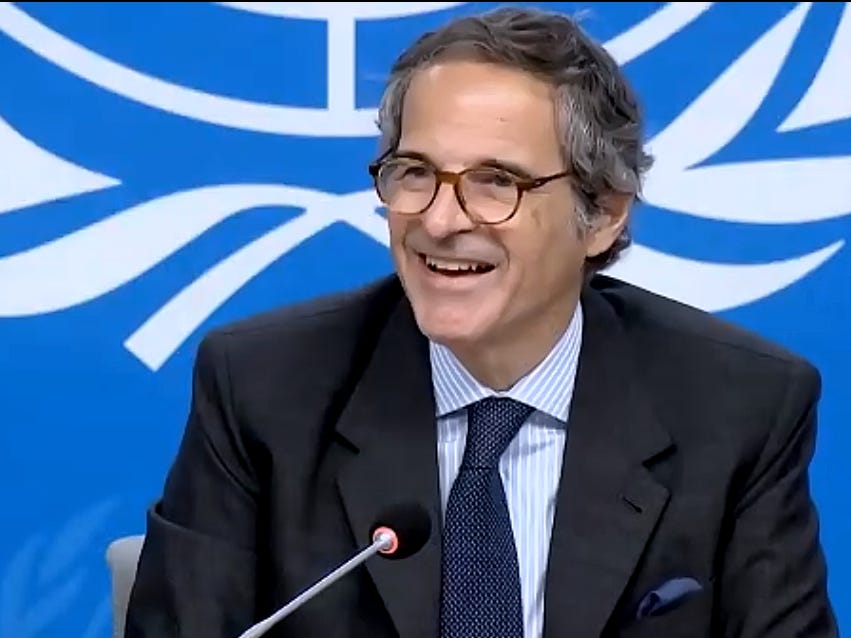
“The indispensable role of the IAEA is recognized as a sound point of departure,” Director General Rafael Mariano Grossi told reporters on Thursday at U.N. headquarters in Geneva. “Now it’s for us to sit down with our American colleagues, our Iranian colleagues, and start formulating the concrete steps that will have to be taken.”
Grossi’s remarks highlighted a transition that often receives less attention than the diplomacy that precedes it. The agreement reached after the 12-day conflict involving the United States, Israel and Iran established broad political commitments. The next phase will focus on how those commitments are implemented, monitored and verified.
Under the memorandum, Iran’s stockpile of highly enriched uranium would be down-blended under IAEA supervision while negotiators pursue a broader agreement within 60 days. But many of the details remain unresolved.
“We are at the gates of the decisive phase of the technical conversations,” Grossi said. “Let’s have them and then we’ll see.”
Throughout the briefing, during which he simply fielded reporters’ questions and offered no opening remarks, Grossi declined to discuss specific technical options under consideration, including whether enriched uranium would remain inside Iran, be diluted to lower enrichment levels or be transferred elsewhere.
“There are several possibilities that open up,” he said. “It’s a moment of enormous responsibility for us all to try to consolidate what has been acquired through the memorandum.”
He also stressed that the agency would participate only in arrangements that meet its technical standards.
“The IAEA will do only a process which is technically sound,” Grossi said. “If we do not feel that we have the technically sound basis, we would not do it.”
The emphasis on technical credibility resurfaced later on Thursday during a separate appearance at the Geneva Graduate Institute, where Grossi spoke about multilateral organizations and international leadership in his capacity as a candidate for U.N. secretary-general.
Reflecting on the role of international organizations, Grossi, who earned his PhD in international relations from the institute, argued that their influence derives from something different than conventional political power.
“In an international organization, you don’t have power, but you have authority,” he said.
The observation helps explain the role the IAEA now occupies in the Iran negotiations.
The agency cannot compel governments to comply with agreements. It does not negotiate ceasefires or impose sanctions. Yet both Washington and Tehran have accepted that any durable arrangement will require an independent institution capable of verifying what each side does.
That function has long distinguished the IAEA from many other international organizations. Its authority rests not on political leverage but on the credibility of its inspections, safeguards and technical assessments.
Grossi suggested the agency already has a clear understanding of what would be required under the new arrangement.
“We know exactly what is needed, and we will do it,” he said when asked whether the agency would deploy personnel to Iran as part of a verification effort.
The agreement’s success remains uncertain. Negotiators still face difficult questions involving sanctions, nuclear restrictions and regional security issues. But Thursday’s discussions made clear that the next phase will depend heavily on technical verification.
The memorandum itself acknowledges as much. The IAEA is not a participant on the margins of the agreement. It is one of the mechanisms through which the agreement would function.
“What happened happened,” Grossi said. “Now we have a chance, we have to seize it.”


