

Issue No. 24 | Monday, September 28, 2026
Good morning,
Welcome to The Science Diplomat Playbook, your Monday morning guide to what’s shaping the week ahead in global science diplomacy.
The lead
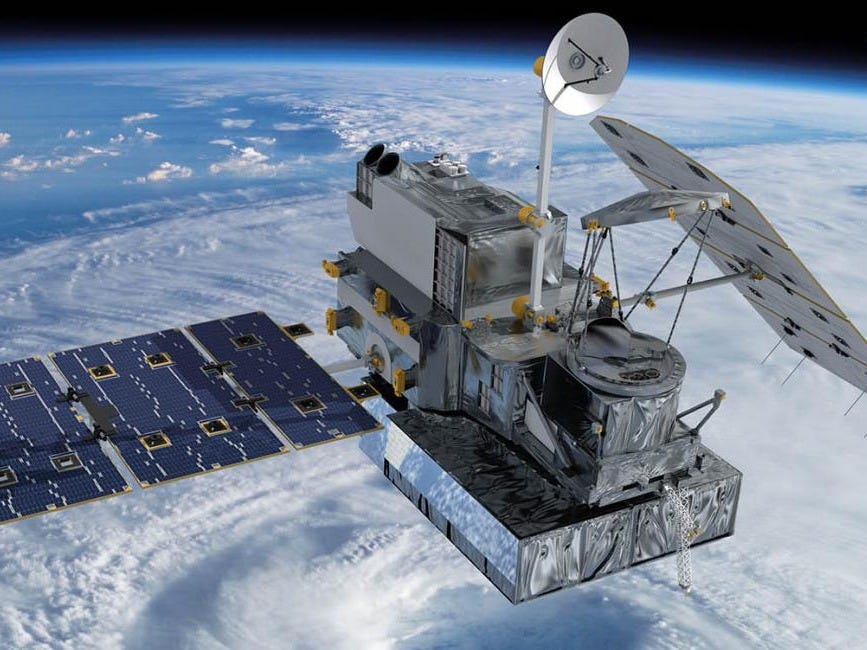
Weather satellites, radar and other observing systems depend on radio frequencies to transmit data and, in some cases, to make the observations themselves. Those frequencies are getting more crowded.
The World Meteorological Organization and International Telecommunication Union bring meteorologists, spectrum regulators and telecommunications experts together in Geneva this week to examine growing pressure on the radio spectrum used for weather, climate and water observations. The three-day meeting begins Monday at ITU headquarters.
Demand for usable radio frequencies is increasing from mobile communications, satellite services and other technologies. Some of the frequencies involved are particularly important to meteorology. Passive satellite sensors measure naturally occurring radiation at specific frequencies to determine atmospheric temperature, water vapor and other conditions. Radar and other systems use spectrum to monitor precipitation, storms and the wider Earth system.
Interference can degrade those observations. That can affect the data used for weather forecasting, climate monitoring and early-warning systems.
The rules are negotiated internationally. Governments allocate spectrum through the ITU, while WMO represents the operational requirements of weather and climate services. This week’s seminar will examine interference, evolving requirements and preparations for the 2027 World Radiocommunication Conference, where governments will again negotiate international rules governing spectrum use.
WMO and ITU will also introduce an updated joint handbook on spectrum use for weather, climate, water and other environmental applications.
The issue rarely attracts the attention given to climate negotiations or extreme weather. But the ability to forecast a storm or track a changing climate depends partly on countries agreeing to protect the frequencies used to observe them.
Elsewhere this week: the U.N. General Assembly concludes its General Debate and turns to nuclear disarmament; the Science Summit moves to Nairobi; WIPO releases its Global Innovation Index; and UNECE convenes Sustainable Energy Week.
Major processes to watch
Nairobi — Science Summit turns to African science systems
After two weeks of online programming and last week’s meetings alongside the U.N. General Assembly in New York, the Science Summit opens its final in-person program Monday in Nairobi.
The three-day agenda covers artificial intelligence, cybersecurity, agriculture, health, research infrastructure and science diplomacy. Running through many of those discussions is a more basic question: how to build and finance scientific capacity.
Monday includes sessions on AI governance and investment, cybersecurity and digital resilience, and financing science and innovation. Tuesday turns to agriculture, food security and science diplomacy. Wednesday includes One Health, genomics and precision medicine, research infrastructure and evidence-informed policymaking.
One session examines how governments, development finance institutions, investors and industry can mobilize capital for research, innovation and commercialization. Another focuses on science diplomacy, research partnerships and financing.
The Nairobi program puts those questions in an African context: scientific capacity, access to capital, research infrastructure and the ability of institutions to participate in international scientific and technological cooperation.
Energy — Geneva puts resilience, technology and finance on the same agenda
UNECE Sustainable Energy Week begins Monday at the Palais des Nations, bringing together expert groups on energy efficiency, renewable energy and cleaner electricity systems before the Committee on Sustainable Energy holds its 35th session.
The first discussion is on resilient energy infrastructure. The week’s agenda then covers data centers and grid resilience, biofuel quality and sustainability standards, renewable-energy integration, industry and buildings, digitalization, electric mobility and financing.
On Wednesday, the Committee on Sustainable Energy begins with a high-level segment on energy security, affordability and sustainability. Its formal work includes the future program of the committee and its expert groups.
Electricity grids must absorb new sources of generation and new sources of demand, including data centers and electric vehicles, while governments confront questions of affordability, infrastructure resilience and financing.
Innovation — WIPO measures the geography of scientific entrepreneurship
WIPO releases its 2026 Global Innovation Index on Tuesday, covering the innovation performance of nearly 140 economies and the world’s top 100 innovation clusters.
This year’s theme, “Powering entrepreneurs at the frontier of science,” examines how scientific research produces deep-science startups and spinouts. AI, quantum computing, synthetic biology and advanced materials are among the technologies WIPO identifies as moving from research toward commercial application.
The report also looks at the obstacles: long development timelines, capital gaps and the emergence of deep-science hubs outside established innovation centers. Governments, companies, universities and research institutions all figure in that ecosystem.
UNGA watch
High-Level Week ends. The General Assembly does not.
The General Assembly concludes its annual General Debate on Monday. The same day, governments mark 25 years since the adoption of the Durban Declaration and Program of Action and are expected to endorse a political declaration renewing commitments to its implementation.
On Tuesday, the General Assembly turns to nuclear disarmament.
Its annual high-level meeting on the total elimination of nuclear weapons takes place this year after the expiration of New START. The U.S.-Russian treaty expired in February without a successor, leaving no agreed limits on the two countries’ strategic nuclear arsenals. The U.N. says no nuclear-disarmament negotiations are currently under way.
The NPT Review Conference took place in April and May, while the first Review Conference of the Treaty on the Prohibition of Nuclear Weapons is scheduled for Nov. 30–Dec. 4.
On Thursday, the General Assembly’s Second Committee begins its work on economic, development and environmental issues.
Security Council watch — Middle East opens the week
The Security Council holds a briefing Monday on the Middle East, including the Palestinian question. Ramiz Alakbarov, acting special coordinator and resident coordinator at UNSCO, is expected to brief alongside two civil society representatives.
Tuesday brings a scheduled vote on reauthorizing the Gang Suppression Force in Haiti and a briefing on the U.N. mission in the Democratic Republic of the Congo.
Council members also conduct their fourth straw poll Tuesday in the selection of the next U.N. secretary-general. The previous round did not produce a conclusive result.
Signals
Data centers have become an energy security issue. UNECE puts their impact on electricity grids alongside resilience, electric mobility and energy-system planning this week.
New deep-science hubs appear on WIPO's map. This year's Global Innovation Index examines emerging concentrations of frontier science entrepreneurship outside established innovation centers.
Development finance is entering the science financing conversation. Nairobi brings development finance institutions together with governments, investors and industry to discuss financing research, innovation and commercialization.
On the calendar
Sept. 7–Oct. 7 — Human Rights Council, 63rd session, Geneva. The month-long session continues. → Meeting information
Sept. 28 — U.N. General Debate concludes, New York. The General Assembly finishes its annual General Debate. → Daily schedule
Sept. 28 — U.N. High-Level Meeting on the Durban Declaration, New York. Governments mark the 25th anniversary of the international framework against racism and are expected to endorse a political declaration renewing commitments to its implementation. → Concept note
Sept. 28–30 — Science Summit 2026, Nairobi. The final in-person program covers AI, cybersecurity, science financing, agriculture, health, research infrastructure and science diplomacy. → Program
Sept. 28–30 — WMO–ITU Global Seminar on Spectrum Use for Meteorology, Geneva. Experts examine spectrum requirements, interference and preparations for future international spectrum negotiations. → Program
Sept. 28–Oct. 1 — UNECE Sustainable Energy Week, Geneva. Expert groups on energy efficiency, renewable energy and cleaner electricity systems meet alongside the Committee on Sustainable Energy. → Program
Sept. 28–Oct. 2 — FAO Committee on Forestry, Rome. The committee holds its 28th session. → Agenda
Sept. 29 — WIPO Global Innovation Index 2026, Geneva. WIPO releases its annual innovation index with a special focus on entrepreneurship at the frontier of science. The public launch runs from 1:30 to 3:30 p.m. → Background
Sept. 29 — U.N. High-Level Meeting on Nuclear Disarmament, New York. The General Assembly holds its annual meeting promoting the total elimination of nuclear weapons. → Background
Sept. 29 — U.N. secretary-general selection, New York. Security Council members conduct their fourth straw poll to gauge support for candidates to succeed António Guterres. → Process
Sept. 30 — Science Diplomacy Journalism: Communicating Beyond the Expert Community, online. The EU Science Diplomacy Alliance holds a public seminar on communicating science diplomacy to broader audiences, featuring The Science Diplomat’s editors. → Program
Closing
You’re reading The Science Diplomat Playbook, a weekly briefing mapping the institutions, technologies and governance systems shaping international cooperation.