

Issue No. 25 | Monday, October 5, 2026
Good morning,
Welcome to The Science Diplomat Playbook, your Monday morning guide to what’s shaping the week ahead in global science diplomacy.
The lead
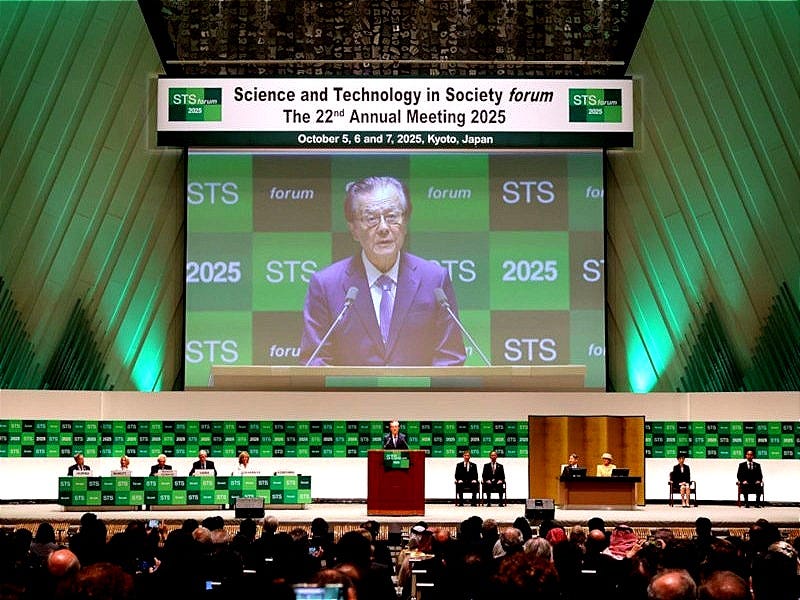
The future of international scientific cooperation is on the agenda in Kyoto this week, as governments, scientists, research institutions and companies meet amid growing geopolitical pressure on the relationships that underpin global science.
The annual Science and Technology in Society Forum runs through Tuesday under the theme “Navigating Tectonic Shifts in Science, Technology, and Society.” Discussions range across artificial intelligence, energy and biomedical science, but also address digital sovereignty, trust in science, international scientific cooperation and the future of science diplomacy.
The meeting has already produced a diplomatic initiative. The United States and 16 other countries on Sunday endorsed the Kyoto Vision for a Golden Age of Science, a joint declaration calling for changes in how research is funded and organized, greater investment in scientific talent and expanded use of what the declaration calls “super intelligence” in scientific research.
The terminology, introduced by President Trump at the U.N. General Assembly last month as a replacement for “artificial intelligence,” has since been adopted across the U.S. executive branch.
The declaration encourages governments to experiment with funding mechanisms including long-duration awards, rapid grants, prizes and challenges, as well as new institutional models for research. It also calls for wider researcher access to AI tools, scientific data, computing infrastructure and experimental facilities.
The stakes for international science are considerably less abstract in Kyiv.
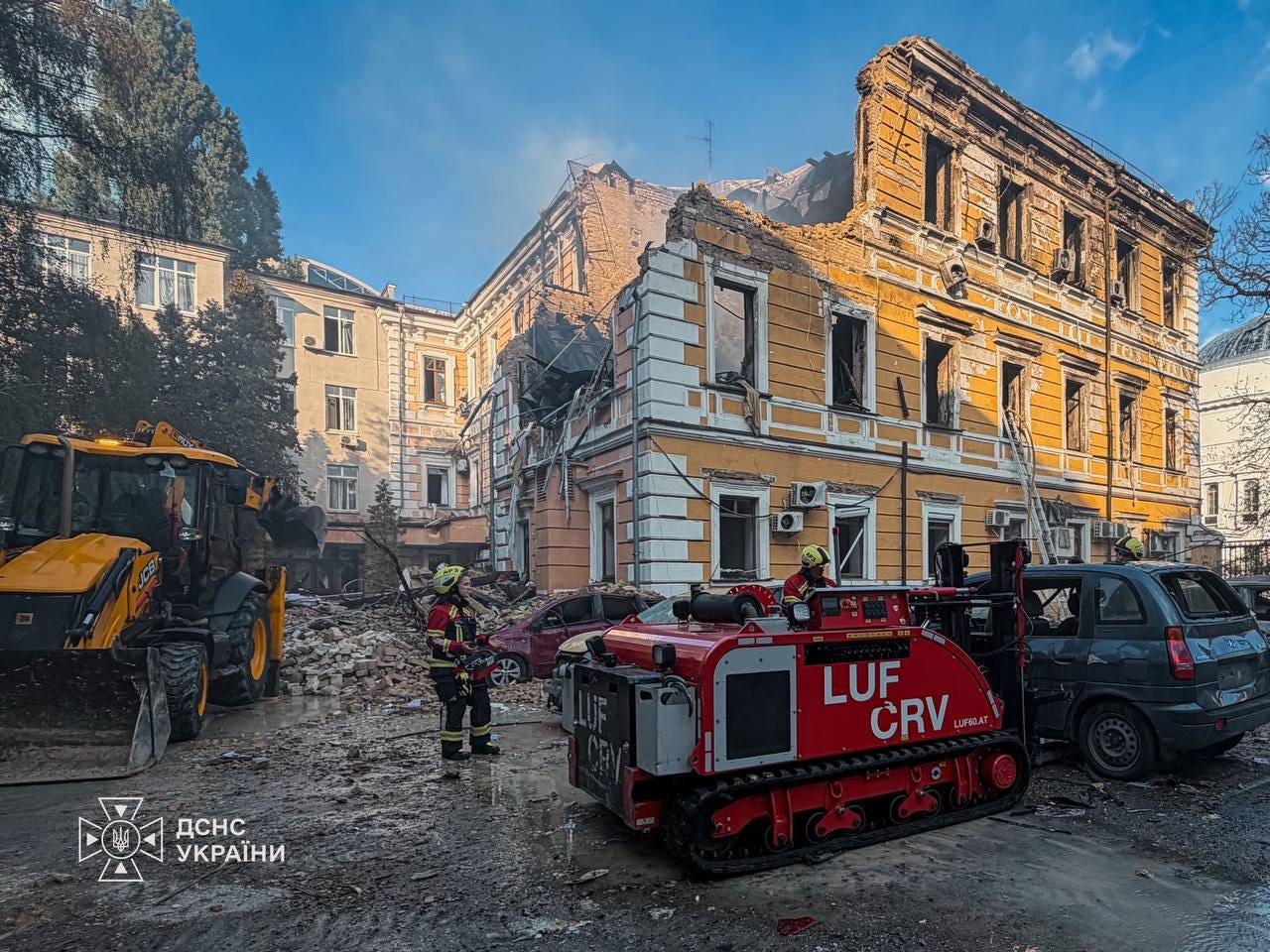
German Chancellor Friedrich Merz and Ukrainian President Volodymyr Zelenskyy visited the badly damaged headquarters of the National Academy of Sciences of Ukraine on Sunday, a week after a Russian drone strike killed at least two people there.
The academy has said it has no connection to military activities and called the strike “an attack on science.” It went further in its response last week: “There can be no ‘science is above politics’ when science is under armed attacks.”
Merz’s visit puts the damaged academy directly into the diplomacy surrounding the war, as questions about protecting Ukrainian science move beyond the scientific community and into relations between governments.
Elsewhere this week, the global space community gathers in Antalya; sustainable finance takes over several days of the Geneva calendar; the Human Rights Council concludes its 63rd session; and the Security Council begins work under the Greek presidency.
Major processes to watch
Ukraine — An attack on science enters wartime diplomacy
The response to last week’s Russian strike on the National Academy of Sciences of Ukraine has moved beyond the scientific community.
Merz and Zelenskyy visited the damaged academy Sunday during the German chancellor’s trip to Kyiv, as Russian strikes continued across the capital. Merz used the visit to call on Russia to end the war and halt attacks on civilians.
The stop was part of a visit that also included German commitments of additional military and energy support. Ukraine’s principal scientific institution has spent years trying to sustain research through war, displacement and damage to scientific infrastructure.
Last week, the academy argued that the attack challenged the idea that science could remain separate from the conflict. European scientific organizations and governments condemned the strike. This week, the visit by Merz puts the protection of Ukraine’s scientific institutions more visibly into high-level diplomacy.
The question extends beyond repairing one building. Ukraine has spent years trying to preserve researchers, laboratories, institutions and international research relationships during the war, while confronting the longer-term task of rebuilding what has been lost.
Space — Antalya puts international cooperation alongside an expanding space economy
The International Astronautical Congress opens Monday in Antalya, bringing space agencies, government officials, scientists, astronauts and companies together for five days of scientific, commercial and policy discussions.
This year’s theme, “The World Needs More Space,” addresses both the expansion of activity beyond Earth and the rules needed to keep space secure, sustainable and accessible as more countries and private companies participate.
International cooperation runs through the program. Discussions include new models for Earth-observation cooperation involving government and commercial satellite fleets, priorities and partnerships for lunar science, and the use of satellite observations in decision-making.
The meetings around the congress broaden that agenda. A U.N.-International Astronautical Federation workshop focuses on using space technologies to strengthen economic resilience in emerging nations, while ministers and parliamentarians meet alongside space agencies, researchers and industry.
There will also be institutional business to watch. On Wednesday, the International Astronautical Federation and Japan Aerospace Exploration Agency are expected to sign an agreement and present the initial framework for the 2028 Global Space Exploration Conference.
Friday is reserved in part for late breaking news: major missions, discoveries and other significant developments emerging close enough to the congress that they could not be incorporated into the regular program.
Kyoto — Science diplomacy examines its operating environment
The STS Forum continues Monday and Tuesday with science diplomacy itself among the subjects under discussion.
Sessions on digital sovereignty, trust in science and international science and technology cooperation run alongside discussions of artificial intelligence, energy and health. The Kyoto Vision announced Sunday gives those discussions a governmental counterpart, with 17 countries endorsing changes in research funding, institutions, AI access and scientific training.
Other discussions address cooperation across political divisions and how international scientific relationships function as governments place greater emphasis on technological sovereignty and security.
Security Council watch — Africa leads the Council’s week
The Security Council opens its substantive work Tuesday with its annual briefing on cooperation with the African Union, against the backdrop of renewed fighting in northern Ethiopia.
Parfait Onanga-Anyanga, the U.N. special representative to the African Union, and A.U. Commissioner for Political Affairs, Peace and Security Bankole Adeoye are expected to brief. Council members are also monitoring Ethiopia after large-scale hostilities resumed in September across Tigray, Afar and Amhara.
Western Sahara follows Wednesday and Thursday, including consultations with U.N. envoy Staffan de Mistura, while the Council votes Thursday on extending the Sudan sanctions regime. Yemen is on the agenda Friday.
Council members are also expected to continue negotiating a Danish draft resolution on protecting medical missions during conflict.
Friday, the Council’s Military Staff Committee is expected to discuss Lebanon and preparations for the transition associated with the closure of UNIFIL by Dec. 31.
Signals
Digital technology is entering the Security Council’s children-and-war agenda. Greece has introduced a draft resolution on the impact of digital technologies on violations against children in armed conflict, with Council members expected to continue negotiations.
Satellite data are moving onto financial balance sheets. Building Bridges will examine how Earth observations and analytics can be turned into rapid agricultural-risk information for insurers, lenders and investors after droughts, conflicts and market shocks.
Banks are starting to scrutinize the AI supply chain. A Geneva discussion this week asks how lenders should assess human-rights risks among data-center and AI clients, extending scrutiny from the minerals used in servers through to banks’ own use of AI.
On the calendar
Oct. 4–6 — Science and Technology in Society Forum, Kyoto. Government officials, scientists, research institutions and companies meet on the international implications of scientific and technological change, including the future of science diplomacy. → Program
Oct. 4–10 — International School on Science Diplomacy, Erice, Italy. Diplomats, international officials, academics and researchers gather for the second edition of a week-long program on the foundations, actors and future practice of science diplomacy. → Program
Sept. 7–Oct. 7 — Human Rights Council, 63rd session, Geneva. The Council concludes its month-long session Wednesday. → Meeting information
Oct. 5 — Protecting Human Rights of Seafarers, Geneva. OHCHR, ILO, IMO, governments, employers and seafarer representatives discuss protections for seafarers stranded, abandoned or detained during armed conflicts and crises. → Overview
Oct. 5–6 — Water Convention Bureau, Geneva. The Bureau of the Convention on the Protection and Use of Transboundary Watercourses and International Lakes meets. → Members
Oct. 5 — Basel, Rotterdam and Stockholm Conventions briefing, Geneva. The conventions’ secretariat begins preparations for the 2027 chemicals and waste COPs, scheduled for April 19–30 in Panama. → Meeting
Oct. 5–9 — International Astronautical Congress, Antalya, Turkey. Space agencies, governments, researchers and companies meet for the 77th IAC, with international cooperation, space sustainability and an expanding global space economy among the issues in focus. → Program
Oct. 6–8 — Building Bridges 2026, Geneva. Sustainable finance discussions cover climate and disaster resilience, nature, emerging markets and the use of technologies including Earth observation and AI in investment decisions. The program includes sessions on converting satellite observations into agricultural risk information and using AI to assess nature-related risks at the asset level. → Program
Closing
You’re reading The Science Diplomat Playbook, a weekly briefing mapping the institutions, technologies and governance systems shaping international cooperation.