

Issue No. 26 | Monday, October 12, 2026
Good morning,
Welcome to The Science Diplomat Playbook, your Monday morning guide to what’s shaping the week ahead in global science diplomacy.
The lead
The world’s leading climate science body meets in Addis Ababa this week with a consequential decision still unresolved: whether its next major assessments will be ready in time to inform international climate negotiations in 2028.
The Intergovernmental Panel on Climate Change (IPCC) opens its 65th plenary session Monday after nearly three years of disagreement over the timetable for its Seventh Assessment Report. The dispute has divided governments over how quickly the scientific reviews should be completed and whether a faster schedule would disadvantage researchers from countries with fewer resources.
The scientists leading the IPCC’s three working groups have proposed completing their reports by September 2028, ahead of the next global stocktake under the Paris Agreement. But countries including India, China, Kenya, Russia and Saudi Arabia have pressed for more time, arguing that researchers from developing countries need sufficient opportunities to contribute.
According to a Reuters investigation published Friday, some participants believe the timetable is being used to delay findings that could increase pressure for stronger climate action. Others argue that aligning the assessments too closely with international negotiations could compromise the IPCC’s independence.
The disagreement reaches into the foundations of science diplomacy. The IPCC does not conduct original research. It brings scientists from around the world together to assess existing knowledge, with governments participating in the approval of major findings. Its authority depends on both the scientific credibility of its assessments and the legitimacy of the international process behind them.
Governments are expected to assess collective progress under the Paris Agreement in 2028, including the adequacy of emissions reductions and climate financing. Without an updated IPCC assessment, those negotiations could proceed without a comprehensive scientific review of developments since the previous assessment cycle.
The Addis Ababa agenda also includes a review of the IPCC’s principles and procedures, consideration of artificial intelligence in its assessment processes, and decisions on its budget.
Elsewhere this week, the World Health Summit examines the future of international health cooperation in Berlin, the IMF and World Bank convene in Bangkok, and Geneva hosts meetings on emerging technologies, refugee protection and sustainable cities.
Major processes to watch
Climate — The IPCC confronts its assessment timetable
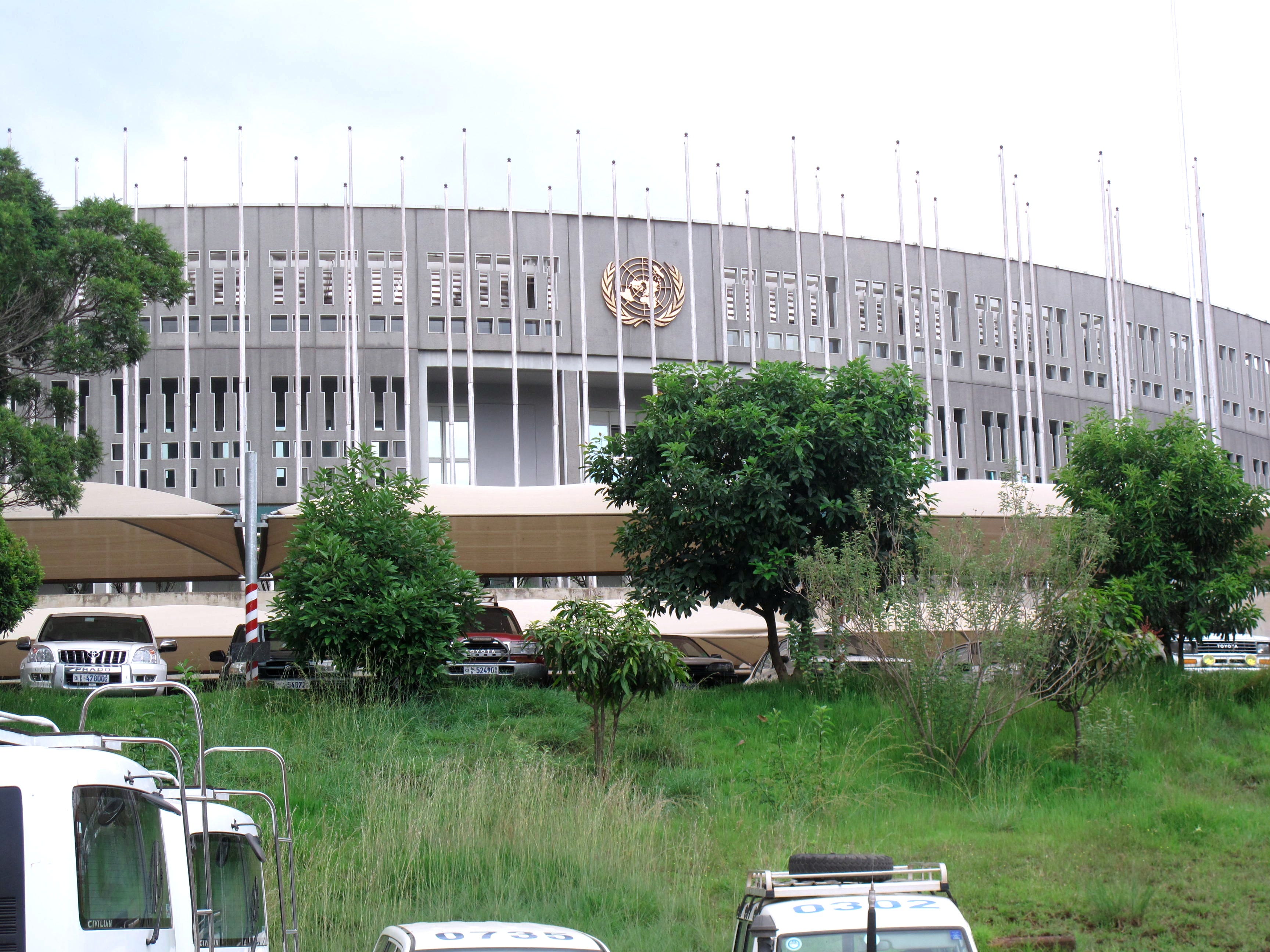
The IPCC’s 65th plenary runs Monday through Friday in Addis Ababa, hosted by Ethiopia and the United Nations Economic Commission for Africa.
The central decision concerns the work plan for the Seventh Assessment Report. The panel’s provisional annotated agenda calls for a decision on the timetable for reports from its three working groups, covering the physical science of climate change, impacts and adaptation, and options for limiting emissions.
The meeting will also consider possible next steps in reviewing the IPCC’s principles and procedures and examine the role of artificial intelligence in its assessment processes.
Financial decisions are on the agenda as well. Governments will consider a revised 2026 budget and proposed 2027 budget, with forecasts for 2028 and 2029.
The outcome to watch is whether governments can settle the assessment timetable, and what any compromise would mean for the availability of scientific evidence during the 2028 climate negotiations.
Global health — Berlin examines financing, governance and pandemic preparedness
The World Health Summit continues Monday and Tuesday in Berlin, bringing together political leaders, scientists, international organizations, civil society and the private sector to examine the future of global health cooperation.
The summit’s organizers identify fragmentation, overlapping initiatives, declining development assistance and concentrated decision-making power as major weaknesses in the international health system.
They cite OECD figures showing that total official development assistance fell 23% in real terms in 2025, with 26 of 34 OECD members reducing their budgets. The decline adds pressure to discussions about the financing of international health institutions and the ability of lower-income countries to sustain essential services.
One unfinished international process is the WHO Pandemic Agreement. Its annex on pathogen access and benefit sharing remains unresolved, leaving questions about how countries will share pathogen materials and sequence information, and how benefits arising from their use will be distributed during future health emergencies.
Sunday’s program included a discussion with prospective candidates for WHO director-general and the launch of findings from the Lancet Commission on 21st Century Global Threats to Health. Another session examined the resilience of healthcare in Ukraine and other crisis settings.
The summit’s six central themes also encompass health equity, AI and data-driven health systems, conflict-related damage to healthcare, and environmental threats including climate change and antimicrobial resistance.
The remaining discussions will examine how scientific evidence, financing and institutional reform can support international health cooperation under increasingly difficult political and economic conditions.
Science diplomacy — Geneva anticipates the next technological challenges
The Geneva Science and Diplomacy Anticipator (GESDA) holds its Anticipation Summit Wednesday and Thursday, with a program devoted to scientific breakthroughs and their implications for international governance.
The summit opens with the launch of the 2027 Science Breakthrough Radar, which maps advances expected to shape societies over the next five, 10 and 25 years.
Wednesday’s sessions address the geopolitics of science, the engineering of living systems, neurotechnology and increasingly autonomous AI-enabled machines.
The program includes the first meeting of a collaborative global network to address the security risks of advanced AI that has both civilian and military uses. Workshops will examine quantum diplomacy, responsible brain-computer interfaces and new foundations for global AI governance.
Thursday brings discussions of commercial activity in space, quantum biology, emerging therapeutics, and AI’s implications for science and society.
The World Intellectual Property Organization and GESDA will also examine future scenarios for quantum computing and intellectual property rights. Other workshops address how governments can anticipate scientific breakthroughs and the use of foresight in bioethics.
GESDA says its Science Breakthrough Radar draws on the cumulative contributions of more than 2,400 scientists in over 90 countries starting with the 2021 edition. The summit’s central challenge is to turn those assessments of emerging technologies into practical cooperation among governments, research institutions and industry.
The meeting takes place as Switzerland prepares to host the AI Summit Geneva 2027. The developments to watch are the priorities identified in the new Radar and whether the summit’s institutional initiatives produce concrete plans for international action.
Global economy — AI, energy and debt dominate the Bangkok meetings
The IMF and World Bank hold their Annual Meetings October 12–18 in Bangkok, bringing finance ministers and central bank governors together amid economic pressures from technological change, energy prices and public debt.
In an October 7 speech ahead of the meetings, IMF Managing Director Kristalina Georgieva identified the rapid expansion of AI, persistently high energy prices and record public debt as three major forces affecting the global economy.
She said AI hardware and related technology products now account for more than one-tenth of global goods trade, with investment concentrated in countries that produce or deploy advanced computing infrastructure.
Georgieva warned that this concentration could widen economic disparities between countries benefiting from the AI investment boom and those with limited access to the necessary infrastructure, capital and skills.
AI is also increasing demand for energy at a time when high prices are already putting pressure on households, businesses and government budgets.
Tuesday’s program includes publication of the October 2026 World Economic Outlook, titled Resilience under Strain, Urgent Choices, and the Global Financial Stability Report, titled Resilience, Risk, and Transformation.
Other sessions examine AI’s effects on Asian labor markets and the use of digitally connected public finance systems.
The meetings offer an opportunity to see how international financial institutions are incorporating technological access, AI-related investment risks and energy constraints into their economic assessments and policy recommendations.
Refugees — UNHCR considers its next budget and protection priorities
The UN Refugee Agency’s Executive Committee meets Monday through Friday in Geneva for its 77th session.
The agenda includes consideration and adoption of UNHCR’s 2027 program budget, reports on administrative oversight and evaluation, and discussions of refugee protection across major regions.
Side events address the evidence supporting protection policies, statelessness, the Sudan regional crisis, and the integration of education, health, social protection and economic inclusion into national systems.
One session, “50 by 35: Sustaining the evidence for action,” places evidence directly on the agenda of an international humanitarian institution confronting major operational and financing demands.
The budget deliberations and discussions of national systems will help determine how UNHCR approaches its protection responsibilities in the coming year.
Security Council watch — Healthcare protection and U.N. leadership
The Security Council opens its week Monday with briefings on Colombia and Syria, followed Tuesday by discussions of the Great Lakes region and closed consultations on escalating hostilities in northern Ethiopia.
Council members are also continuing negotiations on two draft resolutions with direct implications for science and health diplomacy: a Danish proposal to strengthen protection of medical missions during armed conflict and a Greek initiative addressing the impact of digital technologies on violations against children in armed conflict.
Wednesday brings a vote on renewing Haiti’s sanctions regime, a briefing on Libya and an Arria-formula meeting on Ukraine organized by Russia. The Council holds its quarterly open debate on the Middle East Thursday, followed by a briefing on Sudan Friday.
Friday also brings the sixth straw poll in the selection of the next U.N. secretary-general, an important step in determining the future leadership of the international organization.
Signals
The IPCC examines AI in scientific assessment. Governments meeting in Addis Ababa will consider a document on the role of artificial intelligence in IPCC work, bringing questions about emerging technology directly into the governance of international scientific assessment.
The U.N. Forum of Mayors faces a mandate review. Mayors meeting in Geneva are expected to adopt an outcome document on sustainable urban development while UNECE bodies separately review the forum’s terms of reference. The review concerns the future institutional role of local governments within this U.N. process.
Geneva wins the 2029 global space congress. The International Astronautical Federation has selected Geneva over Houston and Barcelona to host the 80th International Astronautical Congress in 2029 at Palexpo. The decision brings a major international gathering of space agencies, researchers and industry leaders to Geneva during the 60th anniversary year of the Apollo 11 Moon landing.
On the calendar
Oct. 11–13 — World Health Summit, Berlin. Global health governance, pandemic preparedness, health financing, scientific evidence and the future of international health cooperation. → Program
Oct. 12–16 — IPCC 65th Plenary Session, Addis Ababa. Governments consider the Seventh Assessment Report timetable, institutional procedures, AI in scientific assessment and the panel’s budget. → Agenda
Oct. 12–18 — IMF–World Bank Annual Meetings, Bangkok. Global economic prospects, financial stability, AI, energy prices and public debt. The IMF’s World Economic Outlook and Global Financial Stability Report are scheduled for Tuesday. → Schedule
Oct. 12–16 — UNHCR Executive Committee, Geneva. The agency’s 77th session considers its 2027 program budget, oversight and refugee protection priorities. → Schedule
Oct. 12–13 — U.N. Forum of Mayors, Geneva. Mayors meet under the theme “Cities Delivering for a Sustainable Future,” with an outcome document on sustainable urban development expected. → Program
Oct. 14–15 — GESDA Anticipation Summit, Geneva. Launch of the 2027 Science Breakthrough Radar and discussions on the geopolitics of science, AI, biotechnology, quantum computing, neurotechnology and space governance. → Program
Oct. 15 — Les Nocturnes de GESDA, Geneva. A public evening of science, art and debate following the Anticipation Summit. → Program
Closing
You’re reading The Science Diplomat Playbook, a weekly briefing mapping the institutions, technologies and governance systems shaping international cooperation.