

Issue No. 29 | Monday, November 2, 2026
Good morning,
Welcome to The Science Diplomat Playbook, your Monday morning guide to what’s shaping the week ahead in global science diplomacy.
The lead
International agreements governing wildlife trade, ozone protection and pandemic preparedness face consequential implementation tests this week, as governments negotiate how to enforce conservation rules, finance environmental commitments and share the benefits of scientific research.
In Geneva, the 81st meeting of the Standing Committee of the Convention on International Trade in Endangered Species of Wild Fauna and Flora (CITES) opens Monday with an agenda spanning illegal wildlife trade, national compliance and the application of scientific evidence to trade controls. Delegates will examine ivory trafficking, country-specific enforcement concerns and the risks of disease transmission through wildlife trade.
In Kigali, Rwanda, parties to the Montreal Protocol will consider financing for the treaty’s next implementation period, alongside measures to improve atmospheric monitoring and address emissions of powerful greenhouse gases. Negotiations will also cover illegal trade, compliance and eligibility for financial assistance.
A third process begins in Geneva, where governments resume negotiations on the pathogen access and benefit-sharing system under the WHO Pandemic Agreement. The talks coincide with a major Ebola outbreak in the Democratic Republic of Congo that has surpassed 10,000 confirmed cases, bringing renewed attention to international cooperation on infectious disease research and access to medical countermeasures.
Elsewhere, Africa–Europe Innovation Dialogues in Abidjan will examine how to finance and sustain cross-regional research partnerships, while forums in Strasbourg and Berlin address democratic resilience, emerging technologies and science diplomacy.
Major Processes
Wildlife trade — CITES confronts enforcement and conservation challenges
November 2–6 | Geneva, Switzerland
The CITES Standing Committee opens its 81st meeting Monday with a substantial agenda focused on compliance with international wildlife trade rules and measures to combat illegal trade in protected species.
The committee, which oversees treaty implementation between meetings of the Conference of the Parties, will review national legislation, trade suspensions and country-specific concerns about enforcement.
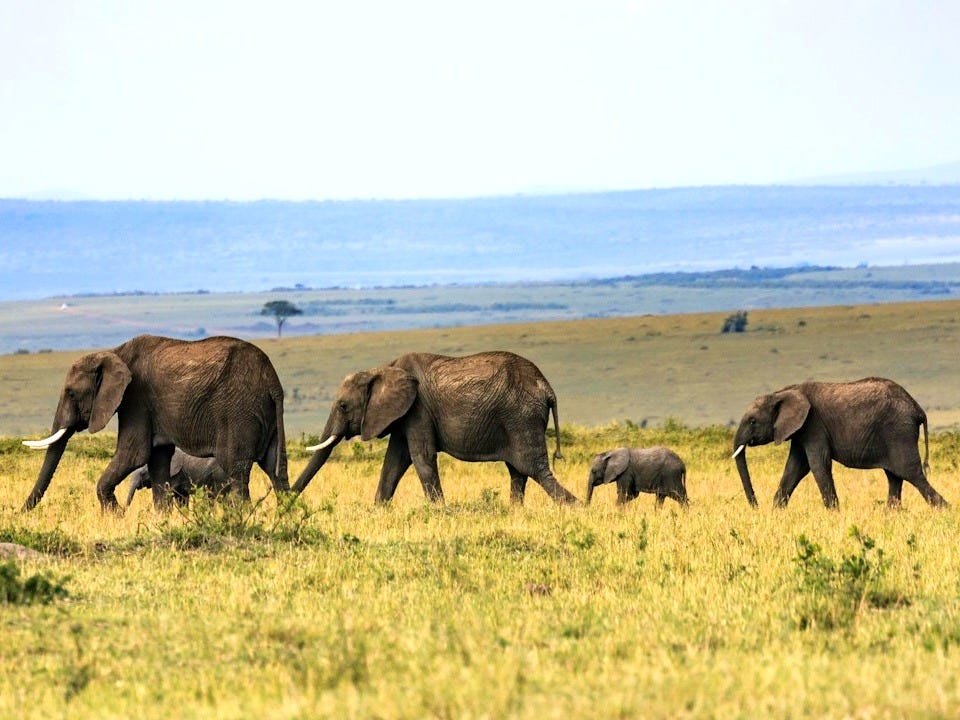
Elephant conservation and ivory trafficking feature prominently, including reviews of national ivory action plans and the Elephant Trade Information System. Delegates will also consider trade and conservation questions involving great apes, rhinoceroses, sharks and rays, and other protected species.
Compliance discussions will address concerns involving Cameroon, the Democratic Republic of Congo, Ecuador, Peru and Nigeria, alongside trade in West African rosewood and systems for tracing wildlife specimens through international commerce.
The committee will examine wildlife crime conducted through the internet, captive breeding, demand-reduction strategies and the effectiveness of measures intended to prevent illegal trade.
Friday’s agenda includes zoonotic disease risks associated with wildlife trade and findings from the Intergovernmental Science-Policy Platform on Biodiversity and Ecosystem Services concerning the sustainable use of wild species. Delegates will also consider electronic trade systems and questions involving biotechnology-produced specimens.
The meeting will test how effectively CITES translates scientific assessments and international conservation commitments into national enforcement measures.
What to watch: Decisions on country-specific compliance, measures to strengthen enforcement against illegal wildlife trade and the use of scientific evidence in regulating trade in protected species.
Ozone protection — Montreal Protocol parties negotiate financing and emissions controls
November 2–6 | Kigali, Rwanda
Governments meet in Kigali for the 38th Meeting of the Parties to the Montreal Protocol, with replenishment of the treaty’s Multilateral Fund for 2027–2029 among the principal issues under negotiation.
The fund helps eligible developing countries meet their obligations to phase out ozone-depleting substances and reduce hydrofluorocarbons. Delegates will consider technical and economic assessments intended to inform the resources required for the next three-year period.
The preparatory segment runs November 2–4, followed by a high-level segment November 5–6, when parties may adopt decisions developed during the negotiations.
Scientific monitoring is another priority. The agenda includes updated assessments of HFC-23, a highly potent greenhouse gas generated as an industrial byproduct. Parties will examine methods for estimating and reporting emissions, alongside proposals to strengthen atmospheric monitoring networks.
These discussions matter because reliable measurements are essential to assessing whether reported emissions reflect actual atmospheric conditions and whether controls are delivering their intended climate benefits.
Delegates will also consider measures to improve licensing and reporting systems, prevent illegal trade in controlled substances and address compliance concerns.
A politically sensitive proposal concerns the classification of Palestine under Article 5 of the treaty, which governs eligibility for certain forms of developing-country assistance. The proposal remains subject to consideration by the parties. Questions about regional representation are also unresolved.
What to watch: Progress toward the 2027–2029 Multilateral Fund replenishment, decisions on HFC-23 emissions monitoring and reporting, and agreement or continued disagreement over compliance and participation questions.
Pandemic preparedness — WHO negotiations resume amid major Ebola outbreak
November 2–13 | Geneva, Switzerland
Governments resume negotiations Monday on international rules for sharing pathogens and the benefits arising from their use in scientific research, as health authorities confront a major Ebola outbreak in the Democratic Republic of Congo.
The ninth meeting of the Intergovernmental Working Group on the WHO Pandemic Agreement will examine the proposed Pathogen Access and Benefit Sharing (PABS) annex, a central component still to be developed following the agreement’s adoption by the World Health Assembly in May 2025.
The talks begin amid the second-largest Ebola outbreak on record. According to the European Centre for Disease Prevention and Control, the Democratic Republic of Congo had reported 10,274 confirmed cases and 4,992 deaths as of October 28. Kenya and Nigeria have also reported cases, while earlier outbreaks or imported cases in Uganda and France are no longer active.
The outbreak is caused by Bundibugyo virus, for which there is no approved strain-specific vaccine. WHO has supported research into whether an existing Ebola vaccine can provide protection against the virus, including plans for a clinical trial.
The working group’s first week will address the operation of the proposed PABS system, access to pathogen materials and genetic sequence information, benefit-sharing arrangements, governance, and the annex’s scope and terminology.
At the center of the negotiations is how to facilitate rapid international exchange of pathogen samples and scientific information while establishing arrangements for equitable access to the vaccines, diagnostics, treatments and other benefits resulting from their use.
The Ebola outbreak illustrates the importance of those questions, although it is not identified as a separate agenda item in the working group’s published program.
Most substantive text negotiations are restricted to participating governments and other working-group members. The talks continue through November 13, with the proposed annex scheduled for consideration by the World Health Assembly in May 2027.
What to watch: Whether governments narrow disagreements over access to pathogen materials and sequence information, establish workable benefit-sharing arrangements and advance the governance provisions of the proposed system.
Africa–Europe research cooperation — Innovation Dialogues focus on implementation and finance
November 3–4 | Abidjan, Côte d’Ivoire
The Africa–Europe Innovation Dialogues convene researchers, policymakers, funders and innovation organizations to examine implementation of the 2023–2033 African Union–European Union Innovation Agenda.
The meeting will focus on the practical conditions needed to sustain joint research and innovation, including financing, institutional partnerships and access to funding opportunities.
Tuesday’s program includes a workshop assessing progress under the AU–EU Innovation Agenda and a closed-door discussion on the sustainability of Africa–Europe research and innovation cooperation.
Wednesday’s sessions will address venture development, access to capital, recognition of qualifications and participation in European research funding programs, including Horizon Europe.
The meeting follows last week’s AU–EU discussions on artificial intelligence in science and shifts attention toward the financing and institutional arrangements needed to support long-term cooperation.
What to watch: Concrete financing opportunities, institutional partnerships and proposals to address barriers to participation in cross-regional research and innovation.
Democracy and technology — Strasbourg forum examines institutional resilience
November 2–3 | Strasbourg, France
The Council of Europe’s World Forum for Democracy convenes under the theme “Rupture or renewal? Democratic security for the future,” bringing together political leaders, civil society organizations and experts to examine pressures on democratic institutions.
The program includes discussions on disinformation, democratic participation, climate governance and cooperation between Europe and Africa on democratic security.
Tuesday’s sessions include an examination of artificial intelligence and democracy, addressing the opportunities, risks and governance challenges associated with increasingly influential digital technologies.
Although the forum is not a treaty negotiation, its discussions intersect with international debates about AI governance, the integrity of public information and the role of scientific and technical expertise in democratic decision-making.
What to watch: Proposals linking AI governance, media literacy and democratic participation, and how the discussions contribute to the Council of Europe’s wider democratic agenda.
Science diplomacy — Falling Walls examines research in a divided world
November 6–9 | Berlin, Germany
The Falling Walls Science Summit brings together researchers, policymakers, scientific institutions and innovation leaders to discuss scientific breakthroughs and the international conditions under which research takes place.
The 2026 program includes a focus on geopolitics, security and science diplomacy, reflecting concern about the effects of strategic competition, political tensions and security policies on international scientific cooperation.
Friday’s opening program includes a Canada-focused session involving senior Canadian and German representatives. The summit also features discussions on emerging research fields, scientific innovation, entrepreneurship and the participation of women in science.
Although Falling Walls is not an intergovernmental negotiating forum, it provides a setting for examining the practical consequences of geopolitical fragmentation for research partnerships and knowledge exchange.
What to watch: How scientific institutions and policymakers address the tension between research openness, national security and international collaboration.
Security Council Watch — Nuclear diplomacy and regional conflicts under scrutiny
Latvia assumes the rotating presidency of the U.N. Security Council for November. The Council is expected to discuss its monthly program of work Monday, followed by a press briefing by Latvia’s U.N. Ambassador Sanita Pavļuta-Deslandes.
On Tuesday, the Security Council and General Assembly are scheduled to hold separate, simultaneous elections for five seats on the International Court of Justice, with nine candidates competing.
Other scheduled business includes discussions concerning the U.N. Interim Security Force for Abyei and Yemen sanctions.
The Council may also face renewed pressure over Iran as Qatar-mediated negotiations continue, with proposals concerning international nuclear inspections raising questions about verification and the prospects for de-escalation.
Developments involving Lebanon, Ukraine and other conflicts could affect the Council’s schedule, although additional meetings or statements remain subject to confirmation.
Members are also working through the selection of chairs for subsidiary bodies and preparations for the transition to incoming Council members.
Signals
Iran war diplomacy — Qatar mediates talks ahead of U.S. midterms. Iranian negotiators continued discussions with Qatari mediators in Doha on Sunday in an effort to reach an agreement to end the U.S.–Israeli war with Iran, Reuters reported. Foreign Minister Abbas Araqchi said negotiations were progressing but had not produced a final agreement. The discussions include a proposal to reopen the Strait of Hormuz within two days of an agreement with Washington. Separately, Axios reported that renewed access for international nuclear inspectors to Iranian facilities is among the confidence-building measures under consideration. The talks come ahead of Tuesday’s U.S. midterm elections, amid concerns about renewed military escalation afterward.
Digital connectivity — ITU updates the global picture. The International Telecommunication Union is expected to publish Facts and Figures 2026 on November 3. Its updated connectivity indicators will provide evidence for discussions about digital inclusion, infrastructure disparities and countries’ capacity to participate in emerging technology partnerships.
Climate and health — WHO examines the costs and benefits of action. WHO is expected to release a report on the global benefits and costs of prioritized actions on climate change and health on November 4. The assessment could provide additional evidence for governments seeking to integrate public health considerations into climate policy and international financing discussions.
Calendar
Monday, November 2
CITES Standing Committee, 81st meeting, begins — Geneva, Switzerland (through November 6).
Montreal Protocol, 38th Meeting of the Parties, begins — Kigali, Rwanda (through November 6).
WHO Pandemic Agreement Intergovernmental Working Group, ninth meeting, begins — Geneva, Switzerland (through November 13).
World Forum for Democracy begins — Strasbourg, France (through November 3).
Latvia presents its November U.N. Security Council program of work — New York.
UNESCO report on the safety of journalists and the danger of impunity expected.
Tuesday, November 3
U.S. midterm elections — United States.
Africa–Europe Innovation Dialogues begin — Abidjan, Côte d’Ivoire (through November 4).
U.N. Security Council and General Assembly elections for five International Court of Justice seats — New York.
ITU Facts and Figures 2026 expected.
World Forum for Democracy concludes — Strasbourg.
Wednesday, November 4
WHO climate-change-and-health assessment expected.
Montreal Protocol preparatory segment concludes — Kigali.
Africa–Europe Innovation Dialogues conclude — Abidjan.
Thursday, November 5
Montreal Protocol high-level segment begins — Kigali (through November 6).
UNECE–WHO Protocol on Water and Health task force meets — Geneva (through November 6).
Friday, November 6
CITES Standing Committee concludes — Geneva.
Montreal Protocol Meeting of the Parties concludes — Kigali.
Falling Walls Science Summit begins — Berlin (through November 9).
WHO pandemic negotiations complete their first week — Geneva.
Looking ahead
November 9 — Falling Walls Science Summit concludes — Berlin.
November 13 — WHO Pandemic Agreement working group concludes its ninth meeting — Geneva.
Closing
You’re reading The Science Diplomat Playbook, a weekly briefing mapping the institutions, technologies and governance systems shaping international cooperation.