

Issue No. 13 | Monday, July 13, 2026
Good morning,
Welcome to The Science Diplomat Playbook, your Monday morning guide to what’s shaping the week ahead in global science diplomacy.
The lead
IIASA launches the Howard Raiffa Academy to explore how decision science can strengthen diplomacy and public policy.
As governments struggle to navigate complex challenges ranging from artificial intelligence and climate change to public health, resource security and geopolitical competition, a gathering at the International Institute for Applied Systems Analysis this week will explore a question that sits at the heart of science diplomacy: How can decision-makers make better choices under conditions of uncertainty?
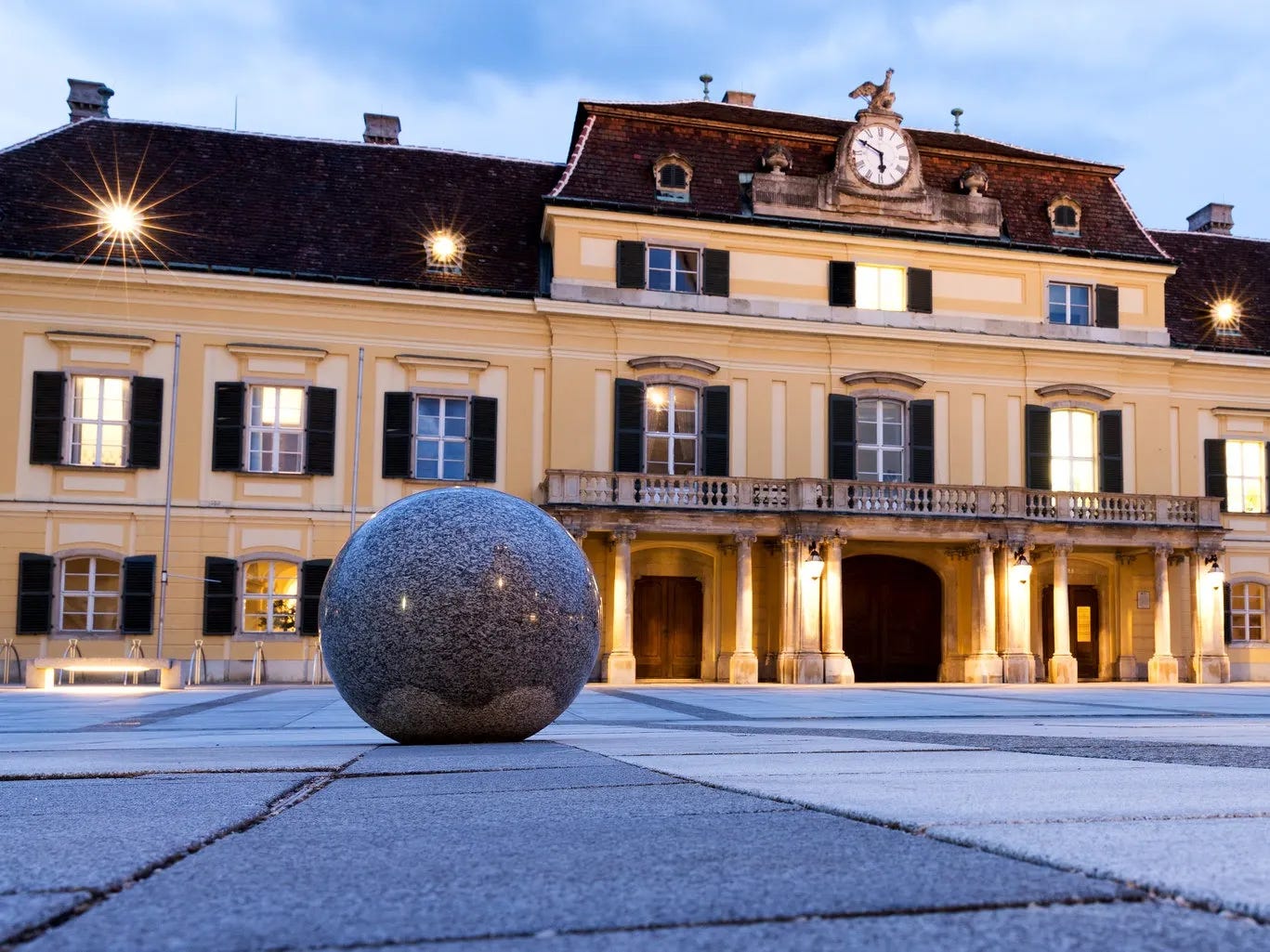
The inaugural Howard Raiffa Academy Short Course, taking place Tuesday through Thursday in Laxenburg, Austria, brings together scientists, diplomats, policymakers, negotiators and decision-analysis experts to examine how analytical tools can improve decision-making and international cooperation. Organized with support from Friends of IIASA and named after Howard Raiffa, IIASA’s first director and one of the founders of modern decision and negotiation analysis, the initiative reflects growing interest in the role of decision science in addressing complex global challenges.
The timing is notable. The international system faces pressure from rapid technological change, rising geopolitical tensions, climate risks and interconnected crises. Yet many of the institutions responsible for managing these challenges were designed for a different era. The Raiffa Academy begins from the premise that scientific evidence alone is often insufficient. What matters equally is how uncertainty is understood, competing objectives are weighed, negotiations are structured and scientific knowledge is incorporated into policy decisions.
The three-day course combines methodological sessions with real-world case studies ranging from transboundary air pollution negotiations and Colorado River water allocation disputes to Microsoft’s partnership with OpenAI. Participants will examine how decision analysis, negotiation analysis and systems thinking can be applied to public policy, diplomacy and governance.
A highlight of the week will be the annual Howard Raiffa Lecture at the Austrian Academy of Sciences in Vienna, where former U.S. Director of National Intelligence Avril Haines, now president-elect of the Carnegie Endowment for International Peace, will speak on “The Ethics of National Security Decisions: Lessons from the Social Sciences.”
The inaugural course is intended as a pilot for a broader effort. Organizers hope to build a network of scientists, policymakers and advisers capable of applying decision-science tools to international challenges where uncertainty is unavoidable, interests diverge and the stakes are high. In that sense, the Raiffa Academy is an experiment in strengthening the analytical foundations of international cooperation itself.
Major processes to watch
WHO Pandemic Agreement — Negotiations move to the implementation phase
Negotiators gather in Geneva for the last week of the seventh meeting of the Intergovernmental Working Group on the WHO Pandemic Agreement, which runs through Friday. Governments will continue work on one of the most difficult unresolved elements of the accord: the Pathogen Access and Benefit Sharing (PABS) annex.
Adopted by the World Health Assembly in 2025, the Pandemic Agreement established a framework for strengthening pandemic prevention, preparedness and response. But negotiators have yet to finalize the system governing how pathogen samples, genetic sequence data and resulting benefits, including vaccines, diagnostics and treatments, would be shared during future outbreaks.
WHO Director-General Tedros Adhanom Ghebreyesus acknowledged that governments had hoped to complete the negotiations before this year’s World Health Assembly. Instead, talks have been extended as countries search for consensus on issues at the intersection of public health, equity, intellectual property and global access.
The negotiations will test whether governments can move from agreeing on broad principles to constructing the mechanisms needed to make the agreement operational.
U.S.-Iran diplomacy — Switzerland may host another round
Reports indicate that U.S. and Iranian negotiators could return to Switzerland in the coming week as regional mediators seek to stabilize a fragile diplomatic process following renewed tensions.
Although details remain uncertain, a new round of talks would place questions of nuclear governance, verification, monitoring and regional security back at the center of international diplomacy. Switzerland has already hosted direct discussions between the two sides this year and remains one of the most important venues for sensitive negotiations involving science, technology and security issues.
Whether diplomacy can regain momentum after recent setbacks remains one of the key questions to watch.
High-Level Political Forum — The SDG deadline approaches
The High-Level Political Forum on Sustainable Development continues in New York through Wednesday, as governments assess progress toward the 2030 Agenda with less than five years remaining before the deadline.
This year’s review focuses on water and sanitation, energy, infrastructure and innovation, sustainable cities and international partnerships. Discussions center not on setting new goals but on accelerating implementation of existing commitments.
Inside institutions
IIASA — Building a new bridge between science and policy
Beyond the Raiffa Academy itself, the initiative reflects a broader effort at IIASA to strengthen connections between scientific analysis and decision-making.
The institute has long specialized in systems analysis and international scientific cooperation. The new program seeks to expand that tradition by incorporating decision analysis, negotiation science and emerging AI-enabled approaches into frameworks for public policy and diplomacy. Organizers describe the effort as a way of helping researchers, policymakers and negotiators work more effectively across the science-policy interface.
WHO — Multilateralism under pressure
The Pandemic Agreement negotiations have become one of the most visible tests of contemporary multilateral health diplomacy.
The challenge is whether they can agree on how benefits, responsibilities and access should be distributed when the next global health emergency emerges.
Security Council watch — Resources, governance and the causes of conflict
Congo is using its Security Council presidency to elevate an important question in international affairs: whether competition over natural resources is adequately addressed as a source of conflict and instability.
An Arria-formula meeting on Monday will examine what organizers describe as normative gaps linking natural resources and peace, while a high-level Council debate later this month will focus on “Natural resource governance: The foundation of peace, security and prosperity.”
The discussions come as governments place growing strategic importance on critical minerals, energy resources and industrial supply chains. While the Council traditionally focuses on conflicts after they erupt, Congo’s presidency is seeking to draw greater attention to governance failures, resource competition and institutional weaknesses that can contribute to instability long before violence begins.
Across regions
Paris — UNESCO takes stock of the Science Decade
UNESCO convenes the first Global Conference of the International Decade of Sciences for Sustainable Development this week, bringing together governments, researchers, industry leaders, civil society organizations and Indigenous knowledge communities to assess progress since the Decade’s launch in 2024.
The gathering comes as policymakers look beyond individual scientific breakthroughs toward broader questions of how science can support sustainable development, strengthen science-policy interfaces and inform the post-2030 development agenda. A high-level session on “Science diplomacy in action: governing global commons” highlights the growing role of scientific cooperation in addressing challenges that transcend national borders.
Two years into the Decade, the conference offers an opportunity to evaluate whether governments are translating commitments on science for sustainable development into concrete action.
Bangkok — The Montreal Protocol faces a new funding test
Negotiators meet in Bangkok for the Open-ended Working Group of the Parties to the Montreal Protocol as governments begin preparations for the next replenishment of the Multilateral Fund, the financial mechanism that helps developing countries implement the treaty.
Often cited as one of the most successful environmental agreements ever negotiated, the Montreal Protocol now faces a new challenge: maintaining momentum on ozone protection and hydrofluorocarbon phase-down efforts amid mounting fiscal pressures on both governments and multilateral institutions.
The discussions will help shape decisions expected later this year in Kigali, Rwanda, where countries will mark the tenth anniversary of the Kigali Amendment and consider the next phase of funding for one of the world’s most effective science-based international agreements.
Kingston — Deep sea mining negotiations enter another critical phase
The International Seabed Authority resumes negotiations in Jamaica over rules that would govern commercial mining of mineral resources in international waters, one of the most consequential unresolved questions in ocean governance.
Delegates continue efforts to balance competing pressures from countries and companies seeking access to critical minerals used in energy and technology systems and those calling for a moratorium or precautionary pause until environmental risks are better understood.
At stake is more than a mining code. The negotiations are viewed as a test of how the international system manages scientific uncertainty, environmental protection and resource competition in areas beyond national jurisdiction.
Signals
• Institutions are investing more in decision-making capacity, not just scientific expertise.
• The hardest phase of global governance begins after agreements are reached.
• Access to data is becoming as politically contested as access to physical resources.
• AI is moving from a governance challenge to a governance tool.
• Resource governance is emerging as a central question in both security and sustainability.
• Infrastructure resilience is becoming a core governance challenge.
On the calendar
July 14–16 — Howard Raiffa Academy Short Course (Laxenburg, Austria)
Scientists, diplomats, policymakers and decision-analysis experts examine how analytical tools can support decision-making, negotiation and diplomacy under uncertainty. → Information
July 15 — Howard Raiffa Lecture: Avril Haines (Vienna)
The former U.S. Director of National Intelligence delivers a lecture on the ethics of national security decision-making and lessons from the social sciences. → Program
July 6–17 — Intergovernmental Working Group on the WHO Pandemic Agreement (Geneva)
Negotiators continue work on the Pathogen Access and Benefit Sharing annex to the Pandemic Agreement. → Information
July 14–23 — High-Level Political Forum on Sustainable Development (New York)
Governments continue annual reviews of progress toward the Sustainable Development Goals. → Program
July 15–17 — Global Conference of the International Decade of Sciences for Sustainable Development (Paris)
UNESCO convenes governments, researchers and other stakeholders to assess progress on the Science Decade and explore science-policy cooperation beyond 2030. → Information
July 13–31 — International Seabed Authority Annual Session (Kingston, Jamaica)
Delegates continue negotiations on rules governing potential deep-sea mining activities in areas beyond national jurisdiction. → Overview
Closing
You’re reading The Science Diplomat Playbook, a weekly briefing mapping the institutions, technologies and governance systems shaping international cooperation.