

Issue No. 14 | Monday, July 20, 2026
Good morning,
Welcome to The Science Diplomat Playbook, your Monday morning guide to what’s shaping the week ahead in global science diplomacy.
The lead
Three years on, the AU–EU Innovation Agenda turns from ambition to delivery.
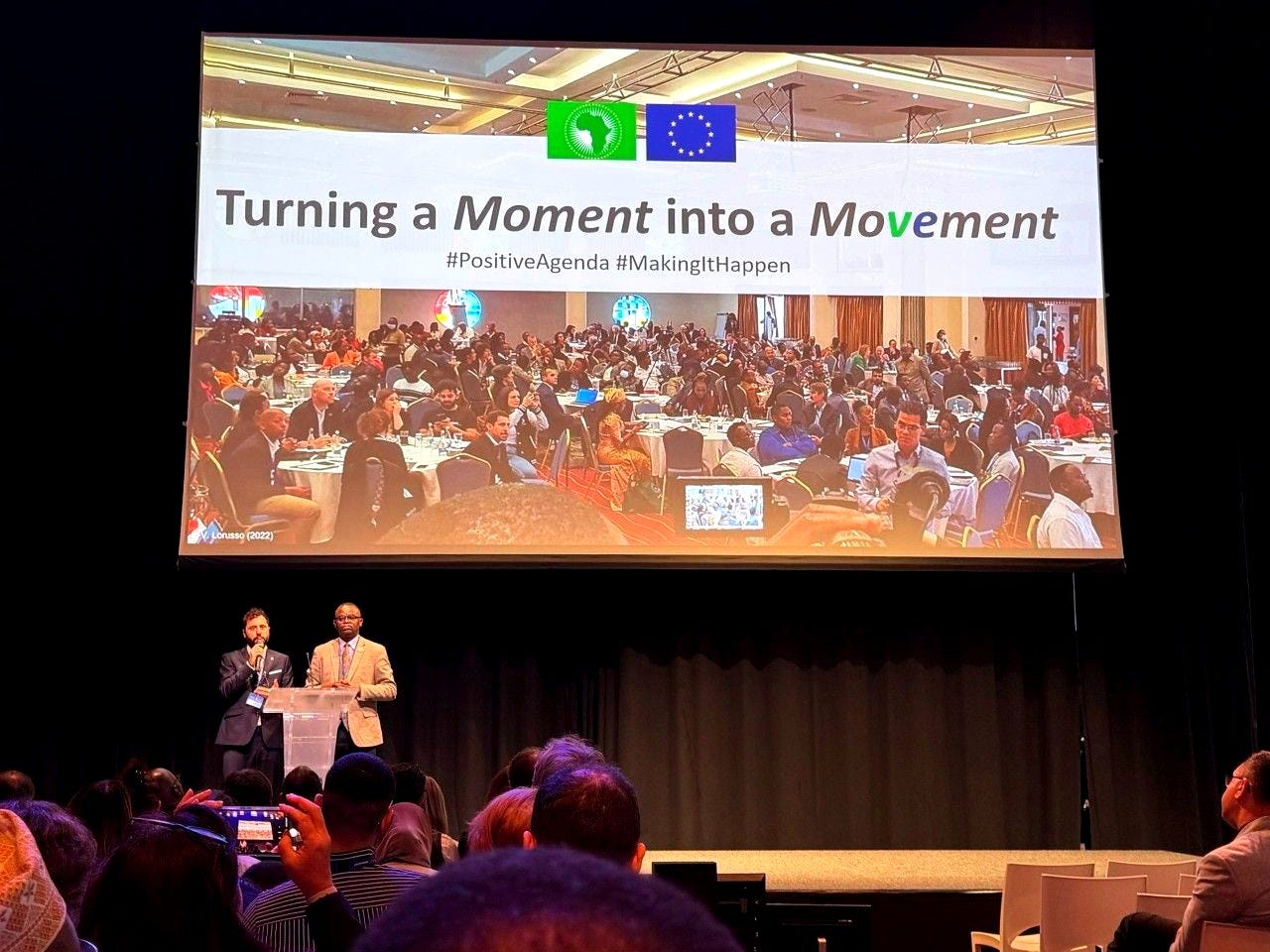
African Union and European officials have largely moved beyond defining the ambitions of their joint research and innovation partnership. This week, they turn to a more difficult question: how to convert those ambitions into durable partnerships, stronger innovation ecosystems and new opportunities for young researchers and entrepreneurs.
Launched in July 2023, the agenda provides a framework for strengthening research, innovation and entrepreneurship between Africa and Europe to support sustainable and inclusive growth. The sixth implementation workshop on Thursday shifts attention from political commitments to the practical work of expanding research collaboration, strengthening innovation ecosystems and supporting a new generation of entrepreneurs.
The workshop also reflects a broader shift in international science diplomacy. After years of launching new frameworks and partnerships, many institutions now face the harder task of making them work.
The agenda was created to provide a common framework for cooperation in research, innovation, entrepreneurship and scientific capacity building across five priority areas, including the green transition, public health, science and technology, and research capacity.
A series of implementation workshops has brought together researchers, policymakers, entrepreneurs, innovation hubs and youth organizations to translate those objectives into practical collaborations.
This year’s workshop focuses on youth-led innovation, highlighting how startups, universities, innovation hubs and policymakers can strengthen cross-continental partnerships. Sessions will examine mobility programs, entrepreneurship support, intellectual property, university-industry partnerships and funding opportunities while taking stock of progress under the first phase of the 2023–2033 agenda.
As one AU official told us, the main task is no longer simply financing collaboration but building institutional capacity that turns research into innovation partnerships.
Major processes to watch
International Seabed Authority — Negotiations on the Mining Code deepen
The international organization in Kingston, Jamaica, enters another week of intensive negotiations on the Mining Code, the rules that would govern commercial exploitation of mineral resources in areas beyond national jurisdiction.
This week’s agenda moves beyond broad principles into the architecture of regulation, including compliance and enforcement mechanisms, closure plans for mining operations, regulatory provisions and environmental protections. Parallel discussions examine regional environmental management plans, transparency of environmental data and the relationship between the ISA and the U.N. High Seas (BBNJ) Agreement.
The Council meets through July 24 before the ISA Assembly opens the following week to consider broader institutional, budgetary and governance questions.
Geneva — CITES moves from decisions to implementation
The CITES Plants Committee meets for the first time since CoP20 in Samarkand to begin the scientific work of implementing conference decisions.
While governments adopted new resolutions and species listings at CoP20, the Plants Committee now begins translating those political decisions into technical guidance on sustainable trade, species identification and scientific assessments used by national authorities.
This week, the Plants Committee will work to advance the scientific priorities and measures for sustainable trade in medicinal and aromatic plants, rosewood trees, orchids, and other wild flora.
Inside institutions
WMO — Ozone assessment panel meets
Scientists meet at World Meteorological Organization headquarters to finalize the Executive Summary for the 2026 Scientific Assessment of Ozone Depletion, the quadrennial report that informs Parties to the Montreal Protocol.
U.N. Global Mechanism — Strengthening ICT security
Diplomats begin the first plenary session of the General Assembly's new permanent mechanism on developments in information and communications technologies in the context of international security.
The meeting is scheduled for Monday through Thursday, starting with statements from U.N. Undersecretary-General and High Representative for Disarmament Affairs Izumi Nakamitsu and El Salvador’s U.N. Ambassador Egriselda López, who chairs the global mechanism.
Security Council watch — Diplomats examine governance beyond crisis response
The U.N. Security Council convenes two debates that look beyond immediate conflicts toward the institutions designed to prevent them.
On Wednesday, diplomats examine how governance of natural resources, including critical minerals, affects peace and security. On Thursday, the Council considers U.N. Secretary-General António Guterres’ recommendations for strengthening mediation and other Chapter VI mechanisms for the peaceful settlement of disputes.
Across regions
Africa–Europe — The AU–EU Innovation Agenda implementation workshop explores how young innovators, entrepreneurs and research organizations can strengthen cross-continental collaboration through funding, mobility and innovation partnerships.
New York — The High-Level Political Forum concludes its annual review of progress toward the Sustainable Development Goals, with ministers focusing on accelerating implementation in the final years before 2030.
Signals
International partnerships are judged more by implementation than new commitments.
Scientific advisory bodies continue to play a larger role in translating political agreements into operational guidance.
Capacity building has become a central objective of international science cooperation.
Governance of strategic resources, from biodiversity to critical minerals, is moving closer to the center of global diplomacy.
Preventive governance is receiving renewed attention across domains ranging from cybersecurity to conflict prevention.
On the calendar
July 14–23 — High-Level Political Forum on Sustainable Development (New York)
Governments continue annual reviews of progress toward the Sustainable Development Goals. → Program
July 17–23 — CITES Plants Committee (Geneva)
Scientific experts meet for the first time since CITES CoP20 to advance implementation of new species listings and guidance on sustainable trade in medicinal plants, rosewoods, orchids and other wild flora. → Agenda
July 20–24 — Plenary Session, Global Mechanism on ICTs in the Context of International Security (New York)
Diplomats hold the first substantive plenary session of the new Global Mechanism on ICT Security. → Documents
July 23 — AU–EU Innovation Agenda Workshop (Online)
African Union and European Commission officials review implementation of the 10-year Innovation Agenda, with a focus on youth-led innovation and entrepreneurship. → Program
July 13–31 — International Seabed Authority Annual Session (Kingston, Jamaica)
Delegates continue negotiations on rules governing potential deep-sea mining activities in areas beyond national jurisdiction. → Overview
Closing
You’re reading The Science Diplomat Playbook, a weekly briefing mapping the institutions, technologies and governance systems shaping international cooperation.