

Issue No. 18 | Monday, August 17, 2026
Good morning,
Welcome to The Science Diplomat Playbook, your Monday morning guide to what’s shaping the week ahead in global science diplomacy.
The lead
The world's overlooked land treaty moves into the spotlight.
Governments gather in Ulaanbaatar on Monday for COP17 of the U.N. Convention to Combat Desertification, opening two weeks of negotiations over a resource that sits beneath many of the world’s most pressing environmental and development challenges: land.
Up to 40% of the world’s land is already degraded, affecting food production, water supplies, livelihoods and economic stability. The talks will bring together the convention’s 197 Parties alongside scientists, Indigenous peoples, pastoralists, farmers, businesses and civil society to address land restoration, drought resilience, rangelands, food systems and soil health.
The meeting shows how broadly the land agenda now reaches across environmental and development policy. COP17 will examine science-policy integration, technologies and financing while linking degradation and drought to food and water security, migration and political stability.
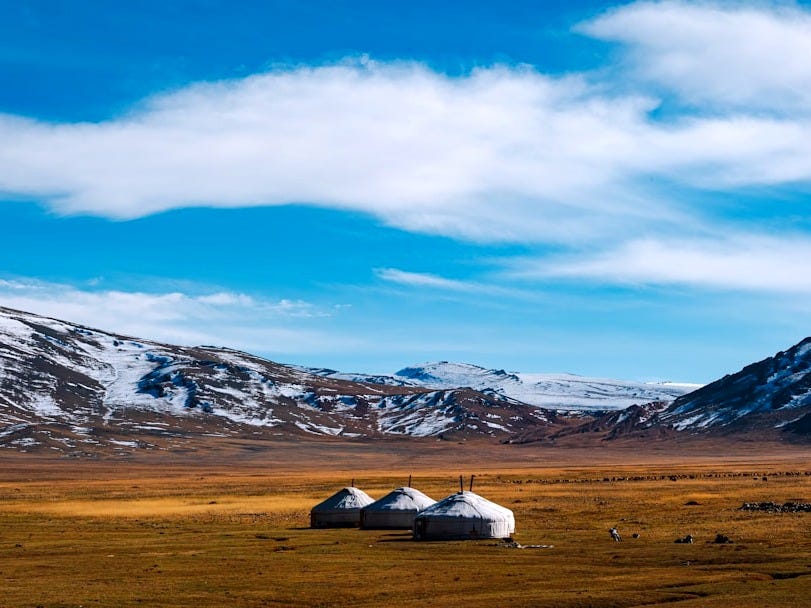
Mongolia gives those negotiations an unusually tangible setting. Nearly 77% of its territory is affected by degradation, while its vast rangelands support pastoral livelihoods that depend directly on the health of the ecosystems governments are trying to protect and restore.
COP17 also takes place during the U.N. International Year of Rangelands and Pastoralists, putting greater attention on ecosystems that cover more than half the Earth’s land surface and directly support the livelihoods of roughly 500 million people.
The conference is the first of the three Rio Convention COPs taking place in 2026, ahead of the biodiversity and climate meetings later this year, giving Ulaanbaatar an early opportunity to test how governments connect land, biodiversity and climate policy rather than treating them as separate negotiating tracks.
Major processes to watch
UNCCD — COP17 puts land degradation at the center of environmental diplomacy
Governments gather in Ulaanbaatar for COP17 of the U.N. Convention to Combat Desertification, opening two weeks of negotiations on land degradation, drought, restoration and the future of the world’s rangelands.
Held during the U.N. International Year of Rangelands and Pastoralists, the conference will examine how science, financing, technology and local knowledge can support land restoration and resilience. Mongolia gives the negotiations a particularly relevant setting: its vast rangelands support pastoral communities while facing substantial pressures from degradation, biodiversity loss and climate change.
The meeting also gives the often less-visible third Rio Convention an opportunity to connect land policy more directly with the climate and biodiversity agendas.
Germany — IJCAI-ECAI brings the global AI research community to Bremen
Thousands of AI researchers gather in Bremen for the 35th International Joint Conference on Artificial Intelligence, held jointly this year with the European Conference on Artificial Intelligence. Workshops and tutorials began over the weekend, with the main conference running Tuesday through Friday.
The program ranges across frontier AI research while devoting dedicated tracks to human-centered AI, AI for social good, health, robotics and the use of AI to enable other critical technologies. Research on privacy, security, fairness and ethics also features in the conference’s workshops and tutorials.
IPCC — Expert scrutiny of AR7 continues
The first expert review of the Working Group I contribution to the IPCC’s Seventh Assessment Report enters its second week.
Scientists worldwide are examining the draft assessment of the physical science of climate change for accuracy, balance, clarity and comprehensiveness. The review continues through Oct. 2 before the report advances through subsequent stages of the IPCC assessment process.
Security Council watch — Technology, climate and succession
Several processes outside the Security Council’s formal meeting schedule intersect with science, technology and governance this week.
Council members are expected to continue negotiations on a Greek-drafted resolution addressing the impact of digital technologies on violations against children in armed conflict. An informal expert group on climate, peace and security also meets Thursday to examine the Horn of Africa.
Meanwhile, the selection of the next U.N. secretary-general moves forward. Council members meet candidate Olara Otunnu on Thursday before conducting their second confidential straw poll on Friday, providing another indication of support among the candidates seeking to succeed António Guterres.
Signals
LLand degradation is gaining greater visibility as a problem connecting climate, biodiversity, food security and development policy.
AI research is expanding into domains where questions of public interest, accountability and governance are becoming part of the scientific agenda itself.
Climate and security are becoming more closely connected within institutions whose mandates were not originally designed around environmental change.
The Security Council’s consideration of digital technologies and children in armed conflict shows how technology governance is spreading into established areas of international law and security.
On the calendar
Aug. 10–Oct. 2 — IPCC Working Group I First Order Draft expert review (Global)
Experts worldwide review the first draft of the physical-science contribution to the IPCC Seventh Assessment Report. → Review information
Aug. 15–21 — IJCAI-ECAI 2026 (Bremen, Germany)
The global AI research community gathers for the 35th International Joint Conference on Artificial Intelligence, with special tracks spanning human-centered AI, AI for social good, health, robotics and critical technologies. The main technical program runs Aug. 18–21. → Program
Aug. 17–28 — UNCCD COP17 (Ulaanbaatar, Mongolia)
Governments meet for the U.N. Convention to Combat Desertification’s biennial conference, focusing on land degradation, restoration, drought resilience and the world’s rangelands. → Overview
Closing
You’re reading The Science Diplomat Playbook, a weekly briefing mapping the institutions, technologies and governance systems shaping international cooperation.