

Issue No. 20 | Monday, August 31, 2026
Good morning,
Welcome to The Science Diplomat Playbook, your Monday morning guide to what’s shaping the week ahead in global science diplomacy.
The lead
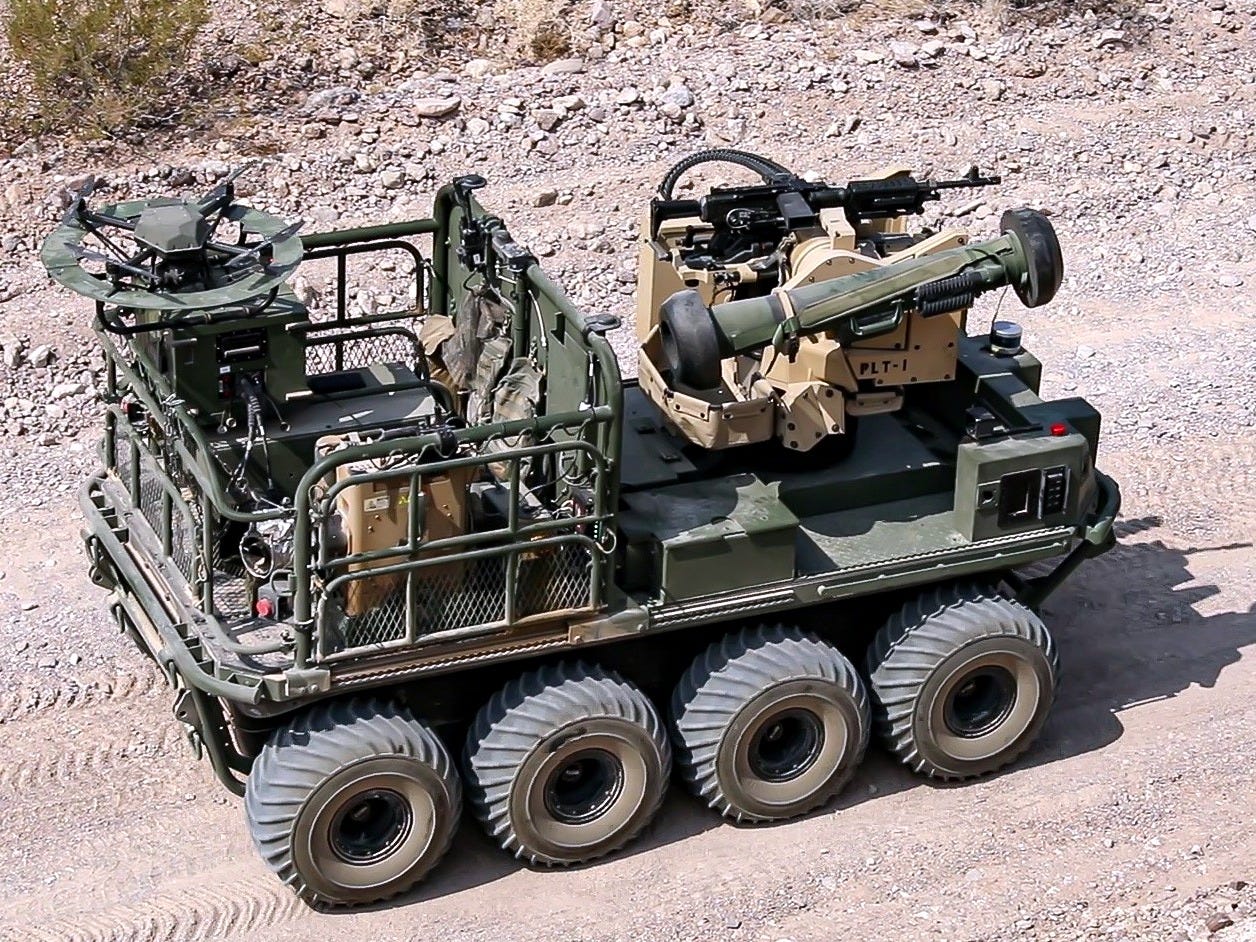
Governments return to Geneva on Monday for a final week of expert talks on lethal autonomous weapons systems as pressure grows to turn more than a decade of international discussion into negotiations over legally binding rules.
The meeting comes days after U.N. Secretary-General António Guterres and International Committee of the Red Cross President Mirjana Spoljaric renewed their call for international rules, warning that advances in autonomous weapons are bringing the world “dangerously close to crossing a moral red line”: machines autonomously targeting human beings.
The technology, they argue, is moving faster than diplomacy. Autonomous capabilities are becoming cheaper, more accessible and easier to incorporate into existing weapons, increasing pressure to establish international rules before potentially harmful practices become entrenched.
But the meeting beginning Monday cannot itself negotiate a new treaty. The Group of Governmental Experts operating under the Convention on Certain Conventional Weapons is authorized only to develop elements that could eventually form the basis of an international instrument. Its current mandate ends with this week’s session.
That puts the diplomatic question ahead of the technical one. Governments have spent more than a decade examining autonomous weapons while the systems themselves have continued to advance. The question now is whether countries are prepared to move from discussing the elements of possible rules toward actually negotiating them.
The U.N. and ICRC are advocating a two-tier approach. They want prohibitions on autonomous weapons that have effects that cannot be adequately predicted, and on systems designed or used to directly target people. Other autonomous weapons would face restrictions involving the targets they can engage, where and for how long they can operate, and the scale of force they can use.
Human control remains at the center of that debate. The problem is particularly acute when weapons target people because an individual’s legal status can change rapidly on a battlefield: a combatant who surrenders or is wounded, for example, becomes protected from attack.
This week’s meeting serves as a bridge to a potentially more consequential decision in November, when countries meet for the convention’s five-year Review Conference and could decide whether to launch formal negotiations.
Elsewhere, the United Nations launches a major report on sea-level rise during the Pacific Islands Forum Leaders Meeting in Palau, while governments and the technology sector gather in The Bahamas for a major ITU forum on global digital policy.
In Geneva, health and technology experts also examine how digital health credentials can move securely across national borders.

Major processes to watch
Autonomous weapons — Final expert session tests the path toward negotiations
Government experts meet through Friday for the second and final session of their 2026 mandate, working from a rolling text intended to identify elements that could eventually form the basis of an international instrument.
UNIDIR will also use battlefield scenarios to test how international humanitarian law applies to autonomous weapons. The immediate question is what governments can agree to carry forward before the CCW Review Conference later this year.
Pacific — Rising seas move from climate science into international law
The United Nations launches a major report on sea-level rise Monday during the Pacific Islands Forum Leaders Meeting in Palau, bringing together scientific evidence with increasingly difficult questions about finance, displacement, sovereignty and international law.
Nearly 770 million people live in coastal areas less than five meters above the high-tide line. The report says sea-level rise is accelerating while gaps in observation networks, coastal mapping and scientific capacity are limiting the ability of countries to forecast impacts and plan for them.
Some of the hardest questions concern what happens when rising seas alter territory itself. Governments are confronting how to preserve statehood, nationality and maritime boundaries if islands become uninhabitable or submerged, alongside protections for people forced to relocate.
The report points to possible next steps ranging from a General Assembly declaration to a dedicated international treaty or other new legal frameworks for sea-level rise. Its recommendations will feed into further international discussions, including a U.N. high-level meeting on sea-level rise in September.
The Bahamas — ITU forum looks for common ground on digital policy
Governments, technology companies, researchers, civil society and the technical community gather in Nassau for the International Telecommunication Union’s World Telecommunication/ICT Policy Forum.
A Strategic Dialogue on Tuesday precedes the formal forum from Wednesday through Friday. Discussions will span connectivity, sustainability, resilience, space, innovation and emerging technologies.
Unlike a treaty negotiation, WTPF does not produce binding rules. Its role is to exchange views and build consensus on major digital-policy questions, with the resulting opinions intended to help shape discussions at the ITU’s forthcoming Plenipotentiary Conference.
That makes Nassau an agenda-setting stage in the larger process of international technology governance: governments are trying to identify areas of agreement before making decisions about the ITU’s future direction.
Geneva — Digital health systems confront the problem of crossing borders
Government officials, international organizations, technical experts and companies meet in Geneva for the Global Digital Collaboration Conference, with WHO focusing on how health information can move securely and reliably between countries.
A central issue is the development of secure and portable digital health wallets. Discussions will examine governance, technical standards, interoperability and trust frameworks needed to allow credentials such as immunization records and professional certifications to be verified across different health systems.
The infrastructure is already operating at significant scale. WHO says its Global Digital Health Certification Network connects more than 80 countries and nearly 2 billion people.
The challenge now is not simply digitizing health records, but establishing the technical and institutional trust required for countries to recognize one another’s digital credentials.
Security Council watch — AI enters the conflict-prevention debate
The U.N. Security Council turns to artificial intelligence on Wednesday in an informal dialogue examining how the technology could be used in conflict prevention and peacebuilding.
The discussion, organized by Bahrain, France, Greece and Latvia, will examine the use of AI in moving from early warning to conflict resolution. Experts from the U.N. Institute for Disarmament Research, the U.N. Department of Peace Operations and Security Council Report are expected to brief.
The meeting comes as the Council is already confronting technology from several other directions. Members continue discussing a proposed resolution on the impact of digital technologies on violations against children in armed conflict, while Thursday’s agenda returns to chemical weapons in Syria.
Separately, the Yemen sanctions committee is expected Monday to examine reports on dual-use components and precursor chemicals and on strengthening information-sharing and flag-state capacity to stop vessels suspected of carrying weapons or related material to Yemen.
Signals
The autonomous-weapons debate is approaching a procedural test: governments have spent years developing possible rules but still need to decide whether to negotiate them.
Sea-level rise is beginning to challenge assumptions embedded in international law about territory, maritime boundaries and even the continuity of nations.
Cross-border digital health depends on countries trusting one another’s technical systems, not simply adopting compatible technology.
ITU’s policy forum shows how international technology governance can take shape through consensus-building before governments reach formal decisions.
On the calendar
Aug. 31 — U.N. Sea-Level Rise Report (Palau)
The United Nations launches a new assessment of the scientific, financial and legal challenges posed by rising seas during the Pacific Islands Forum Leaders Meeting. → Report
Aug. 31–Sept. 4 — Lethal Autonomous Weapons Systems GGE (Geneva)
Government experts hold the final session of their current mandate to develop elements that could form the basis of international rules on autonomous weapons. → Overview
Sept. 1–3 — Global Digital Collaboration Conference (Geneva)
WHO and partners examine trusted digital systems, including standards and interoperability for health credentials that can work across borders. → Agenda
Sept. 1–4 — ITU Strategic Dialogue and WTPF-26 (Nassau, The Bahamas)
Governments and the technology sector discuss connectivity, resilience, sustainability, space, innovation and emerging technologies ahead of the ITU’s forthcoming Plenipotentiary Conference. → Program
Sept. 3 — WMO El Niño update (Geneva)
The World Meteorological Organization provides its latest assessment of El Niño conditions and outlook. → El Niño/La Niña Updates
Sept. 1–4 — UNSGM workshop (Geneva)
Experts meet at the Palais des Nations for a workshop on the U.N. secretary-general’s mechanism for investigating alleged use of chemical, biological and toxin weapons. → Timetable
Aug. 10–Oct. 2 — IPCC Working Group I First Order Draft expert review (Global)
Experts continue reviewing the first draft of the physical-science contribution to the IPCC Seventh Assessment Report. → Review information
Closing
You’re reading The Science Diplomat Playbook, a weekly briefing mapping the institutions, technologies and governance systems shaping international cooperation.