The Science Diplomat Playbook
The World Health Assembly opens this week under the shadow of Ebola and strain on global health cooperation.
Issue No. 5 | Monday, May 18, 2026
Good morning,
Welcome to The Science Diplomat Playbook, your Monday morning guide to what’s shaping the week ahead in global science diplomacy.
The lead
The World Health Assembly opens this week under the shadow of Ebola and strain on global health cooperation.
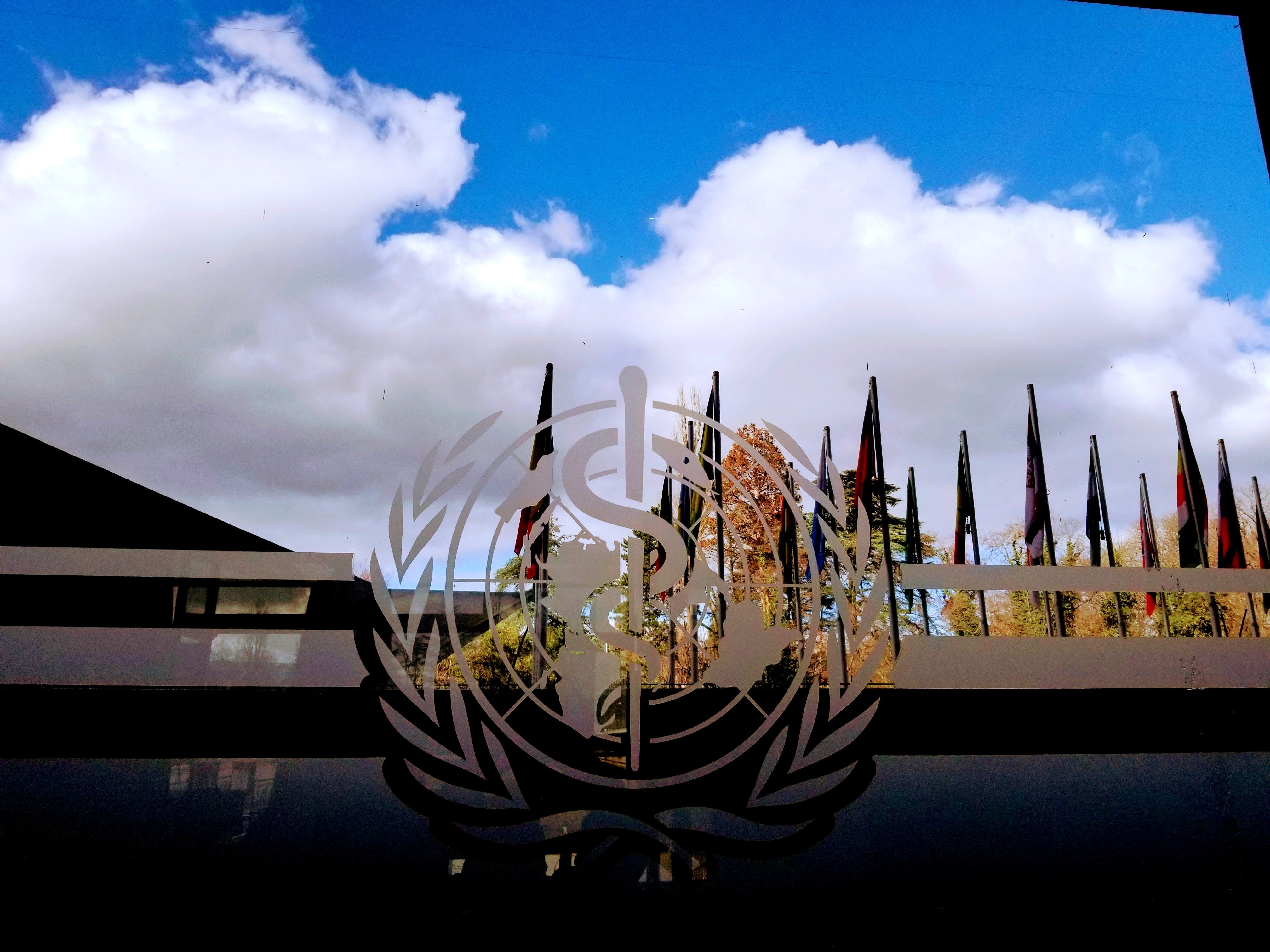
The World Health Organization declared the Ebola outbreak affecting Congo and Uganda a Public Health Emergency of International Concern on Sunday, elevating the crisis just as health ministers, diplomats and scientific advisers arrive in Geneva for the 79th World Health Assembly, WHO’s governing body. The designation is the organization’s highest level of global alarm short of a pandemic emergency.
The outbreak, caused by the rare Bundibugyo strain of Ebola, has added urgency to an assembly already expected to focus heavily on pandemic preparedness, financing and implementation of last year’s Pandemic Agreement. Unlike the more common Zaire strain, there are no approved vaccines or targeted treatments for the Bundibugyo variant, increasing pressure on governments, researchers and international health agencies to coordinate surveillance, diagnostics and research efforts under difficult conditions.
The emergency also arrives at an awkward moment for global health governance. WHO member nations failed to finalize key elements of the Pandemic Agreement’s Pathogen Access and Benefit Sharing (PABS) framework after disputes over intellectual property, technology transfer and access to medical countermeasures delayed consensus. The Pandemic Agreement itself was adopted at last year’s World Health Assembly and was presented as a major achievement for multilateral health diplomacy after the COVID-19 pandemic. But the treaty’s operational framework still depends on a separate agreement governing how countries share biological samples, pathogen data, vaccines and other medical countermeasures during outbreaks. WHO member nations are now expected to extend those negotiations into 2027 as technical and political disagreements remain unresolved.
Those tensions are likely to shape discussions throughout the assembly. Developing countries continue to push for stronger guarantees that scientific data and pathogen samples shared during outbreaks will lead to equitable access to vaccines, therapeutics and diagnostics. Wealthier countries and pharmaceutical interests remain cautious about provisions affecting intellectual property, manufacturing and mandatory benefit-sharing obligations.
WHO has already released emergency funding and advised governments against border closures or trade restrictions, warning that such measures can push outbreaks into less visible and harder-to-monitor channels. At the same time, the organization is expected to convene an International Health Regulations emergency committee to refine recommendations as cases spread from remote areas into major urban centers including Kampala and Kinshasa.
The outbreak is also triggering parallel layers of regional and international coordination. Africa CDC said on Sunday it is considering whether to declare a Public Health Emergency of Continental Security, a mechanism reserved for cross-border threats affecting multiple African Union member nations. The agency has already convened representatives from affected countries, donor governments, U.N. agencies, pharmaceutical companies and humanitarian organizations to coordinate surveillance, laboratory systems, logistics and cross-border response efforts.
Africa CDC Director-General Jean Kaseya also announced he would cut short his participation at the World Health Assembly in Geneva to return to affected countries, underscoring how outbreak governance operates simultaneously through national, regional and global institutions.
The assembly also opens under broader political strain surrounding the future of international health cooperation itself. The United States and Argentina have withdrawn from WHO even as recent outbreaks continue to demonstrate the dependence of disease surveillance, diagnostics and emergency coordination on cross-border scientific cooperation.
The outbreak, stalled pandemic negotiations and the withdrawals of the United States and Argentina from WHO expose new strains on the institutions that underpin global health cooperation. As health ministers gather in Geneva this week, the central question is not only how to contain the Ebola outbreak, but whether the international systems designed to coordinate surveillance, research and emergency response can function effectively during a major cross-border health crisis.

Inside institutions
World Health Organization — WHA79 opens amid outbreak diplomacy
Health ministers, diplomats and scientific advisers from 194 member nations gather in Geneva this week as WHO members confront unresolved negotiations over the Pandemic Agreement’s pathogen-sharing framework alongside mounting political strain surrounding the future of international health cooperation.
Africa CDC — Continental emergency coordination intensifies
Africa CDC is weighing whether to declare a Public Health Emergency of Continental Security as Ebola spreads across borders in Central and East Africa. The agency has activated regional coordination mechanisms involving governments, U.N. agencies, donors and pharmaceutical companies while emphasizing African-led preparedness and response architecture.
United Nations system — AI governance moves toward operational coordination
Preparatory consultations continue this week for the inaugural U.N. Global Dialogue on AI Governance as governments and stakeholders move from broad principles toward questions involving implementation, coordination and institutional oversight.
Peace Research Institute Oslo — European resilience debates widen
PRIO’s European Security Week examines how shifting alliances, emerging technologies and infrastructure vulnerabilities are reshaping European security governance and strategic resilience.
Scientific institutions — Universities expand diplomacy training networks
Academic institutions and international education networks continue building formal science diplomacy training initiatives focused on preparing future diplomatic and governance leaders.
Security Council watch
The United Nations Security Council, meeting under China’s month-long presidency, is focusing this week on institutional legitimacy, protection of civilians and broader questions surrounding international order and multilateral coordination.
The agenda includes a briefing on Ukraine following intensified Russian attacks on civilian and critical infrastructure, the Council’s annual debate on the protection of civilians in armed conflict, and discussions on Gaza, Libya and maritime security in the Strait of Hormuz.
The schedule reflects how humanitarian coordination, infrastructure protection and institutional resilience are increasingly intersecting across multiple U.N. processes.
Across regions
Switzerland / European Union — Water diplomacy gains strategic attention
A Swiss science briefing in Brussels this week examines water security as both a scientific and geopolitical issue, reflecting growing concern over climate pressures, resource governance and strategic infrastructure resilience.
Asia-Europe science diplomacy initiatives expand
The Science Diplomacy Education Symposium brings together educators, researchers and academic leaders to examine how universities across Asia and Europe are adapting science diplomacy training to shifting geopolitical and technological conditions.
Latin America / International Science Council — Foresight and scientific advice gain institutional focus
Virtual foresight sessions organized by the International Science Council’s regional focal point for Latin America and the Caribbean are bringing together policymakers, diplomats and researchers to examine how scientific advice, strategic foresight and evidence-based governance can be integrated more directly into public institutions.
Signals
Global health governance is being tested under real-world pressure
The Ebola emergency and postponed Pandemic Agreement negotiations are exposing unresolved tensions surrounding equity, technology transfer and institutional trust.
Scientific cooperation remains resilient despite political fragmentation
Even as governments challenge multilateral institutions politically, outbreak response and scientific coordination continue to depend heavily on international cooperation frameworks.
Strategic resilience is becoming a central diplomatic concern
From health systems and water security to AI governance and infrastructure protection, institutions are increasingly focused on resilience across interconnected systems.
On the calendar
May 18–23 — 79th World Health Assembly (Geneva)
Health ministers and diplomats convene as WHO member nations confront outbreak response, pandemic governance and health financing. → Program
Side events and parallel discussions are also expected to focus on climate-related health risks, artificial intelligence, disability equity and “One Health” approaches linking human, animal and environmental health. → Details
May 19 — Swiss Science Briefing: “Eyes on Water” (Brussels)
Swiss and European institutions examine water as a strategic scientific and geopolitical resource. → Details
May 18–22 — PRIO European Security Week (Online)
Series examining European resilience, technological change and shifting security dynamics. → Program
May 18–22 — Canada-Singapore AI + Quantum Collaboration Mission (Singapore)
Government officials and industry leaders convene alongside Asia Tech x Singapore to expand bilateral cooperation on artificial intelligence and quantum technologies. → Details
May 20 — Science Diplomacy Education Symposium (Online)
Asia-Europe forum examining how universities are training future science diplomacy practitioners and policy leaders. → Details
May 18–24 — WHO Ebola emergency coordination efforts
WHO and international partners continue response coordination following the declaration of a Public Health Emergency of International Concern linked to the Bundibugyo Ebola outbreak. → Background
Closing
You’re reading The Science Diplomat Playbook, a weekly briefing mapping global science diplomacy.


