

Issue No. 8 | Monday, June 8, 2026
Good morning,
Welcome to The Science Diplomat Playbook, your Monday morning guide to what’s shaping the week ahead in global science diplomacy.
The lead
Scientific verification is taking on added importance in international security as governments turn to technical institutions to manage political disputes.
The International Atomic Energy Agency’s Board of Governors convenes in Vienna this week with Iran, Ukraine, Syria, North Korea and AUKUS all on the agenda. The meeting brings together diplomats, nuclear experts and regulators at a moment when some of the world’s most sensitive security questions depend on scientific monitoring, technical verification and international inspection systems.
The agenda includes safeguards implementation in Iran and Syria, nuclear safety and security in Ukraine, safeguards questions surrounding AUKUS and the IAEA's annual review of global safeguards activities. Iran's cooperation with international inspectors and the status of its nuclear material are expected to be among the most closely watched issues.
While political disagreements often dominate headlines, the Board’s work highlights a broader reality: many international security disputes now rely on scientific expertise to establish facts, monitor compliance and build confidence among governments.
Similar dynamics are emerging elsewhere across the multilateral system. The United Nations will hold a high-level debate on wildlife trafficking and environmental crime. The World Trade Organization will continue discussions on plastics pollution and sustainable plastics trade. Climate negotiators meeting in Bonn will focus on adaptation and implementation ahead of COP31.
The discussions illustrate how technical expertise increasingly shapes decisions traditionally associated with diplomacy, trade and security.
Inside institutions
International Atomic Energy Agency — Nuclear verification and international security
The IAEA Board of Governors meets in Vienna through June 12 with safeguards implementation in Iran, Syria and North Korea among the most closely watched agenda items. Nuclear safety and security in Ukraine, technical cooperation activities and safeguards questions related to AUKUS are also expected to feature prominently in discussions.
World Health Organization — Ebola response enters a new phase
WHO hosts a global webinar this week on the Ebola outbreak affecting Congo and Uganda, providing an update on the Bundibugyo strain, border health measures and preparedness efforts. The event follows the declaration of a Public Health Emergency of International Concern and continued implementation of the joint WHO–Africa CDC response plan.
United Nations — Environmental crime moves up the agenda
The General Assembly holds a high-level debate on preventing and combating wildlife trafficking and other crimes affecting the environment. The discussion reflects growing concern about the links between environmental degradation, organized crime, biodiversity loss and sustainable development.
World Trade Organization — Plastics negotiations continue
Trade officials meet in Geneva for discussions on plastics pollution and environmentally sustainable plastics trade. The dialogue forms part of broader efforts to connect trade policy with environmental objectives and sustainable production systems.
Security Council watch
Colombia continues its presidency of the United Nations Security Council with an emphasis on mediation, climate-related security risks and multilateral diplomacy.
Council members are expected to follow developments related to Iran, Lebanon, Ukraine and maritime security in the Strait of Hormuz. The Council will also receive a briefing on Iran under its nonproliferation agenda, linking diplomatic debates in New York with safeguards discussions taking place simultaneously at the IAEA Board of Governors in Vienna.
In Geneva, several declared candidates for secretary-general will participate in one of the most visible public debates of the leadership contest to date.
Across regions
Climate diplomacy — Bonn meetings continue
Negotiators and experts meeting in Bonn will focus on climate adaptation, implementation of National Adaptation Plans and preparations for COP31 in Antalya, Turkey. Several discussions this week will examine how countries translate climate commitments into practical policy measures.
Asia-Pacific — Trade facilitation and digital cooperation
The Asia-Pacific Trade Facilitation Forum and Paperless Trade Week convene in Bangkok, bringing together policymakers, international organizations and technical experts to discuss digital trade systems, customs modernization and regional economic integration.
Europe — Women, peace and security
The Council of Europe hosts its annual Gender Equality Commission conference in Strasbourg, focusing on women’s participation in conflict resolution, peacebuilding and post-conflict recovery.
Signals
• Scientific verification is becoming central to international security governance.
• Environmental issues are being framed as questions of security, trade and international cooperation.
• The contest to succeed António Guterres is attracting greater public attention as candidates outline competing visions for the future of multilateralism.
On the calendar
June 8–12 — IAEA Board of Governors (Vienna)
The Board usually meets in March and June, twice in September, and in November. → Background
June 8 — U.N. General Assembly debate on wildlife trafficking and environmental crime (New York)
Organizers say the debate aims to raise awareness on the scale and complexity of crimes that affect the environment. → Watch
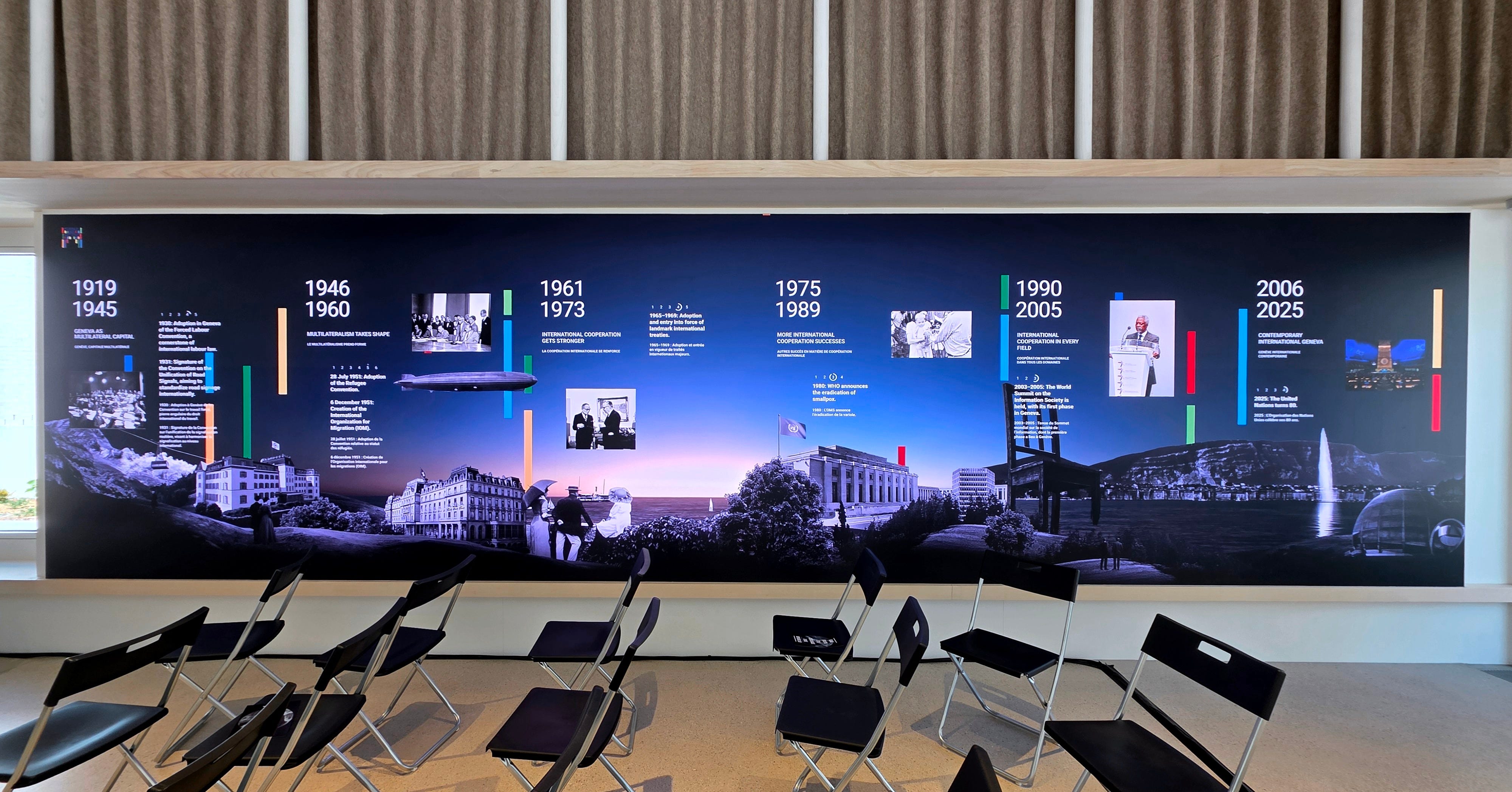
June 8 — Immersive new ‘Portail des Nations’ multilateralism center opens to the public
Years in the making, the new center on the grounds of the Palais des Nations in Geneva combines multimedia storytelling, negotiation simulations and interactive exhibits. → Details
June 8–12 — International Labor Conference (Geneva)
Delegates from the ILO’s 187 member nations conclude meetings on AI, platform work, social dialogue and gender equality in the world of work. → Program
June 8–18 — UNFCCC climate meetings (Bonn)
Mitigation, adaptation, finance, technology and capacity-building are up for discussions as nations prepare for COP 31 at Antalya in November. → Schedule
June 9 — WHO webinar: Ebola Bundibugyo virus disease: what we know (Virtual)
This webinar with WHO officials will aim to explain why the outbreak is significant, WHO’s recommendations for dealing with it, and the rationale behind them. → Program
June 9 — Secretary-General candidates debate (Geneva)
The Geneva Graduate Institute will host a debate organised by GWL Voices, in partnership with the U.N. Foundation, featuring candidates for the position of United Nations Secretary-General. → Program
June 9 — Fourth International Conference on Environmental Peacebuilding (Ottawa, Ontario)
A free day of virtual talks is offered ahead of the in-person conference at the University of Ottawa from June 16-19, 2026. → Program
June 10–18 — U.N. Committee on the Peaceful Uses of Outer Space (Vienna)
Lunar governance, space traffic coordination and the long-term sustainability of space activities are on the agenda. → Program
Closing
You’re reading The Science Diplomat Playbook, a weekly briefing mapping global science diplomacy.