Time is power
How duration shapes who decides. Part 4 of a five-part series.

Power in global science governance is built into who can operate, measure, access systems, and persist. This series examines those dynamics in five parts, continuing here with time.
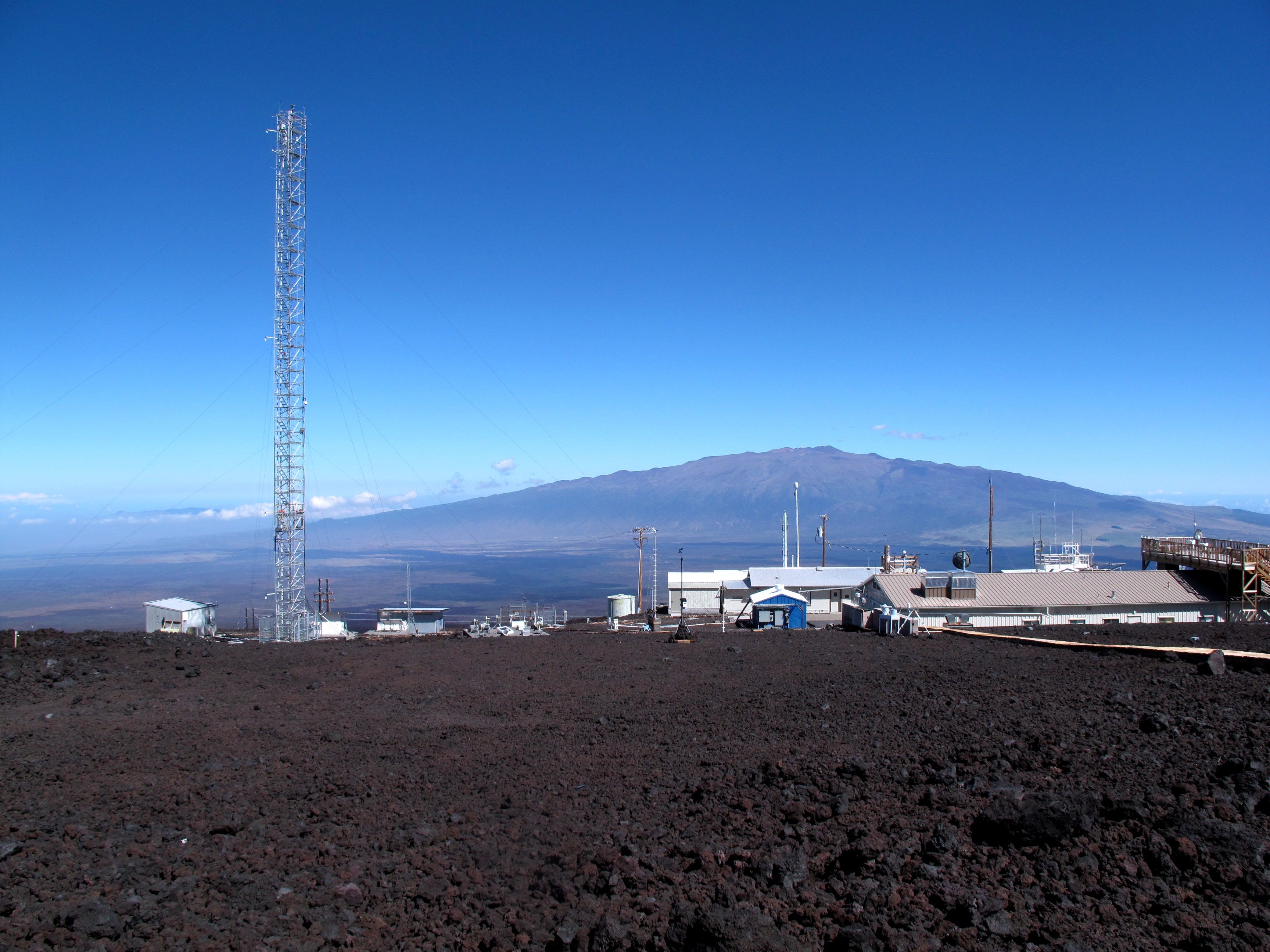
In 1958, climatologist Charles David Keeling began measuring carbon dioxide in the atmosphere using an experimental manometer at Mauna Loa, a site selected for its clean and stable air. Trade winds sweeping across the Pacific reduced local contamination, allowing readings that could be compared consistently over time.
The work was part of a broader effort to understand atmospheric chemistry and, over time, the measurements became something more broadly durable and useful, even for diplomacy.
Today, carbon dioxide concentrations are tracked through long-term observation systems coordinated under the World Meteorological Organization’s Global Atmosphere Watch program. Monitoring stations operate across a range of environments, but the record at Mauna Loa remains one of the longest continuous datasets available.
Carbon dioxide levels there were about 385 parts per million in 2009, when governments meeting in Copenhagen coalesced around a goal of limiting global warming to below 2°C above pre-industrial levels. Now, they are tracking closer to 430 ppm.
The change is significant, but so is the continuity of the record that captures it. Because the measurements have been maintained without interruption, they allow scientists to distinguish long-term trends from short-term variation. That distinction underpins much of the analysis used in climate assessments.
Countries entering the system today can deploy sensors and contribute new data. They cannot recreate a continuous record that began decades earlier under different atmospheric conditions. The value of the dataset depends on how long it has been maintained.
“Without long-term observations it would not be possible to confirm that the Earth has warmed significantly over the past century,” WMO’s then-deputy secretary-general Elena Manaenkova said in 2019, when recognition certificates were handed to stations that have observed weather for more than a century.
Records like these are used repeatedly in scientific reports and policy discussions. Their role comes from continued use rather than formal designation. Over time, the measurements became a long-term record used to track change.
Time operates differently in systems that manage innovation. Under the Patent Cooperation Treaty, administered by the World Intellectual Property Organization, a filing establishes a “priority date.” That date marks when an invention is formally recognized and sets the sequence for what follows. Applicants then have up to 30 months to decide where to seek protection, refine the technology, and secure financing.
During that period, others working in the same area can continue research, but moving toward commercial use carries legal risk. The filing does not stop competing work. It sets the order in which that work can move forward.
“In this world of shortened innovation and business cycles, WIPO will work hard to ensure that our global IP services keeps pace with the changing expectations of our customers,” WIPO Director General Daren Tang said in March, when the agency reported that international patent filings rose 0.7% in 2025 to 275,900 applications.
The effect is often most visible in industries where development and deployment move quickly. Differences in timing can affect which products reach the market first and under what conditions.
Long-term research programs show a similar pattern in a different setting. Space missions are often planned and executed over decades. Designing, funding, and launching a major mission requires sustained coordination across changes in leadership, policy priorities, and budgets. Decisions made early in the process shape the work that follows.
Participation in these programs is formally open. In practice, roles differ over time. Countries able to maintain funding and technical continuity tend to lead mission design and set research priorities. Others contribute instruments, data analysis, or supporting work within frameworks established earlier.
“This is not a sprint, this is a marathon,” Thomas Zurbuchen, who led NASA’s science mission directorate from 2016 to 2022, wrote about competition in space exploration. “Having run several marathons myself, I know from experience that consistency and focus are the most vital ingredients for victory.”
The differences in duration show up in how work is organized and decisions are made. Long-running climate records provide the basis for scientific assessments. Patent filings establish the sequence in which technologies move toward market. Space missions reflect commitments made many years before launch.
These patterns emerge from how long the systems are maintained and how consistently they are funded. Countries and institutions that sustain programs over longer periods often define the records, timelines, and project structures that others work within. Those entering later contribute to ongoing efforts but do so against baselines and schedules that are already in place.
By the time negotiations take place, those conditions have already been set.
Part 5 examines how these advantages, once established through capacity, measurement, access, and time, become embedded in institutions and continue to shape outcomes.

