

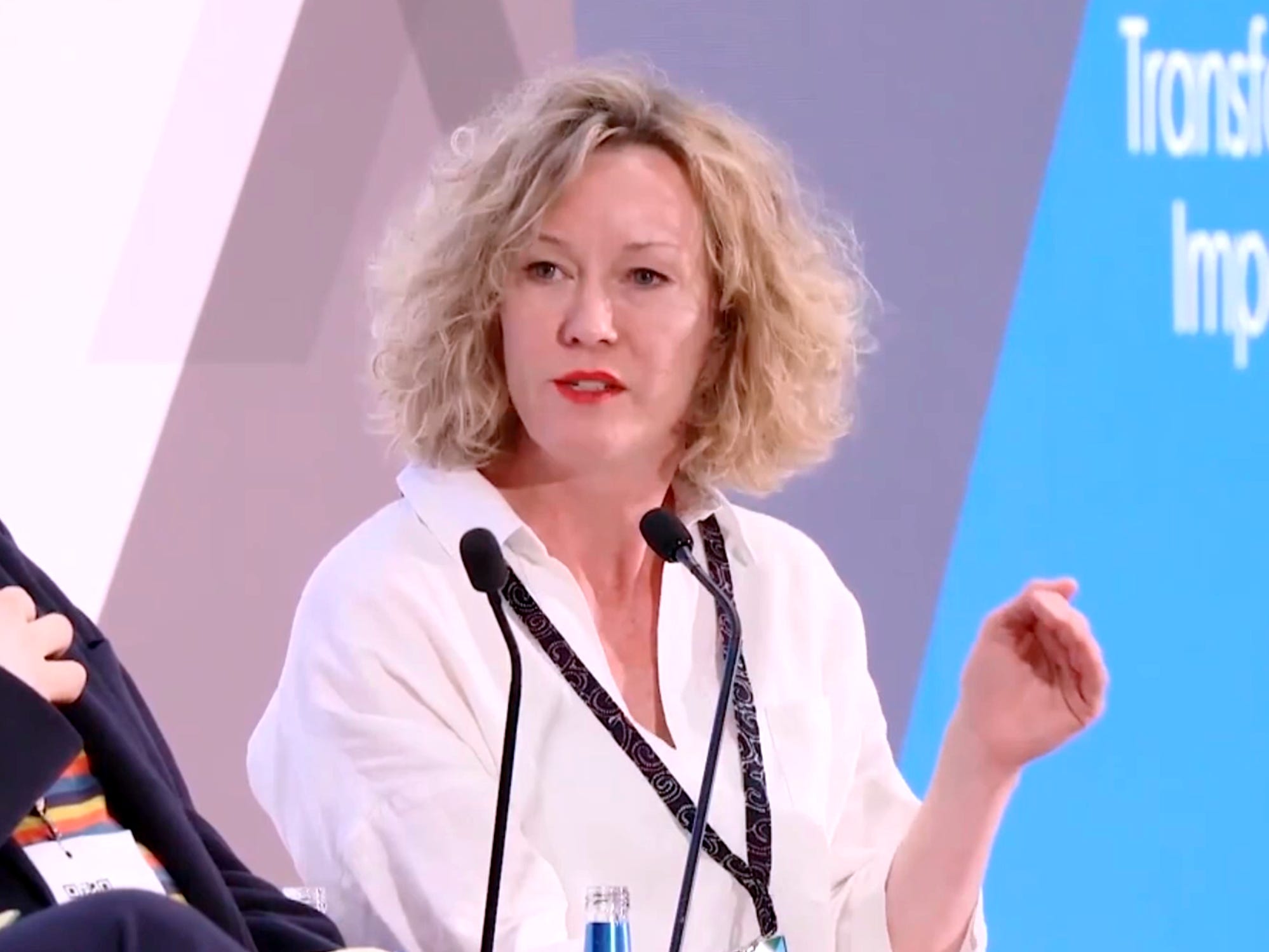
Tracey Brown has spent more than two decades defending an idea that often seems deceptively simple: evidence matters.
Yet the chief executive of the London-based charity Sense about Science argues that facts alone are never enough. Evidence must be scrutinized, communicated, challenged and defended through institutions that allow citizens to understand the world around them.
“People are very motivated to have people in authority tell the truth and to have honest and independent statistics,” Brown said during an interview on The Science Diplomat Podcast. “I didn’t think we lived in a post-truth society. I think we lived in a post-politics society.”
Since becoming one of Britain’s most prominent advocates for evidence-based public policy, Brown has led campaigns promoting transparency in clinical trials, strengthening protections for independent scientific advisers, and encouraging citizens to ask institutions for evidence behind public claims and decisions.
Brown repeatedly pointed to what she described as the often-overlooked infrastructure that allows societies to distinguish reliable information from opinion, advocacy or misinformation.
One example was a campaign to popularize peer review as a basic indicator of scientific credibility. Twenty years ago, she said, many news reports discussed scientific findings without even identifying the journal in which a study appeared. Today, peer review has become a familiar part of public discussion about scientific evidence.
“It wasn’t a question of, is it true?” Brown said. “It was just, has it been through some really kind of fundamental checks?”
She also highlighted the AllTrials campaign, which sought to ensure that clinical trial results are published rather than selectively disclosed. The effort helped push pharmaceutical companies, regulators and medical organizations toward greater transparency.
Brown argued that evidence should inform public decisions without being treated as beyond question. “I’m nervous of anything that makes science beyond question, because that’s not science,” she said.
That distinction became particularly important during debates over climate change, public health and pandemic policy, where uncertainty itself often became politically contested. Brown warned against both the weaponization of uncertainty to delay action and the temptation to present scientific conclusions as absolute certainties.
“I think we can be clear at the same time that uncertainty doesn’t mean we don’t do anything,” she said. “Everything that we’re researching is uncertain or we wouldn’t be researching it.”
Brown described investigative and specialist journalists as part of a broader ecosystem of what she called “public good curators” — people who assemble information in ways that allow citizens to understand events, institutions and public decisions.
“Almost as though a good journalist, especially a good journalist who will work their way through evidence, a good journalist is like our public representative there in the world,” she said.
Brown also warned that political polarization complicates public discussions about evidence. Scientific findings are often presented alongside competing claims, advocacy campaigns and ideological narratives, making it more difficult for citizens to evaluate information on its merits.
“The real challenge,” she said, is that scientific evidence is treated as just another opinion. Despite those concerns, Brown remained cautiously optimistic about the public’s willingness to engage with evidence when institutions are transparent and accountable.
“We underestimate people’s ability to accept evidence that is contrary to what they think,” she said.
S1E6: Tracey Brown on evidence, accountability, and the public interest

Season 1, Episode 6 —Tracey Brown on evidence, accountability, and the public interest