Two U.N. negotiations expose the limits of consensus
Analysis: Two multilateral meetings ended with different results but exposed the same tension between scientific urgency and diplomatic rules that empower holdouts.

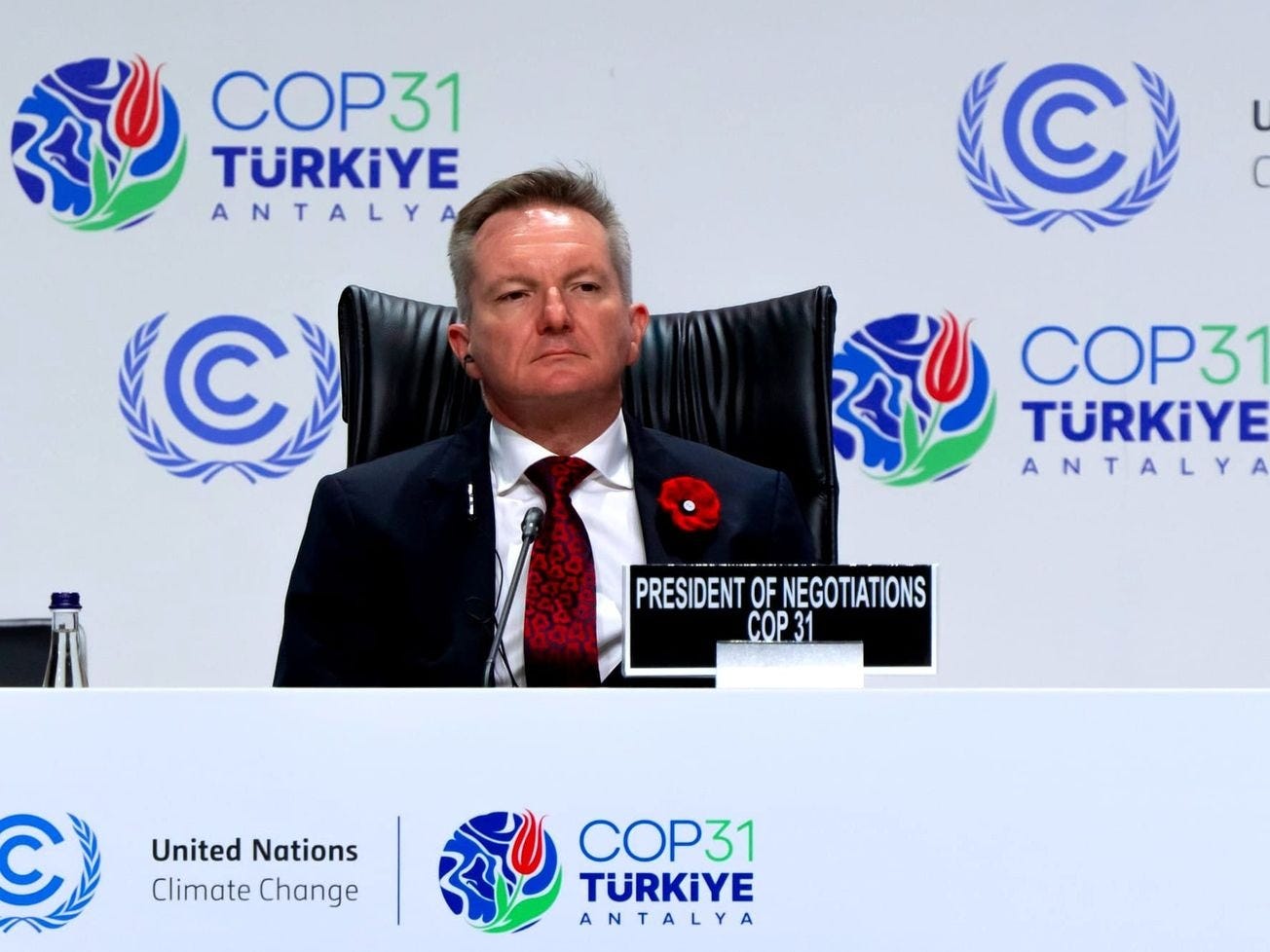
Climate talks collapsed and a conventional weapons review was derailed within 24 hours, showing how scientific and technological urgency collides with diplomatic systems that give holdouts enormous leverage.
At COP31 in Antalya, Turkey, countries failed to adopt an overarching climate agreement on Sunday after oil-producing governments resisted explicit language on moving away from fossil fuels and European and vulnerable developing countries rejected a compromise they considered inadequate.
In Geneva, procedural objections from Russia prevented governments from completing a scheduled review of the Convention on Certain Conventional Weapons on Saturday. The conference produced a two-year mandate to develop international rules for autonomous weapons, but did not decide whether those rules should be legally binding.
The subjects were different, as were the outcomes. Climate negotiators left Antalya without their principal political agreement. The weapons conference made limited progress on autonomous systems while failing to conduct the broader review normally held every five years.
Both meetings exposed the same institutional tension: governments are trying to govern problems shaped by rapidly developing science and technology through diplomatic systems in which decisions generally require everyone in the room to stand aside.
Consensus keeps the most powerful and reluctant governments inside a negotiation. It also allows them to block outcomes supported by much larger coalitions.
Scientific agreement does not settle political disputes
Climate science can identify the causes and consequences of rising temperatures, but it cannot determine how quickly individual countries must change their energy systems, who should bear the costs or how much financing wealthier governments should provide to vulnerable economies.
At COP31, roughly 130 countries sought language acknowledging fossil fuels as the principal cause of global warming. Saudi Arabia, Russia and other producers resisted language that could constrain national energy choices or reduce demand for coal, oil and gas.
The proposed Antalya Pact recalled the 2023 agreement at COP28 to transition away from fossil fuels in energy systems but did not mention them explicitly or create a new commitment to reduce their use.
That omission proved unacceptable to the European Union, Britain, Norway, Panama, the Marshall Islands and other governments. “We will not accept a COP that greenwashes fossil fuels,” Ireland’s climate minister, Darragh O’Brien, said on behalf of the E.U.
The draft also failed to satisfy developing countries seeking stronger financial commitments for adaptation and climate-related losses.
The disagreement came as governments acknowledged that the Paris Agreement’s goal of holding warming to 1.5° Celsius above preindustrial levels is likely to be exceeded. The proposed agreement called for efforts to reverse that overshoot but did not resolve how governments would produce the emissions reductions or financing required.
Science established the danger. It did not resolve the conflict among countries with different resources, development needs and degrees of economic dependence on fossil fuels.
“We must protect climate science, reform the COP process to stop polluters from blocking progress and develop clear roadmaps to replace fossil fuels with clean energy,” former U.S. Vice President Al Gore said.
Technology moves while governments negotiate
The autonomous weapons talks faced a related problem. Artificial intelligence, sensors and automated targeting systems are advancing while governments continue debating which systems should be prohibited, what degree of human control should be required and whether new international law is necessary.
After 13 years of discussions, the Convention on Certain Conventional Weapons agreed to give a group of government experts two years to develop an international instrument on lethal autonomous weapons systems.
The mandate leaves the instrument’s legal force undecided. The United States favored a five-year process leading toward nonbinding rules. Peru sought a two-year negotiation for a binding protocol. Britain, France and Germany supported beginning negotiations without determining the outcome’s legal status in advance.
Russia has also opposed binding restrictions. The compromise allows technical and diplomatic work to continue, but the systems being discussed are not waiting for governments to agree. AI is already being incorporated into military surveillance, target identification and decisions about the use of force.
The scientific questions are inseparable from legal and political ones. Governments must consider whether the behavior of a system can be sufficiently understood and predicted, how it performs outside the conditions in which it was tested and who is responsible when decisions are distributed among developers, commanders, operators and machines.
A technical assessment can identify limitations and risks. It cannot decide how much uncertainty governments are willing to accept in exchange for a perceived military advantage.
What consensus preserves—and prevents
Consensus is often defended as essential to the legitimacy of international agreements. Climate measures affecting national energy systems are unlikely to succeed without the participation of major emitters and producers. Weapons rules will have limited effect if the countries developing and deploying the technology remain outside them.
But the requirement also changes the balance of power inside negotiations.
At COP31, fossil fuel producers could prevent stronger language. The E.U. and vulnerable countries could also block a compromise they believed concealed the source of the problem. Consensus empowered both the countries resisting new obligations and those refusing to accept a weaker result.
Amnesty International described the rejection of the proposed text as “an important act of resistance,” arguing that no agreement was preferable to one that failed to name fossil fuels or provide adequate climate finance.
The weapons conference demonstrated how procedural disputes can consume a substantive meeting. Russia sought restrictions on when the European Union and other observers could speak. Other governments argued that the proposal would undermine established practice and meaningful participation.
The disagreement prevented adoption of the conference agenda and rules of procedure. Governments therefore did not complete their comprehensive review of existing conventional-weapons rules, and proposals involving incendiary weapons, mines and emerging technologies also failed to advance.
The dispute prompted Austria to question whether the convention’s longstanding practice of deciding without votes creates an absolute consensus requirement. Russia rejected that interpretation.
Changing either system would itself require extensive political agreement. Proposals to replace consensus with supermajority voting in climate negotiations have circulated for years without overcoming resistance from governments that would lose influence under such a system.
Nor would voting necessarily make implementation easier. An agreement imposed over the objections of major powers could produce stronger language while weakening participation or compliance.
The two conferences leave governments with no simple institutional remedy. Consensus can produce broad legitimacy when agreement exists, but it can also allow the most reluctant participants to set the ceiling for collective action—or prevent a collective decision altogether.
Existing climate commitments remain in force, and the autonomous weapons mandate creates a path for further negotiations in 2027. Neither outcome resolves the conflicts that shaped the meetings.
U.N. Secretary-General António Guterres closed COP31 by separating the state of the negotiations from the state of knowledge. “There may be no consensus in the negotiating room,” he said. “There is no ambiguity in the science.”
Discussion about this post