

A landmark agreement that transformed U.S.-India relations and rewrote parts of the global nuclear order is still shaping debates about science diplomacy, diplomacy experts and former negotiators said.
Participants in a discussion hosted by the Stimson Center in Washington on Wednesday argued that the 2008 U.S.-India Civil Nuclear Agreement succeeded in building strategic trust and changing international nuclear governance, even as many of its commercial ambitions failed to materialize.
The event marked the publication of The U.S.-India Nuclear Accord: History, Analysis, and Reflections, a new volume edited by political scientists Šumit Ganguly and Dinsha Mistree that combines first-person accounts from key negotiators with assessments of the agreement’s long-term consequences.
“The real purpose of it was to bring India strategically into the fold from the U.S. side,” Mistree said, arguing that the agreement’s significance ultimately extended well beyond civilian nuclear energy.
The accord represented one of the most consequential diplomatic breakthroughs of the early 21st century. Under its terms, India agreed to place its civilian nuclear facilities under safeguards administered by the International Atomic Energy Agency while retaining control of its military nuclear program.
The agreement also paved the way for an unprecedented waiver from the Nuclear Suppliers Group, allowing international civilian nuclear cooperation with India despite its status outside the Nuclear Nonproliferation Treaty.
"The significance of this accord simply cannot be adequately underscored for the simple reason this was a unique carve out, it was a carve out for one particular country, and this required consequently a significant expenditure of political capital on the part of the Bush administration,” said Ganguly.
In practical terms, the agreement separated civilian and military nuclear activities in a country that had long remained outside key elements of the global nuclear governance system.
For science diplomacy practitioners, the accord offers a striking example of how highly technical questions become diplomatic ones.
Negotiators had to navigate nuclear safeguards, export controls, reactor technology, nonproliferation concerns and international regulatory frameworks while overcoming political opposition in both Washington and New Delhi.
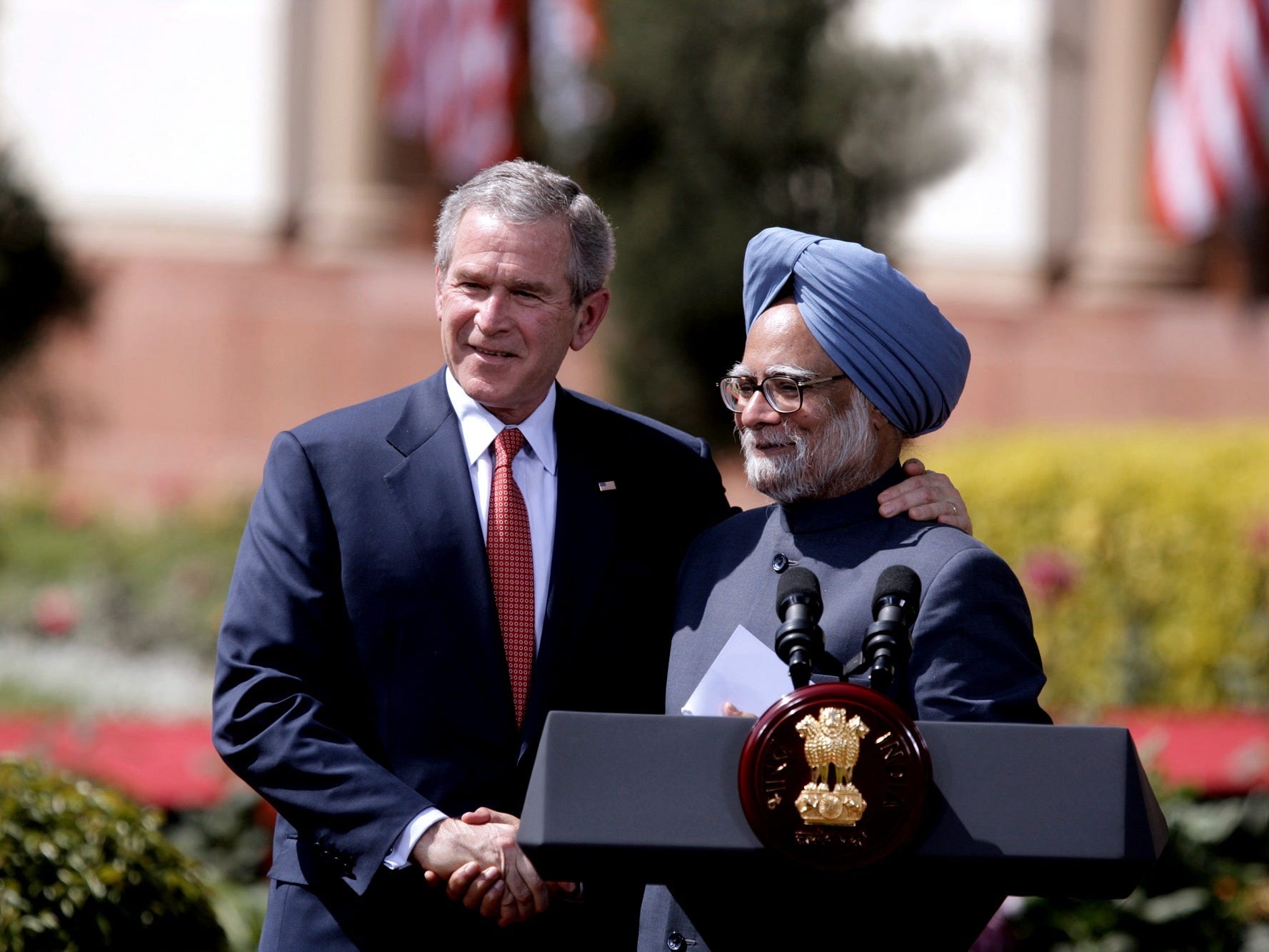
The U.S.-India Civil Nuclear Agreement began with a July 2005 framework and was formalized during a March 2006 New Delhi summit between then-U.S. president George W. Bush and India’s then-prime minister Manmohan Singh, with India agreeing to separate its military and civilian reactors. To allow this trade with a non-NPT signatory, Bush signed the Hyde Act in December 2006, and bilateral text negotiations concluded in July 2007.
The deal gained global momentum in September 2008 when the Nuclear Suppliers Group granted India a historic waiver, lifting a three-decade ban on global nuclear commerce. Following final U.S. congressional approval, the landmark 123 Agreement was officially signed into effect on October 10, 2008, fully integrating India into the global nuclear architecture.
Mistree recalled a pivotal moment during the negotiations in July 2005 when then-U.S. Secretary of State Condoleezza Rice — who wrote the preface for the new book — reportedly told Indian officials to choose someone among their most skeptical ranks to draft language they could accept. “I think we can work with this,” she said, according to Mistree’s account. The exchange, he argued, marked the point when trust began to emerge between the two sides.
Several participants emphasized that trust may have been the agreement’s most enduring legacy.
Daniel Markey, who served at the State Department during the negotiations, described the accord as “an outstanding, perhaps even the outstanding example of how big, bold ideas can, under certain circumstances, be translated into tangible, world-changing policies.”
The deal required years of sustained political effort. Unlike agreements forged in response to an immediate crisis, Markey noted, the initiative reflected a strategic choice by leaders in both countries who were willing to spend considerable political capital despite uncertainty about the outcome.
Yet speakers also acknowledged that the accord fell short of some of its most visible goals.
Many supporters anticipated a significant expansion of civilian nuclear commerce and reactor construction in India. Those expectations largely faded after India’s 2010 nuclear liability law raised concerns among foreign suppliers and investors.
As a result, the agreement’s diplomatic and strategic achievements have often overshadowed its commercial outcomes. That paradox remains relevant for science diplomacy today.
The agreement succeeded in changing institutions, rules and strategic relationships, even where anticipated market outcomes failed to materialize. It demonstrated how technical cooperation can become a vehicle for broader geopolitical realignment and how scientific and regulatory questions can reshape international relationships.
Participants suggested that those lessons may be increasingly important as governments confront contemporary challenges involving artificial intelligence, biotechnology, climate technologies and other fields where scientific expertise and diplomacy are becoming more tightly intertwined.
“This is fundamentally a case where geopolitical interests, commercial interests to an extent, won out over nonproliferation concerns,” said Elizabeth Threlkeld, a senior fellow and director of the South Asia Program at the Stimson Center.
“And as authors in the book rightly note, there were very strong views on all sides, valid views, informed views. So this was really a debate among experts,” she said. “And rather than being able to make a call on who's right, who's wrong, it's a value judgment in terms of what we're prioritizing in this longer term bet. And I think that was somewhat unique in this moment.”