
In the basement of the U.N. refugee agency sits one of the world’s largest collections of humanitarian history. The shelves hold millions of pages documenting refugee movements, emergency responses, diplomatic negotiations and decisions stretching back to the agency’s creation in 1950.
They record not only what happened but how governments and humanitarian organizations responded, what worked, what failed and how international protection gradually evolved over three-quarters of a century. Yet this year, the archives themselves came under pressure.
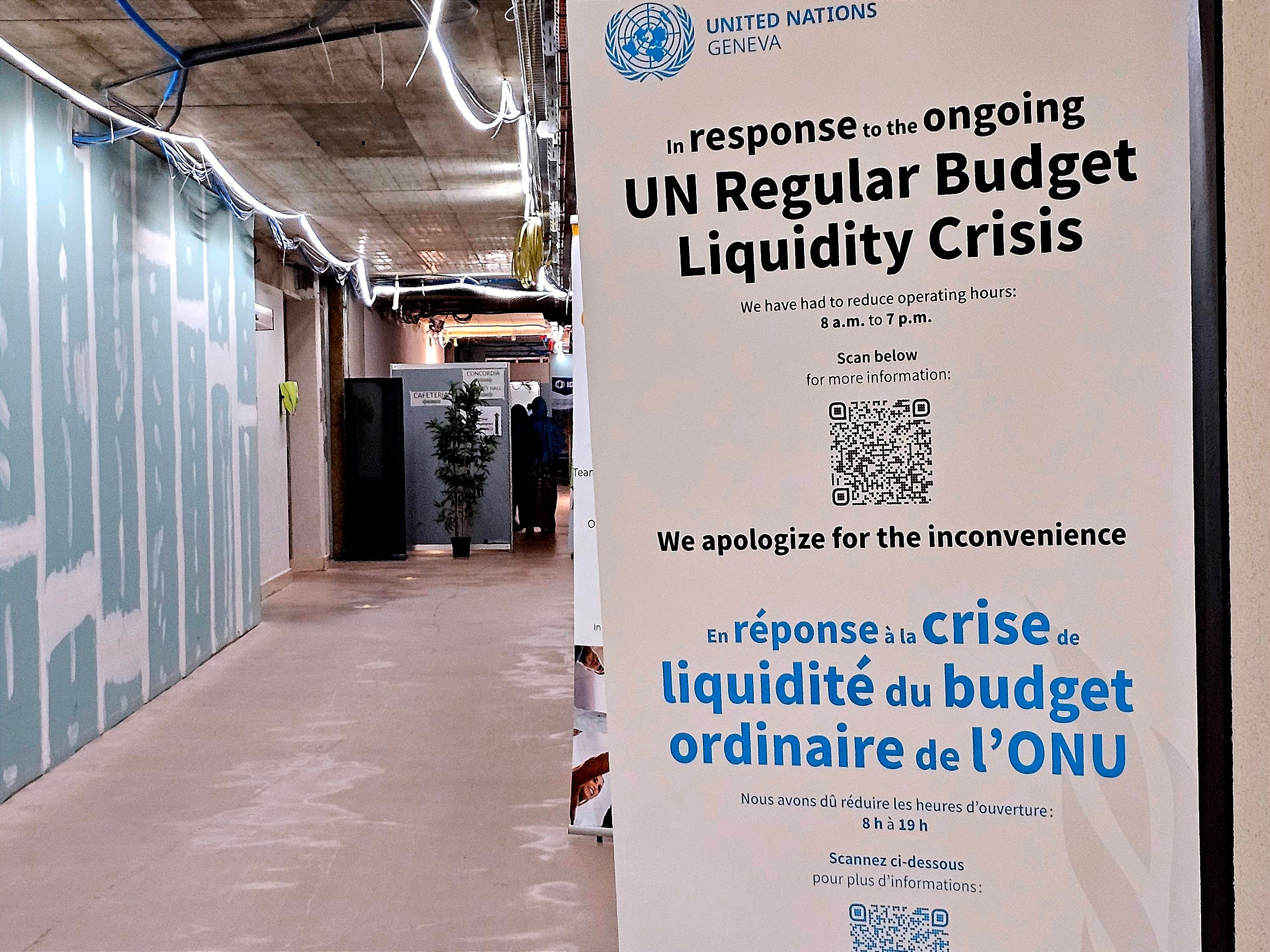
Budget reductions, restructuring and office closures forced the Office of the U.N. High Commissioner for Refugees to scale back archival operations, reduce staffing and close its public reading room. UNHCR archivists warned that the danger extended beyond preserving documents.
Without continued organization, cataloguing, metadata and specialist knowledge, institutional memory itself begins to erode. An institution can preserve its records while gradually losing the ability to understand them. Information survives, but memory does not.
What survives depends on something relatively fragile: whether governments continue to believe these institutions perform functions that no one else performs as well. That begins with institutional memory, which can shorten learning curves, reducing mistakes.
As humanitarian organizations confront a new displacement crisis, they regularly consult earlier operations to understand legal precedents, registration systems, camp management, repatriation agreements and relationships with host governments.
The archives face pressure at the same time as the refugee system itself. A global Ipsos survey released with UNHCR during the 75th anniversary of the 1951 Refugee Convention found that 66% of respondents across 29 countries continued to support offering refuge to people fleeing war or persecution.
At the same time, 61% believed many asylum seekers were motivated by economic opportunity rather than a well-founded claim. UNHCR officials argued the central challenge was no longer defending the Convention's principles but ensuring that "the promise works in practice" through asylum systems that are fair, timely and credible.
The survey and the archives point to different dimensions of the same institutional problem. One asks whether governments can preserve knowledge accumulated over seventy-five years. The other asks whether they can preserve public confidence that the refugee system still functions as intended.
The same principle extends beyond humanitarian agencies. When governments adopted the Sustainable Development Goals in 2015, they committed themselves to 17 global objectives and a shared system for measuring progress. Over the past decade, the global SDGs database has expanded to include millions of observations.
Every indicator now has an internationally agreed methodology even as progress toward the goals continues to lag. Governments have proved better at preserving a common framework for measuring development than at achieving the goals themselves.
The contrast became more pronounced in 2026. The Sustainable Development Goals report concluded that only a small fraction of targets remain on track for achievement by 2030, with conflict, debt, climate pressures and shrinking development assistance slowing or reversing progress in many areas. Yet the statistical architecture continued to expand.
The shared database grew from roughly 330,000 records in 2016 to more than 3.2 million, while every SDG indicator acquired an internationally agreed methodology. Even as governments struggled to achieve common objectives, they continued investing in a common system for observing them.
The outcome illustrates an unusual form of institutional resilience. Governments often disagree about policy, but they continue to cooperate around evidence because shared measurement remains useful even when shared action becomes more difficult.
Authority represents another form of institutional resilience. Speaking to an audience in Geneva in July, International Atomic Energy Agency Director General Rafael Mariano Grossi observed that international organizations should not confuse authority with power. “You don’t have power,” he said. “You have authority.”
Authority depends less on mandates than on technical competence, credibility and trust. Governments invite inspectors, scientists and humanitarian organizations into politically sensitive situations because they believe those institutions can produce knowledge and judgments that others accept as legitimate.
Once credibility erodes, authority quickly follows.
Grossi argued that this distinction has practical consequences. Governments increasingly negotiate major conflicts outside multilateral institutions, he acknowledged, but international organizations continue to possess something governments cannot easily reproduce: authority rooted in technical competence and credibility.
"It's not because the U.N. exists that the U.N. will be called," he said. "The U.N. will be called if it has the credibility and the ability to add value to the peace negotiation."
The World Meteorological Organization's Early Warnings for All initiative highlights another dimension of institutional resilience: translating knowledge into action. Last year, the global push for climate resilience hit a new milestone with 60% of all countries reporting the adoption of a multi-hazard early warning system.
At last 119 nations had a coordinated system to warn residents about impending natural dangers, compared to only 56 nations in 2015, according to the WMO and the U.N. Office for Disaster Risk Reduction.
Despite the progress, coverage and capability gaps persisted, underscoring the challenge of achieving the universal protection goal by 2027. Coverage was lowest in the Americas and Caribbean, and small island developing nations lagged significantly.
A significant systemic shortfall noted in the report was the lack of development in disaster risk knowledge, a foundational pillar of any effective warning system. Fewer than a third of all countries reported having adequate capabilities for risk knowledge, making it the least developed early warning pillar globally.
The findings suggest that resilience depends not only on scientific forecasting but also on institutions capable of translating forecasts into public warnings, emergency planning and coordinated response.
Institutions preserve value by maintaining functions that individual governments cannot easily reproduce on their own. They preserve institutional memory, maintain shared systems of evidence, provide expertise that governments trust and help translate knowledge into coordinated action.
Pressure exposes whether those capabilities survive even when budgets shrink, politics hardens and confidence weakens. Institutions that retain them preserve something larger than themselves: the possibility that governments facing the next crisis will not have to begin again from nothing.