

Companies that own computing infrastructure have gained considerable influence over science diplomacy. Universities manage international research partnerships, while standards bodies influence how technologies are developed and used.
Governments remain central, but they now operate within a wider system of institutions with different forms of authority and competing interests.
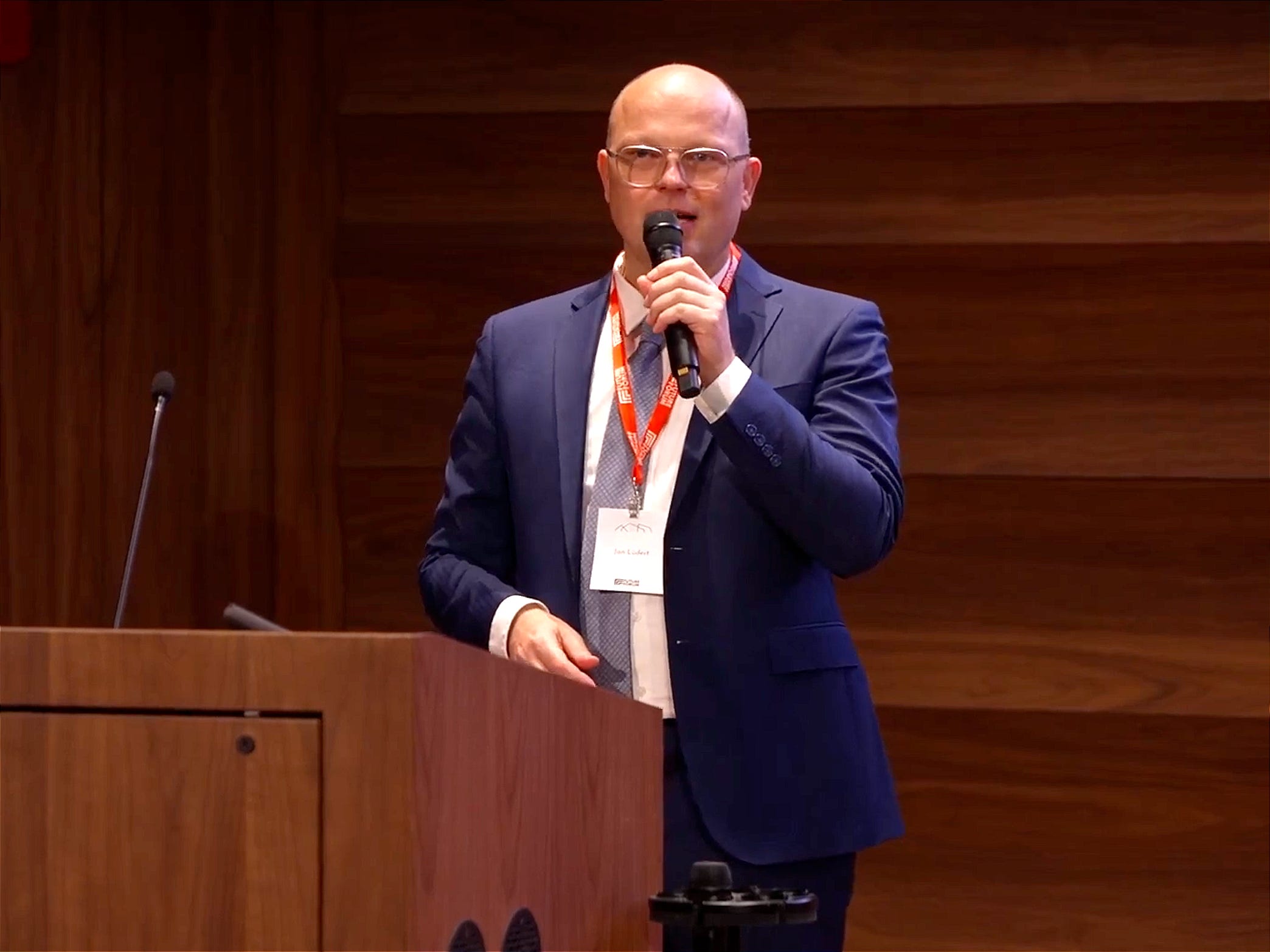
“The real important question that underlies this notion of polycentricity is about where authority really resides today,” Jan Lüdert, head of programs at the German Center for Research and Innovation in New York, said in an interview with The Science Diplomat Podcast.
That question is central to the new Palgrave Handbook of Science Diplomacy, which Lüdert co-edited with Martin Wählisch. Its 28 chapters bring together 52 scholars and practitioners examining how geopolitical competition and technological change are affecting the field.
Lüdert uses the term “polycentric” to describe a system with overlapping centers of power. Governments control foreign policy, export restrictions and many sources of research funding. Universities determine how collaborations operate and who participates. Companies own cloud platforms, data centers and other infrastructure on which data-intensive research depends.
“Science diplomacy is shifting into a so-called polycentric reality. That means that we have more overlapping centers of authority,” he said.
Artificial intelligence makes the distribution of power especially visible. Governments are attempting to regulate systems developed largely by private companies, while those companies warn about potential dangers and call for legislation. Neither side wants to surrender a strategic or commercial advantage.
“There is a lot of passing of the buck happening,” Lüdert said.
He questioned whether some corporate demands for regulation reflect safety concerns or attempts to protect market position. But he rejected the idea that governments have lost control.
“We live in a state system and states are still the most important and powerful actors,” he said. “We should not underestimate the role of corporate actors who are clearly able to drive and determine outcomes in ways that are very novel.”
The same attention to power applies to research funding. “What’s the dictum? Follow the money?” Lüdert asked.
Private investment has become especially important in artificial intelligence, biotechnology and quantum computing. Some projects require large expenditures with uncertain returns, a risk governments have traditionally accepted when supporting basic research or major scientific infrastructure. Lüdert said it remains unclear who will sustain those projects if governments retreat from them.
The handbook also revealed inequalities within the field. Lüdert and Wählisch tried to include scholars and practitioners from the Global South but did not achieve the representation they wanted.
“We do have some, but we certainly do not have enough,” Lüdert said. “It’s a structural issue that is in place.”
Research security poses another test. Governments and universities are under pressure to protect sensitive technologies, data and intellectual property while preserving the openness on which scientific progress depends.
Lüdert favors what he calls a “risk-reflexive” approach. Researchers and institutions would receive the information and support needed to identify vulnerabilities without treating security as a reason to close international partnerships by default.
“Open science is and continues to be the basis of scientific discovery,” he said.
Researchers cannot make every security judgment alone. A scientist considering a foreign postdoctoral researcher or data partnership may not have access to information held by security agencies or institutional compliance offices.
Researchers who should be concentrating on their science are also being asked to assess the security implications of prospective colleagues and data systems, Lüdert said, while the scientific community should retain a central role in deciding when cooperation becomes too risky.
Lüdert said he would be concerned if scientific freedom were curtailed solely for strategic reasons.
The open-access handbook had been downloaded 39,000 times by the time of the interview last month. Lüdert said international cooperation will remain essential as governments place greater emphasis on national security and competition.
“We will essentially need more cooperation, not less. And so that would be my hope not to lose sight of that,” he said.
S1E9: Jan Lüdert on science diplomacy, global power and the future of scientific cooperation

Season 1, Episode 9 — Jan Lüdert on science diplomacy, global power and the future of scientific cooperation